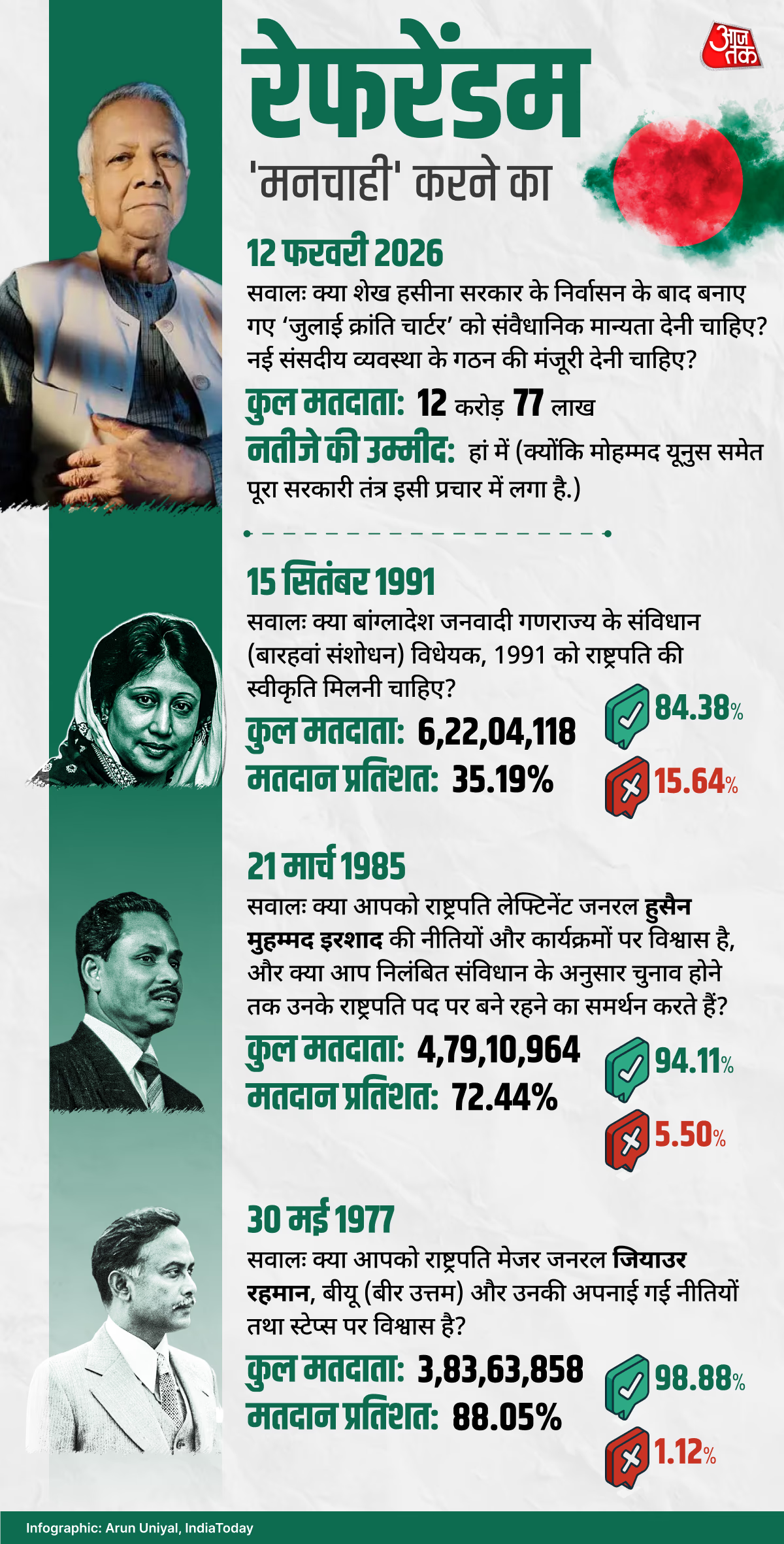
Bangladesh is preparing for its fourth major referendum, scheduled alongside the general elections on February 12, 2026. The question put forth is whether the public supports implementing the 'July Charter,' a package of 47 significant amendments affecting constitutional changes. Prior to this, three referendums have taken place in the country, each reflecting the politics and power structures of their times, and correspondingly influencing results. Of these, two referendums were initiated by military dictators to consolidate their hold on power, ensuring outcomes aligned with their desires.
The first referendum on May 30, 1977, saw citizens affirm their trust in President Ziaur Rahman for political and policy decisions, with approximately 98.88% saying 'yes.' The second on March 21, 1985, during President Hussain Muhammad Ershad's regime, asked if people supported his policies and leadership until civilian government was established — over 94% endorsed him. The third, on September 15, 1991, was significant in bringing back a parliamentary government. The question asked if the president should approve the 12th amendment bill; 84% agreed. These referendums, across distinct periods, sought public confidence or constitutional approval, significantly impacting the direction of politics and governance to align with incumbents' desires.
Is Yunus Aiming to Strengthen His Grip on Power?
Mohammad Yunus, managing Bangladesh's governance for the past 18 months as an interim leader, has faced considerable scrutiny. Initially hesitant to move towards elections, his leadership decisions have often suggested a reluctance to relinquish authority. He assured the nation that post-elections, he would hand over power to the new government and possibly return to his work at Yunus Center. However, critics suspect his push for the referendum, favoring a ‘yes’ outcome, as an attempt to retain indirect influence in decision-making post-reform. By advocating for constitutional changes, he might seek to shape the governmental framework beyond his tenure.
Source: aajtak
The Current Referendum: A Reverse Stream?
This upcoming referendum deviates from the norm. Typically, a referendum follows parliamentary decisions to seek public approval. This time, a public referendum will guide subsequent decisions — a reversal of usual practice. The public faces a single choice, ‘yes’ or ‘no,’ on 47 intertwined changes without separate judgments. This approach raises debate about its fairness, especially when discussions and parliamentary debates should precede public opinion.
If 'Yes' Prevails
A 'yes' vote will usher profound change; a constitutional reform council will mimic parliamentary functions to enact 47 charter changes, contingent on a 151-member majority approval within 180 days. This reformation includes establishing new parliamentary structures, defining prime ministerial powers, modifying presidential authority, and more. Existing parliamentary structures could shift drastically to bicameral systems, introducing a 100-member upper house as suggested, if the referendum favors change.
Conversely, a 'no' vote halts the process entirely, scuttling proposed changes in the July Charter. However, the government plans to prevent this outcome. Yunus promotes a ‘yes’ vote claiming it will end misgovernance, enhance democracy, good governance, and social justice. The election commission cautioned civil servants against directly promoting a ‘yes’ vote.
Post-Referendum: Sequential Changes
Should a referendum pass, implementation requires navigating through several stages, addressing constitutional design, adherence to new laws, and establishing commission and constitutional rules. Analysts argue packing multiple significant issues into one question isn't prudent; piecemeal issues might yield better public engagement and understanding.
Transformative Prospects in Bangladesh's Parliament
If affirmed, changes could lead to Bangladesh's transition from a singular to a dual parliamentary system. This would balance responsibilities within a new upper house, affecting prime ministerial terms, presidential powers, judiciary independence, and more, potentially reshaping the political landscape. Thus, this referendum is more than a mere yes/no vote; it defines the trajectory of Bangladesh's political and constitutional future. Debates even suggest it’s a referendum on Yunus's future role, where a 'yes' results in amplified influence.