Diving deep into Tamil Nadu’s history reveals the influence of two philosophies beyond its native Tamil culture. Jain and Buddhist philosophies left a lasting imprint for centuries. These traditions infused discipline into society, elevated literature, and deepened thought. Yet, they eventually grew monotonous and dull, lacking vibrancy and excitement, leaving life devoid of color and enthusiasm.
Monotonous Life Under Jain and Buddhist Philosophies
Jain and Buddhist traditions claimed to uncover the ultimate truth, yet demanded detachment from the world with heavy sacrifices and moral teachings, often impractical and bookish. Humans don’t merely seek salvation; they desire to live and embrace all human emotions. This created a void within Tamil society, a sense of emptiness, which could not be filled by mere philosophy. It needed an emotional revival. Enter ‘Nayanmars and Alvars,’ deep-rooted in Tamil tradition, bringing the devotion to Shiva and Vishnu to center stage.
The Nayanmar Saints and Their Tradition
Nayanmar saints were not philosophers. They were not secluded scholars residing in monasteries. They roamed the streets, sang in temples, and communicated with the divine in the common people’s language. They taught Tamil society that rather than fearing God, they ought to love Him. Thus began the ‘devotion movement,’ which brought back color, music, and joy into Tamil life.
Let's start with the Shaivism movement—a devotion tradition where Lord Shiva emerged as the primary deity.
The Strength of the Shaivism Tradition
The Shaivism tradition’s greatest strength was its rootedness in Tamil soil, unlike the believed-to-be external Jain and Buddhist traditions, which originated from North India and carried an alien sentiment similar to the 'Dravidian' concept felt by Tamils. Despite adopting the Tamil language and integrating themselves, their roots were external, unlike those of the Shaivism tradition.
In Tamil Sangam literature, the term ‘Muthalvan’ or ‘First Creator,’ an entity who dances and sustains the universe, unmistakably mirrors Shiva. The Nayanmars didn’t introduce a new deity; rather, they rekindled the ancient, familiar image of Shiva into the people’s hearts—a return from philosophical asceticism to heartfelt spiritual connection. It was an attempt to simplify and make accessible the complex doctrines of philosophy—a new restart in life known as the Shaivism tradition.
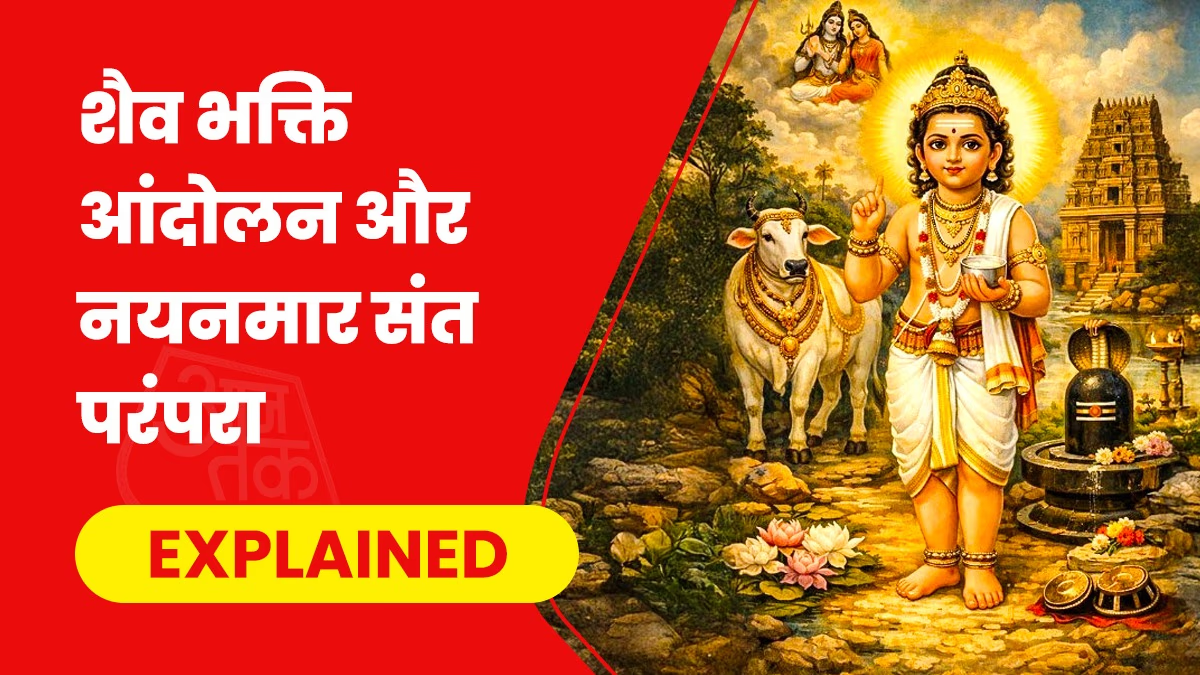
Kartikeya or Murugan in Tamil Tradition
According to the oldest Tamil text, ‘Tolkappiyam,’ Murugan is the deity of the hill regions or ‘Kurinji,’ whom North Indians know as Kartikeya. The Tamils viewed Murugan as a symbol of vigor, with the color red indicating auspiciousness and symbolizing warriors and youthfulness. While they later believed Murugan to be Shiva’s son, North Indian tales already depicted him as such, without dispute.
Source: aajtak
Between the 6th and 9th centuries, approximately ‘63 Nayanmar saints’ emerged. They hailed from diverse backgrounds, including Brahmins, Shudras, merchants, and even women.
The message was clear: caste meant nothing to Shiva, only devotion did. Their greatest strategy was language. They bypassed the heavy Sanskrit hymns, instead singing in simple, direct Tamil. They drifted from temple to temple, extolling Shiva’s greatness. People listened, connected, and began singing themselves. This devotion emerged from the heart, not from scholarly tomes or mythological texts.
The Three Pillars of Nayanar Saints
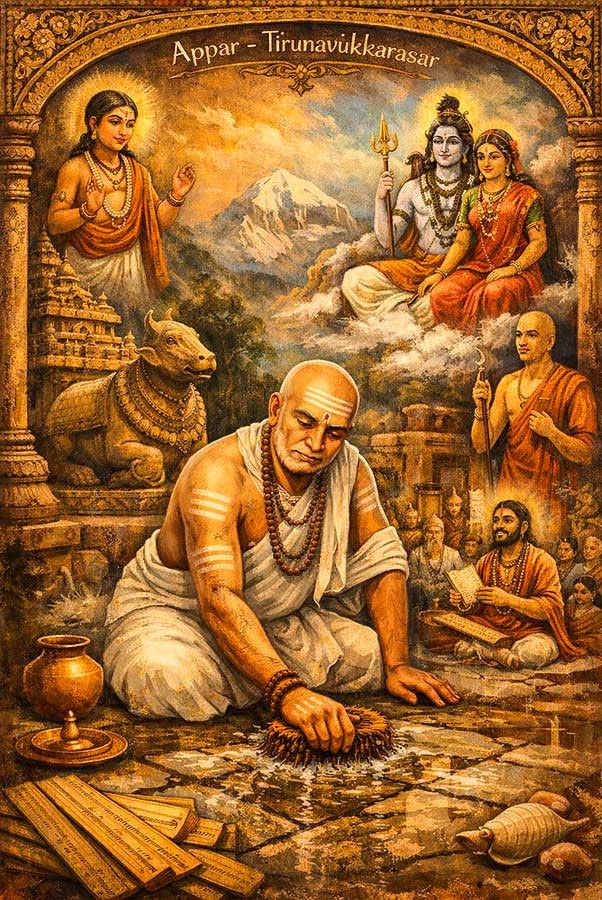
Delving deeper into this tradition, the Tamils identified three main pillars: Appar, Sambandar, and Sundarar. Appar emerged as a major saint of this tradition, advocating faith beyond fear. His faith showed no fear towards God, only love. Known as ‘Thirunavukkarasar,’ he was formerly a Jain monk who later adopted Shaivism, a transformation that deeply irked the Jain-influenced king Mahendravarman.
Folklore narrates that Saint Appar faced multiple ordeals—from a lime kiln, poison, being crushed by an elephant, bound and cast into the sea—yet he survived each and continued singing Shiva’s praises unfazed. His story parallels the North Indian tale of Lord Vishnu and his child devotee Prahlada. Similarly, Tamils too embraced the devotion towards Shiva through the Nayanmar saints.
Saint Appar’s famous sentiment 'We are nobody’s slaves, not even afraid of death' wasn’t political—it spoke of spiritual freedom.
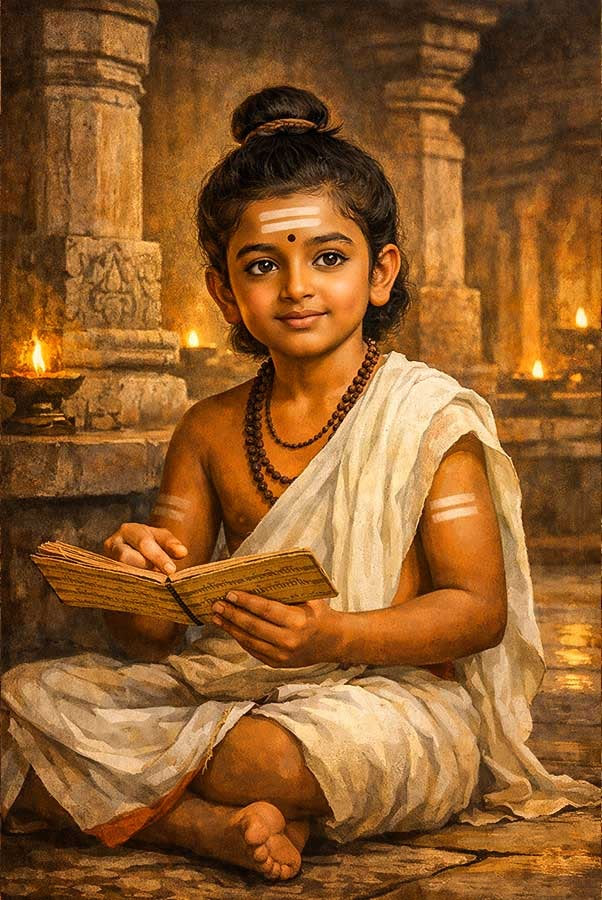
Following is the tale of the next saint, Tirujnanasambandar, now known as Saint Sambandar. He became a saint at the tender age of three, and Tamil folklore suggests Goddess Parvati herself nursed him. Despite facing opposition from Jain saints, he never engaged in debates with Jain monks but instead won arguments through hidden meanings within his songs.
Source: aajtak
Cities like Madurai, under Jain influence, saw a resurgence in Shiva worship thanks to Sambandar’s devotion, catalyzing an immense growth of faith and devotion towards Murugan within Tamil society. Now, we turn to the third saint Sundarar, distinctly different from the first two. He didn’t turn into an ascetic and renounce worldly pleasures but instead befriended Shiva.
Finding Friendship in Shiva
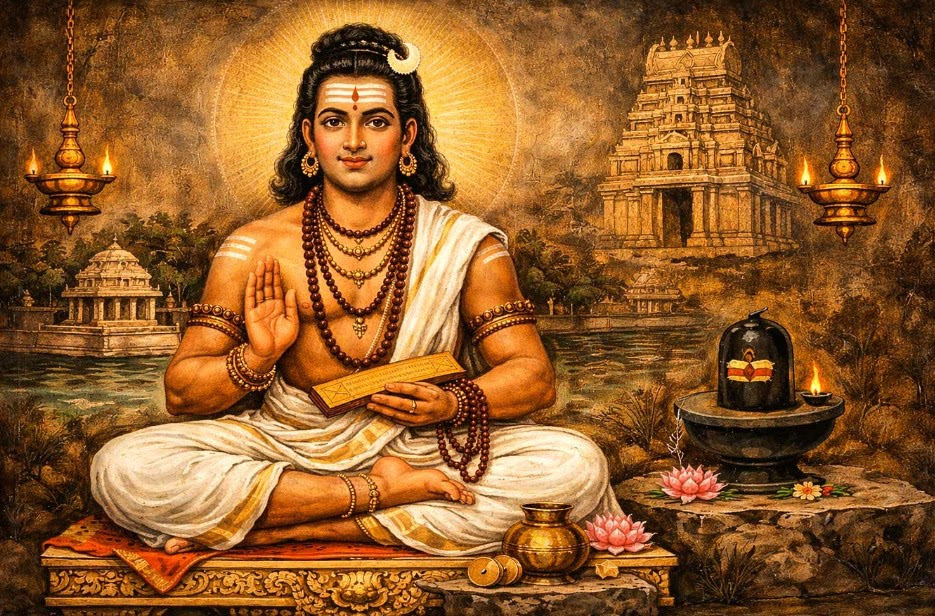
Sundarar perceived Shiva as akin to himself, stepping beyond the ideal divinity to find the human element within the deity. He conversed with Shiva as a friend, having grievances, complaints, jest—all part of his devotion. He demonstrated that devotion is not about renouncing life, but connecting God to one’s everyday existence.
North Indians could relate to Sundarar’s ideology, as most householders worship Shiva in this informal manner, affectionately addressing him as Baba. His approach remains highly relevant for today’s householders.
Following the discussion on these three saints, let's explore the mystical depth and awe-inspiring beauty that underpins Shiva’s essence. Among the Nayanmar saints, a mystic named Tirumular taught that love is the essence of Shiva. To deepen this sentiment and idea, he composed the famous Tamil scripture ‘Thirumantiram,’ encapsulating Shaivism’s philosophy in 3,000 verses. These verses combine yoga, tantra, and devotion, a unification of all three.
His most renowned statement 'Anbe Sivam,' meaning love is Shiva, emphasized that separating love and God shows a lack of understanding of the divine. Also deserving mention is the female saint Karaikkal Ammaiyar, who embraced the terrifying beauty of devotion, or the truth we term Satyam, Shivam, Sundaram.
Her truth appeared as the cremation ashes and fire of the crematorium. Karaikkal Ammaiyar did not desire beauty from God, but a skeletal ‘beautiful’ form, to banish the attraction to outer beauty and cultivate genuine devotion. This concept mirrored Jain philosophy, but the straightforward poetry wrapped it in simplicity, creating a tradition of devotion.
Source: aajtak
Singing Saints of the Crematorium
Karaikkal Ammaiyar, a courageous saint, sang in crematoriums. Her poems, both terrifying and alluring, written in Tamil literature, document how Shiva himself referred to her as ‘Amma,’ showcasing the peak of devotion where God himself becomes enchanted with his devotee.
Later, Nambi Andar Nambi compiled these works into '12 Thirumurai.' This means that the Nayanmar saints didn't just fill temples with crowds but revitalized Tamil tradition with life and color. Where there was once silence, bells and drums now rang, and captivating hymns crossed temple thresholds to become a tradition.
The void of the Jain-Buddhist era transformed into celebration, ushering a grand cultural renaissance for the Tamils. The Shaivism movement solidified Tamil society’s roots, bridged devotion to the masses, and reinstated Tamil as the language of the divine.