Investigators examining the Air India flight crash in Ahmedabad have concluded that it was not the result of a technical malfunction but a 'deliberate act'. The Italian newspaper Corriere della Sera reported this based on sources familiar with recent discussions between New Delhi and Washington. However, drawing conclusions before the DGCA's official report is released would be premature.
According to the report, Indian investigators have determined that the crash on June 12, 2025, following an engine fuel cut-off, was not due to mechanical failure but a deliberate action. Officials are now preparing a draft of their final report.
The newspaper further reported that US experts assisting in the investigation hailed these findings as a 'significant achievement'.
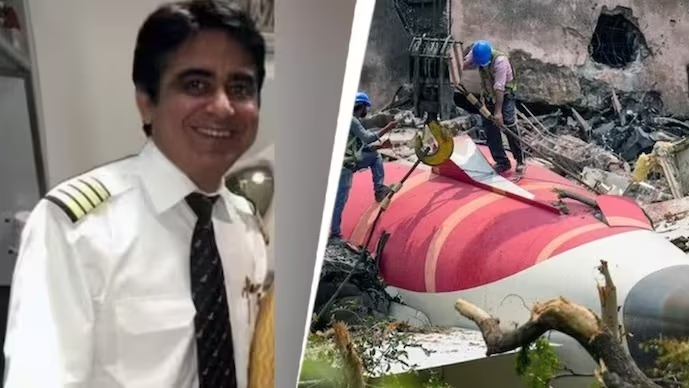
The Air India Boeing 787 Dreamliner took off from Ahmedabad Airport and crashed seconds later. The tragedy claimed 260 lives, including passengers and medical students housed within the dormitory hit by the aircraft. Miraculously, one passenger survived the ordeal.
In July 2025, a preliminary report from the Aircraft Accident Investigation Bureau of India (AAIB) mentioned a final cockpit conversation concerning a pilot shutting down the fuel control. The cockpit voice recording captured one pilot questioning, “Why did you shut it (fuel) off?” to which another replied, “I didn't.”
The Italian newspaper reiterated this account. The report suggested that investigators now believe one of the pilots intentionally turned off the engine fuel control switch, causing the aircraft to lose power and crash. Captain Sumeet Sabharwal was in command, with First Officer Clive Kunder as the co-pilot.
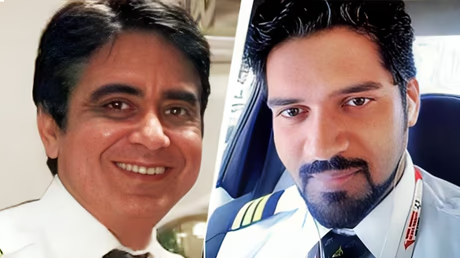
Source: aajtak
The new report further states, “Responsibility is yet to be clear, but Captain Sumeet Sabharwal is the primary suspect, with post-incident revelations of his depression.”
Read More:
Post AAIB's preliminary investigation, Sabharwal's father denied the accusations, demanded a new inquiry, and dismissed speculations on his son's mental health. He refuted claims that personal issues, including divorce rumors, led to anxiety or depression.
According to Corriere della Sera, the final investigation report is expected to recommend continuous psychological evaluation and mental health monitoring for pilots.
Several theories emerged weeks after the crash, ranging from technical faults to human error. Over time, investigators focused on the fuel control switch in the cockpit.
Initial technical assessments based on black box data dismissed a mechanical failure, pointing instead to the manual movement of the switches regulating engine ignition and shutdown. It emerged during the investigation that both engines had been stopped at the time of the crash.