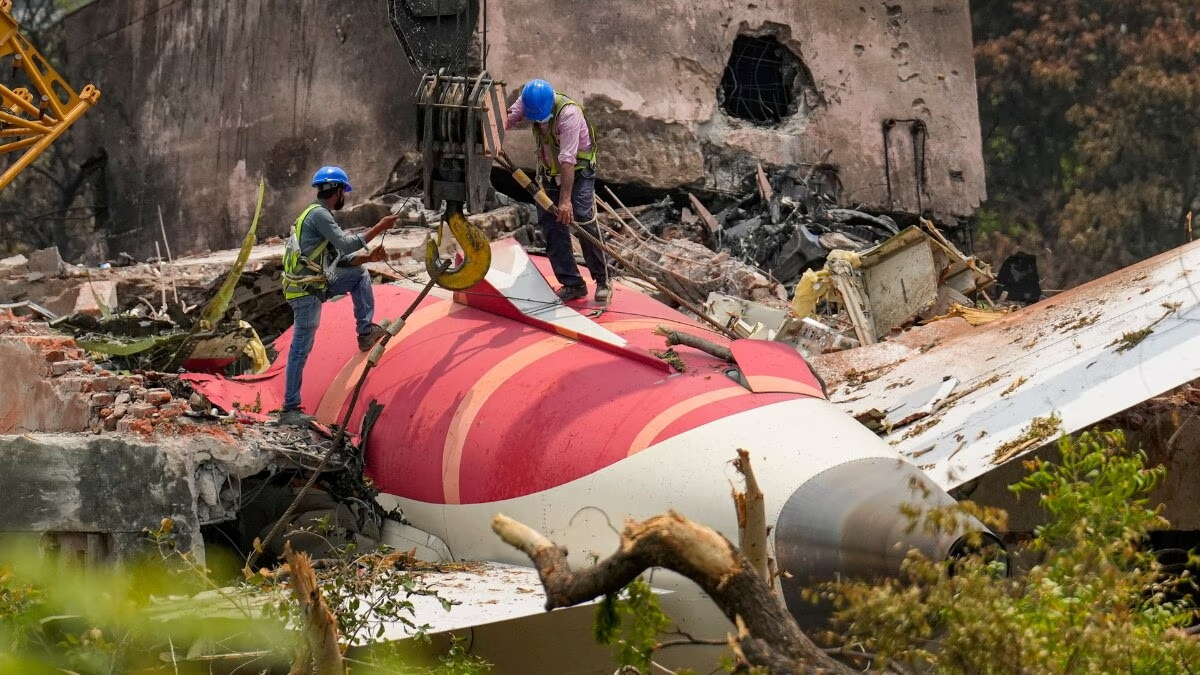
In June, a major airline disaster struck Air India when a plane crash resulted in the tragic deaths of several passengers. The families of those lost have taken legal action in the Delaware Superior Court against Boeing, the aircraft manufacturer, and Honeywell, the parts supplier. The lawsuit, filed on Tuesday, seeks justice for the victims, raising questions about the true cause of the crash, as the investigation is still ongoing.
The families allege that the fuel cutoff switch, designed by Honeywell and installed in the Boeing 787-8 Dreamliner, was the primary cause of the accident. According to them, the engine lost thrust abruptly just seconds after takeoff due to the switch's malfunction. This case is being handled by the Lanier Law Firm in Texas. The plaintiffs include Indian and UK citizens, representing families such as Kanta Ben Dhirubhai Paghdal, Navya Chirag Paghdal, Kubarbhai Patel, and Babiben Patel among others.
The flight was heading to London Gatwick with 229 passengers and 12 crew members, but only one passenger survived the devastating crash. In addition, the crash claimed the lives of 19 more people on the ground after it took off from Ahmedabad airport.
Families Claim 'Inadvertent Fuel Cutoff'
The families insist that the fuel cutoff switch’s locking mechanism was either faulty or absent. This mechanism is crucial to prevent accidental movement of the switch and ensuring safety. The lawsuit claims that the design allowed accidental movement during normal cockpit activities.
The filing states, "Boeing and Honeywell were aware of this hazard but failed to act." It also mentions a 2018 advisory from the US Federal Aviation Administration (FAA), recommending inspections of the switch, although these inspections were not mandatory. The families allege that Air India never conducted the required checks.
The Investigation Into the Crash Continues
India's Aircraft Accident Investigation Bureau (AAIB) has not yet issued a final report. However, a preliminary report released in July noted that fuel flow to the engine ceased immediately after takeoff. Confusion among pilots was also captured in cockpit voice recordings.
In July, FAA Administrator Brian Bedford expressed confidence that neither a mechanical failure nor an inadvertent movement of the fuel control system was responsible for the accident. Several aviation experts also argued that the location and design of the fuel cutoff switch made an accidental flip unlikely.