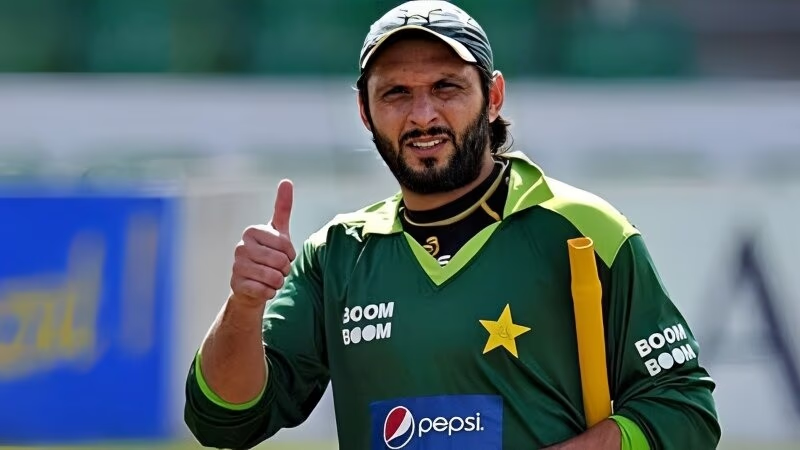
Amid the ongoing controversy surrounding the ICC Men's T20 World Cup 2026 match against India, former Pakistani captain Shahid Afridi has made his stance public. Afridi took to social media platform X, expressing that he holds cricket above politics but still supports the decision made by the Pakistani government.
The Pakistani government has permitted its team to travel to Sri Lanka for the T20 World Cup but decided against playing the group match against India. Shahid Afridi stated that he has always believed cricket can open doors closed by politics. Nevertheless, he acknowledged it is unfortunate not to face India in the match.
Read Also: Pakistan's Strategic Move Against India... Will Pakistan Cricket Team Meet Bangladesh's Fate?
In his post, Shahid Afridi also questioned the International Cricket Council (ICC), stating this is not a time for mere statements, but for leading with decisions. Afridi wrote that the ICC needs to prove it is fair, independent, and equal to all member nations. His statement comes at a time when the ICC is contemplating strict action against Pakistan's decision.
Shahid Afridi reiterates, 'I have always believed that when politics closes doors, cricket can carve new paths. It is regrettable that Pakistan will not play against India in the T20 World Cup, but I stand by my government's decision. This is a time for the ICC to not only issue statements but to demonstrate fairness, independence, and justice for every member.'
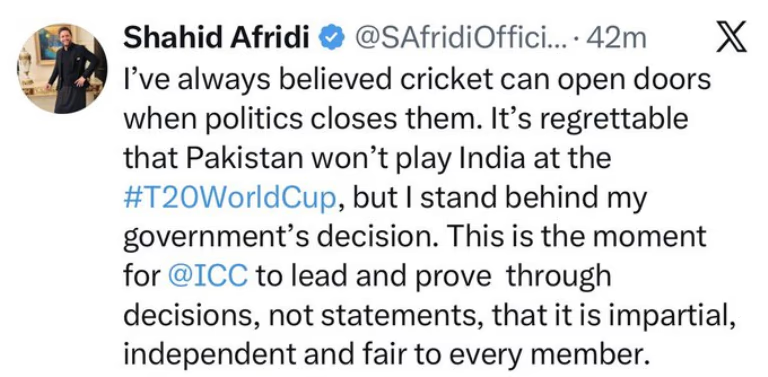
Source: aajtak
Shahid Afridi's statement is significant as several former Pakistani cricketers appear divided on the decision to not play against India. While some criticize it, influential figures like Afridi openly support the government's stand.
The ICC has already expressed concern over selective participation, stating it is not in global cricket's interest. However, there has been no detailed official response from Pakistan Cricket Board (PCB) Chairman Mohsin Naqvi so far.
The boycott is not just an issue of a single match with India anymore. It now directly ties to the ICC's credibility, the future of Pakistani cricket, and the politics of global cricket. In this context, Shahid Afridi's statement is seen as a catalyst for further controversy.