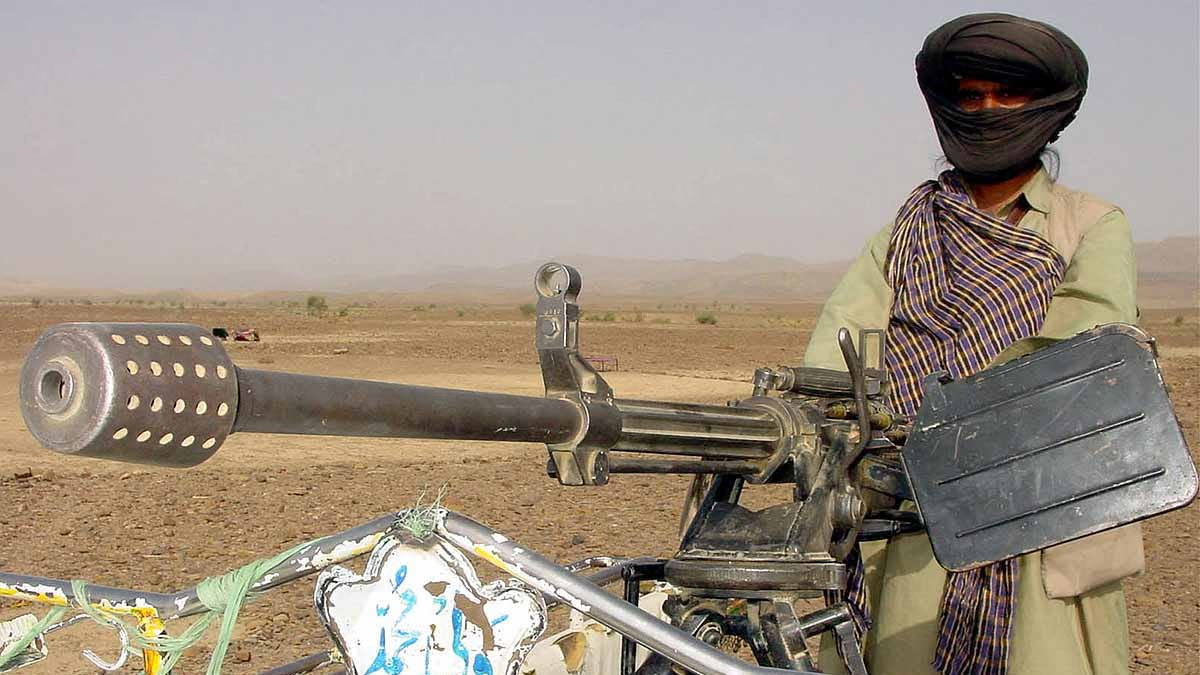
Balochistan is Pakistan’s largest province, plagued by a longstanding separatist movement. The Baloch people see themselves as distinct from the Pakistani government and demand greater control over their resources. The movement’s driving force is the Baloch Liberation Army (BLA), fighting guerrilla wars against the Pakistani military. Classified as a terrorist organization by Pakistan, the USA, and the UK, the Balochs term it a freedom struggle.
What is the Baloch Liberation Army (BLA)?
The BLA is a Baloch nationalist armed group fighting to liberate Balochistan from Pakistan. Balochistan, Pakistan’s largest yet least populated and underdeveloped province, is rich in natural resources like gas, minerals, and coastlines.
Source: aajtak
How Many Fighters Do the Balochs Have?
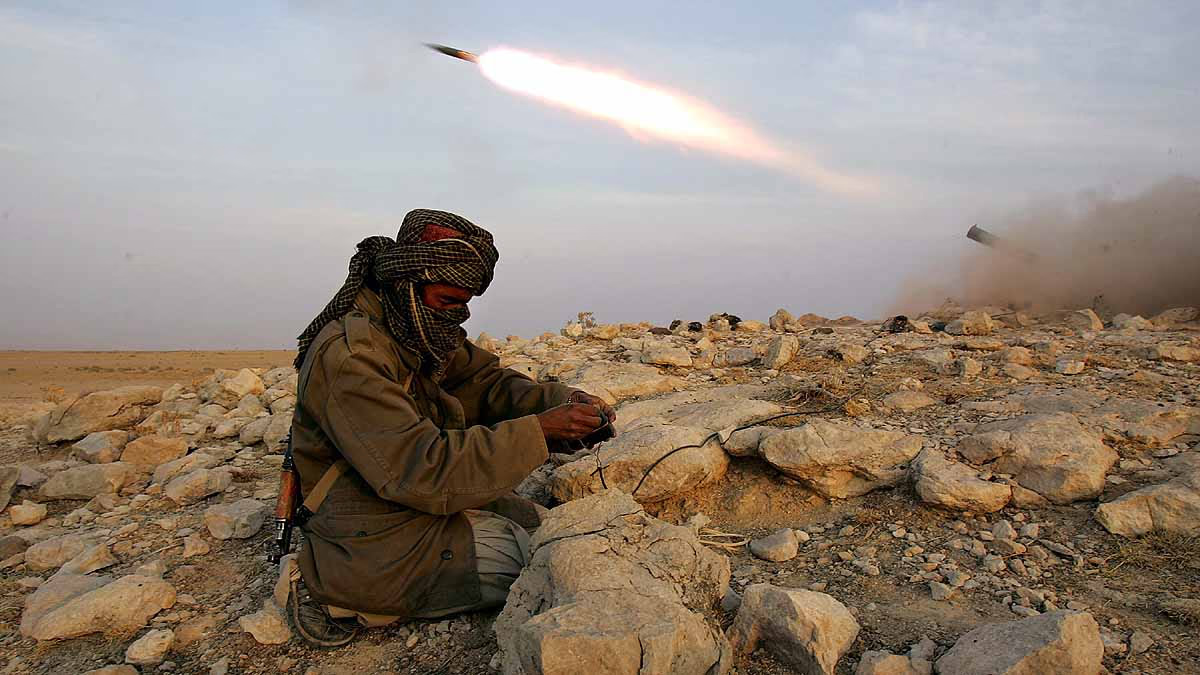
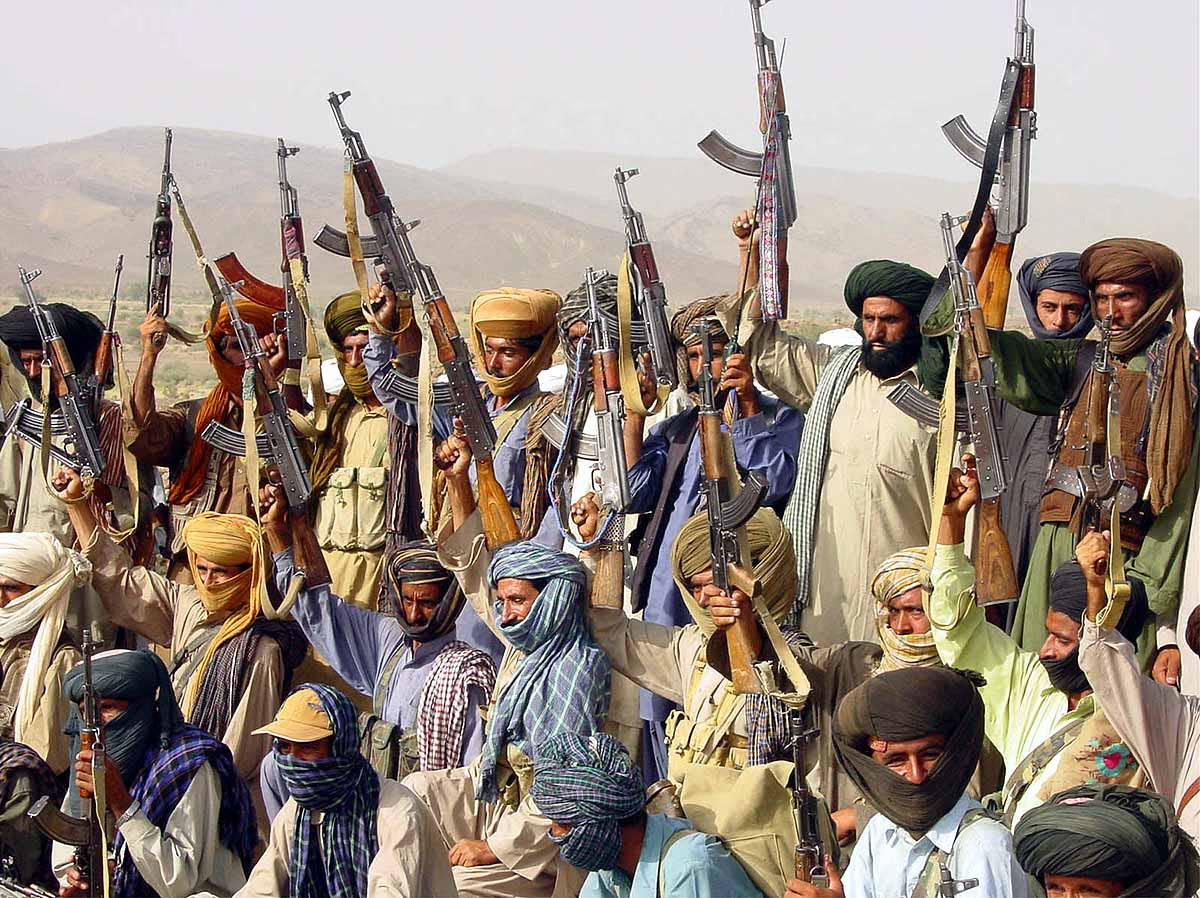
Accurately estimating the number of Baloch separatists is challenging due to their secretive operations, often hidden in mountainous terrains. Various groups operate in Balochistan like the BLA, Balochistan Liberation Front (BLF), Baloch National Army (BNA), and United Baloch Army (UBA), with the BLA being the largest and most active.
Estimated Number of BLA Fighters:
In 2020, about 600 were actively fighting with the BLA, escalating to 3000 by 2025. The BLA overall has thousands, including fighters, supporters, and recruiters. Over 3000 Baloch fighters opposed the Pakistani Army in Operation Herof.
Other Baloch Groups' Fighters:
The BLF claimed in 2025 that 42 of their fighters were killed, yet the total remains unestimated. Groups like Jaysh al-Adl host about 500-600 fighters. Overall numbers for Baloch separatist groups range from 5000 to 10000, subject to change with ongoing recruitment and losses. The Pakistani military asserts killing over 100 fighters between 2025-2026.
Source: aajtak
What is BLA's Strategy Against the Pakistani Army?
The BLA avoids direct confrontations due to the sheer power of the army, adopting asymmetric warfare tactics like the Taliban in Afghanistan, employing hit-and-run strategies. Their methods have evolved over time.
Main Guerrilla Warfare Strategies
Hit-and-Run Attacks and Ambushes:
Exploiting the mountainous regions, BLA fighters ambush military outposts, patrols, and convoys with IEDs, rockets, and small arms before swiftly retreating to evade counterattacks.
Suicide Attacks:
The Majeed Brigade conducts suicide bombings, involving both men and women, targeting military camps, checkpoints, and critical sites. 2025 witnessed several such attacks like those on Noshki and Panjgur camps, held for three days by the BLA.
Coordinated Assaults:
The BLA simultaneously attacks multiple sites to scatter military capabilities, evident in Operation Herof (Black Storm), beginning its second phase in 2026. Ten cities witnessed assaults, highways were blocked, and Baloch flags replaced Pakistani ones. In 2025, the BLA claimed 521 attacks, resulting in over 1060 Pakistani military fatalities.
Targets:
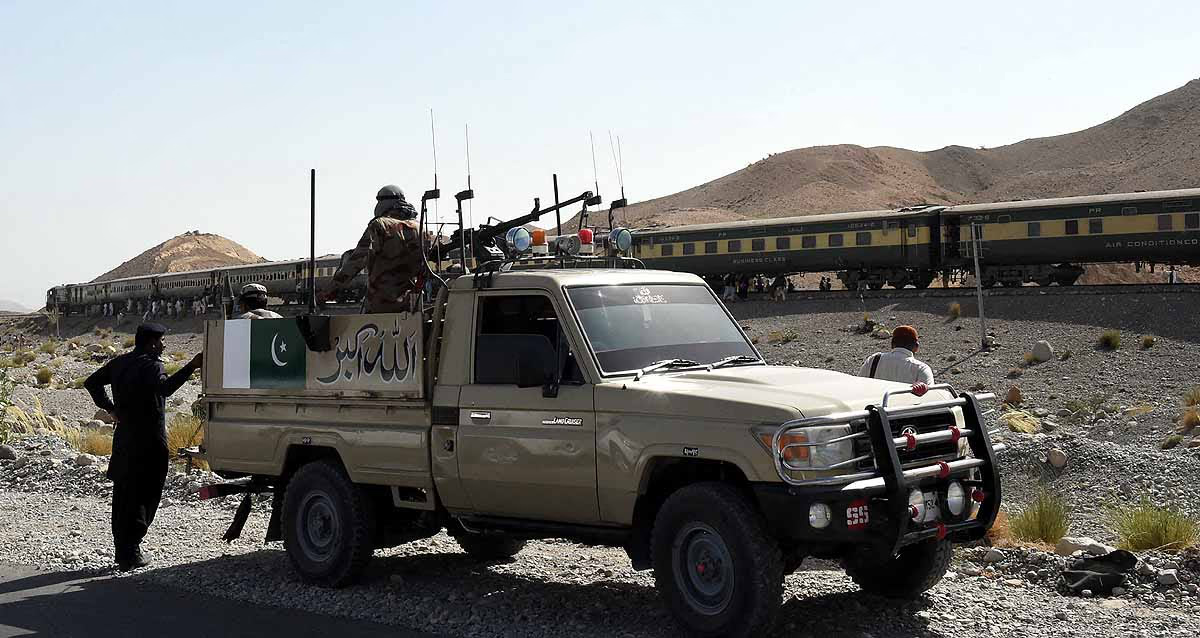
The BLA primarily targets the Pakistani military, police, infrastructure (like gas pipelines, railways), Chinese projects (CPEC), and non-Baloch residents. Attacks on Chinese engineers and workers occur as they believe Pakistan exploits their resources.
Source: aajtak
Digital and Propaganda Strategy:
Utilizing social media platforms like Telegram, WhatsApp, and Rumble, the BLA shares attack videos, propaganda content, and martyr stories, easing recruitment processes. They leverage local grievances, such as enforced disappearances and resource exploitation.
Increasing Attacks:
BLA's strategy intensified between 2025-2026. In Operation Herof, they destroyed drones, towers, and vehicles. The Pakistani Army blames Indian assistance for these attacks but provides no evidence. The BLA aims to exhaust the military with prolonged skirmishes, followed by blitzkrieg assaults for territorial gains.
Recent Developments:
BLA's approach became more aggressive in 2025-2026. They decimated drones, towers, and vehicles in Operation Herof. Despite Pakistani claims of Indian backing, no proof is offered. BLA’s goal, through persistent strikes, is to deplete army energy before launching extensive offensives.
What's the Impact?
This conflict impacts Balochistan’s economy and security. Despite extensive military operations by the Pakistani Army, separatism persists. Experts argue that only military actions won't resolve the issue; political dialogue and development are essential.
Reasons for Unrest in Balochistan
Economic Exploitation: Balochistan's resources are exploited without benefiting local residents.
Political Marginalization: Baloch people are deprived of their rights and autonomy.
Human Rights Violations: Amnesty International and Human Rights Watch report thousands of Baloch activists, journalists, and students have been forcibly disappeared or killed.