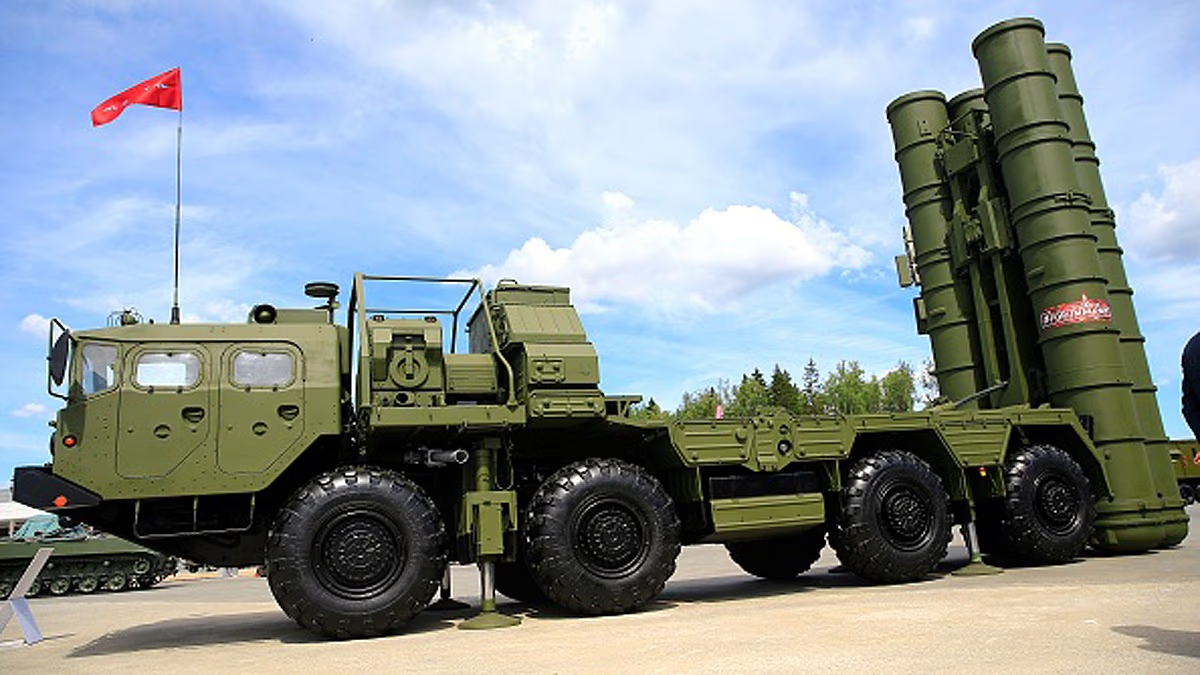
Russia is set to bolster the S-400 Triumph, the world's most formidable air defense system. Drawing on lessons from its deployment in the Ukraine conflict, Russia is refining the system to counter emerging challenges more effectively.
This upgrade spells good news not just for the Russian military, but for nations like India. In 2018, India secured a $5.43 billion deal for five S-400 squadrons, three of which are already operational, with the remaining two expected by 2026.
The S-400, a mobile surface-to-air missile system, can neutralize enemy aircraft, missiles, drones, and even hypersonic weapons from up to 400 kilometers. It can detect targets as far as 600 kilometers and simultaneously track 80 targets, engaging 36 at once. In India, it's christened 'Sudarshan Chakra.'
This system is deemed more advanced than the American Patriot or the Israeli Iron Dome. Russia asserts that no foreign system matches its prowess.
During the conflict in Ukraine, labeled a 'Special Military Operation' by Russia, the S-400 excelled. The Russian forces deployed it to thwart American ATACMS missiles and Ukrainian drone strikes. In August 2025, its efficacy increased, and by November 2025, it successfully intercepted ATACMS near the Russian border.
The conflict revealed vulnerabilities as well, with Ukraine's drones and cruise missiles damaging several S-400 radars and launchers in Crimea by September 2025. This prompted Russia to reinforce the system against jamming and low-flying threats, equipping it with capabilities rarely seen in air defense systems.
According to Yan Novikov, CEO of the Almaz-Antey Group, the rapid pace of technological evolution ensures swift responses to new threats. The potential of the S-400 upgrade is vast, allowing for neutralization of emergent threats during warfare.
Experts predict these changes might include...
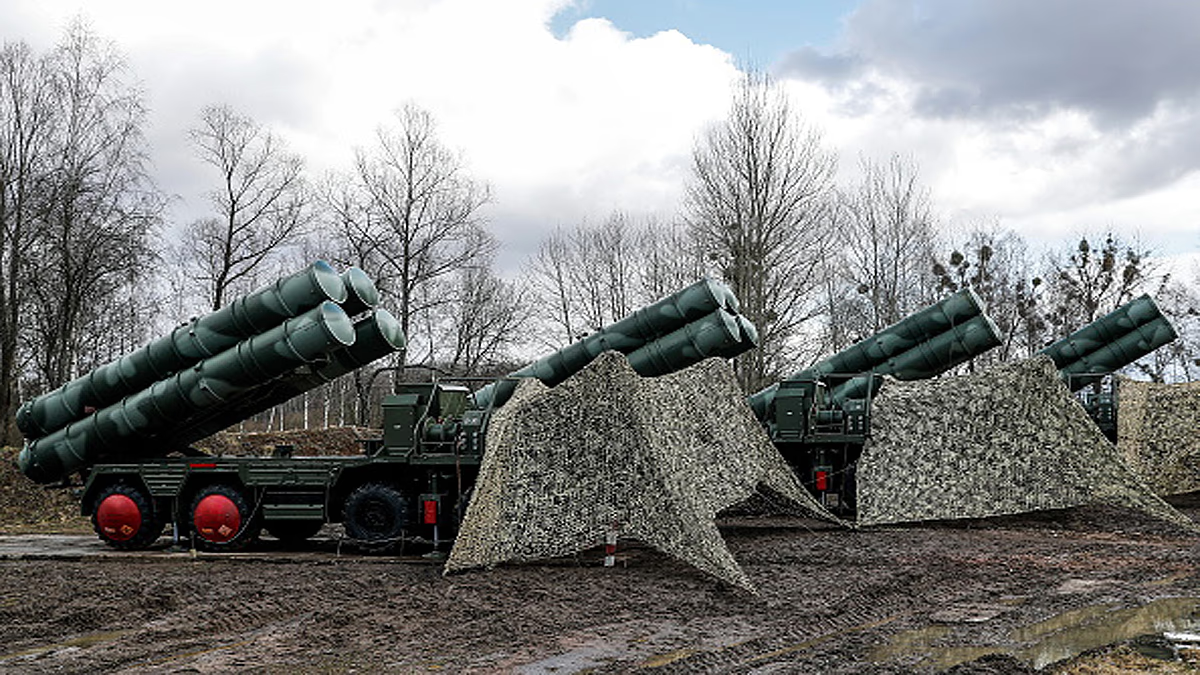
Source: aajtak
Enhanced radar: Strengthened anti-jamming technology and improved detection of drones and low-level missiles.
New missiles: Long-range 40N6 missiles, extending over 400 km to hit targets.
Networking: Better connectivity with AWACS (Airborne Warning and Control System) for handling multiple hostile targets simultaneously.
Mobility: Improved flexibility for rapid movement and concealment, preventing easy targeting by adversaries.
The upgrades promise to make the S-400 more invincible. Russia claims these enhancements will benefit exports as well.
For India, these upgrades are a boon. Under the 2018 agreement, five squadrons are to be received. Three have been deployed along the Punjab, Rajasthan, and northeastern borders. However, Operation Sindoor in May 2025 proved the S-400's might.
It intercepted a Pakistani JF-17 fighter jet, F-16, and an AWACS (SAAB-2000 Erieye) aircraft from 300 km away.
Thwarted Pakistani drones and missiles from attacking 15 Indian cities.
Neutralized a Chinese LY-80 system in Lahore and an HQ-9 in Karachi.
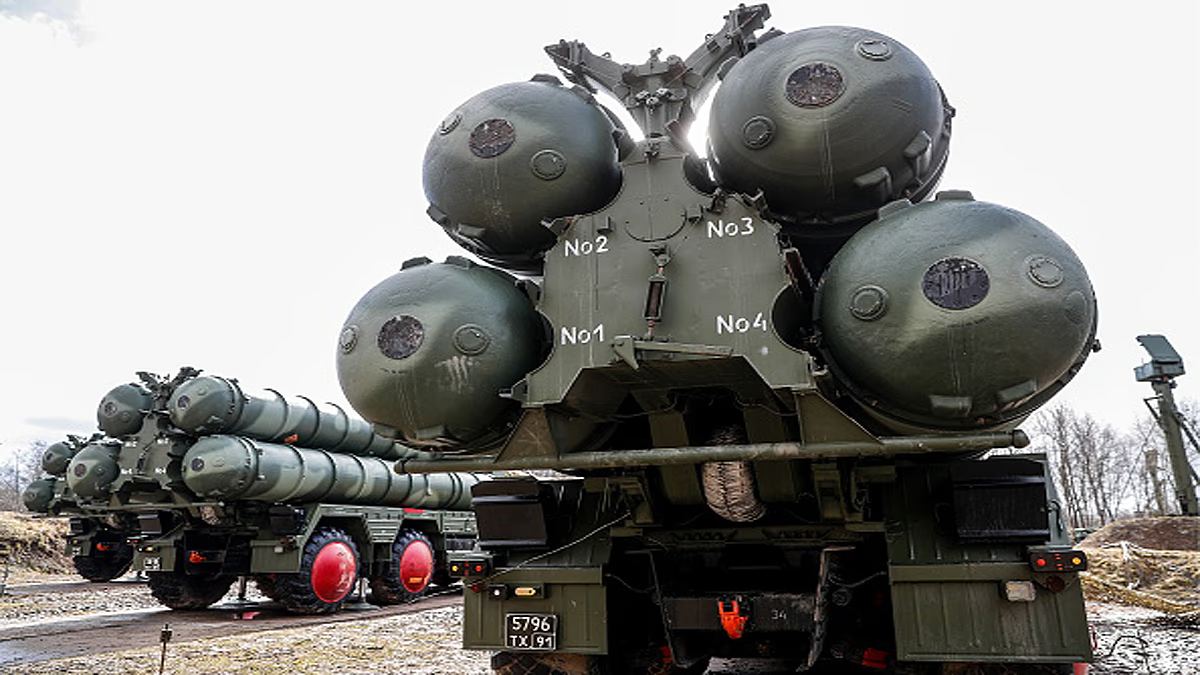
Source: aajtak
Air Chief Marshal Amar Preet Singh of the Indian Air Force hailed this as the largest surface-to-air kill record to date. Following Operation Sindoor, India resolved to procure more S-400 systems. Discussions for an additional five squadrons and a missile deal worth 10,000 crore rupees are slated for December 2025 between PM Modi and President Putin.
Additionally, talks are ongoing about acquiring the S-500 (the upgraded version of the S-400). Despite the ongoing conflict in Ukraine, Russia has assured that remaining deliveries will be fulfilled by 2026. India is constructing a layered defense network by integrating the S-400 with Akash, Spyder, and MRSAM systems.
The S-400 is costly to maintain, and the US has threatened CAATSA sanctions, which India has disregarded. Despite vulnerabilities revealed in the Ukraine conflict, upgrades are expected to address these weaknesses.
Experts believe this enhancement will be a game-changer along the India-Pakistan and India-China borders. Russia asserts the S-400 now possesses extraordinary capabilities. Should India receive the upgraded version, it could boast the strongest air defense globally.