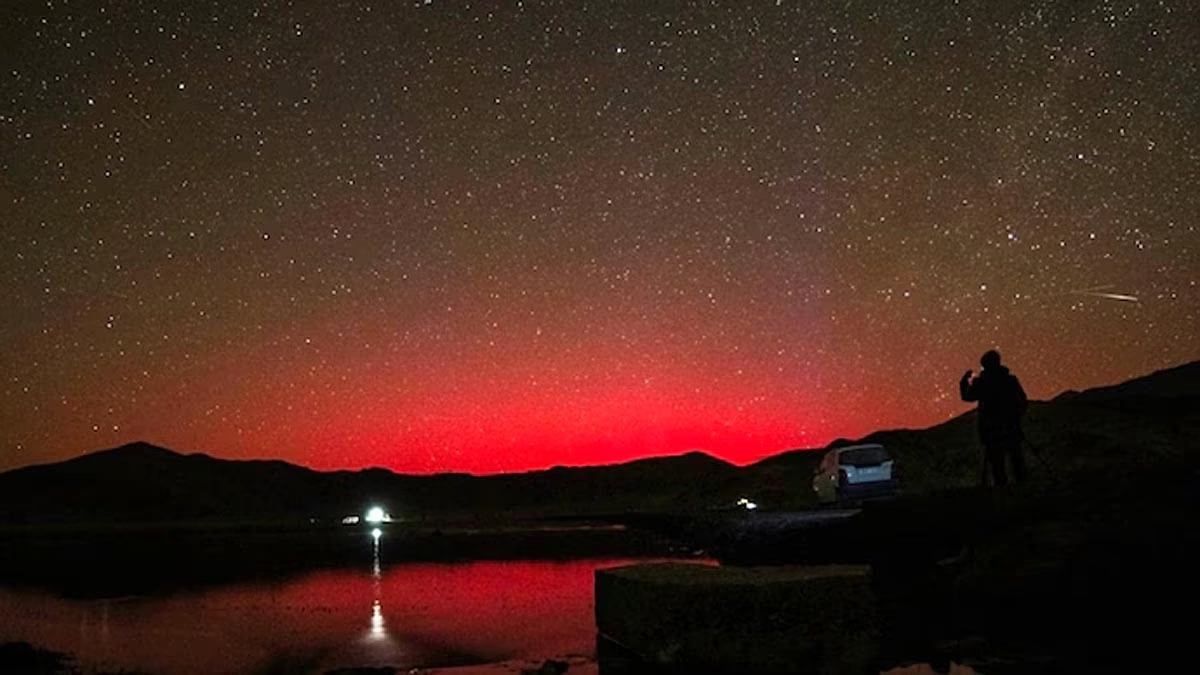
The nights of January 19 and 20 at the Hanle Dark Sky Reserve were anything but ordinary. Typically, a starry sky accompanied by views of galaxies is what graces this locale, but those nights were different — a crimson aurora, much like the northern lights, illuminated the sky.
These striking images swiftly circulated on social media, but scientists quickly pointed out that it wasn't merely a mesmerizing visual display. It serves as a foreboding signal of the Sun's heightened activity, posing risks to India's satellites, power grids, and digital infrastructure.
What happened? The Solar Storm Unfolds
On January 19, 2026, an X-class solar flare, the most potent variety, erupted from the Sun.
It propelled a coronal mass ejection (CME), a vast cloud of magnetized plasma and gas heading towards Earth at 1,700 km/s, reaching our planet in merely 25 hours.
It resulted in a G4-class geomagnetic storm and an S4-level solar radiation storm — the most severe since 2003.
The all-sky camera at Hanle (Indian Institute of Astrophysics - IIA) captured this event. This marked the sixth occurrence of such magnitude in this solar cycle.
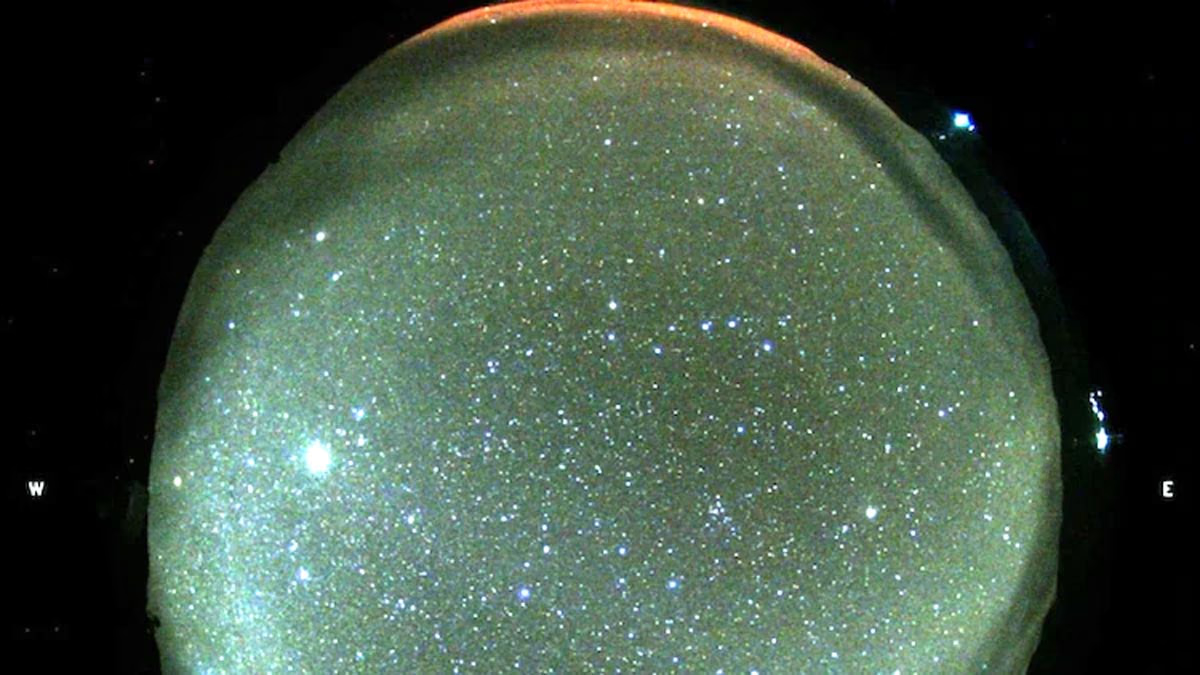
Source: aajtak
Why display a red aurora? The Scientific Explanation
An aurora forms when charged particles from the Sun collide with Earth's magnetic field and energize oxygen and nitrogen atoms in the atmosphere. While typically green in polar regions (north/south), the red color emerges from oxygen atoms 300 km above areas like Hanle. These are becoming more frequent due to the Sun's solar maximum.
Why does this pose a threat to India?
Behind this beauty lies a substantial threat...
Impact on Satellites: Solar storms compress Earth's magnetic shield. The Aditya-L1 mission (ISRO) indicates that geostationary satellites (36,000 km above) can be affected by harmful solar winds, potentially causing satellites to drift from their orbits.
Power Grid Challenges: Geomagnetic storms induce currents on Earth that can burn out transformers, causing blackouts.
GPS, Banking, and Communications: GPS signals can be disrupted, affecting banking and navigation systems.
Impact on the ISS: Astronauts aboard the International Space Station had to take shelter to avoid radiation exposure.
Threats to India's digital economy (UPI, 5G, satellite internet).
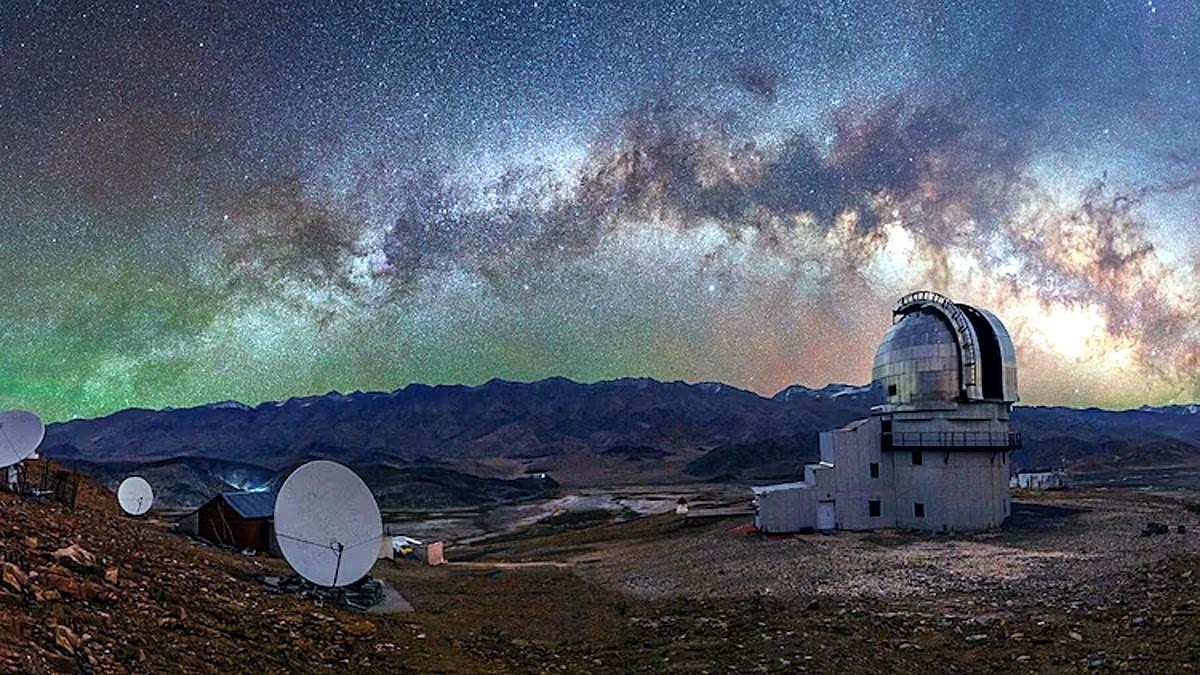
Source: aajtak
What is India doing? Preparation and Solutions
Aditya-L1 is strategically placed at the L1 point — about 1.5 million km from the Sun. It can detect CMEs 24-48 hours in advance, allowing for satellites to be put in safe mode and grid stabilization. The Hanle Observatory provides ground data, which validates satellite insights.
Power Grid Hardening: Installation of geomagnetic current sensors enables real-time monitoring.
Preservation of Hanle Dark Sky Reserve: As tourism rises, protecting the area from light pollution becomes essential, ensuring the functionality of optical sensors.
Understanding the Beauty and the Danger
Hanle's red sky in early 2026 was a magnificent spectacle, yet it heralds the Sun's awakening. Solar storms like these will surge through this solar cycle. India must enhance space weather forecasting and fortify its satellites and grids. Scientists caution that our electronic world is more fragile than we realize. By preserving locations like Hanle, we gain invaluable insights into space and shield ourselves from potential dangers.