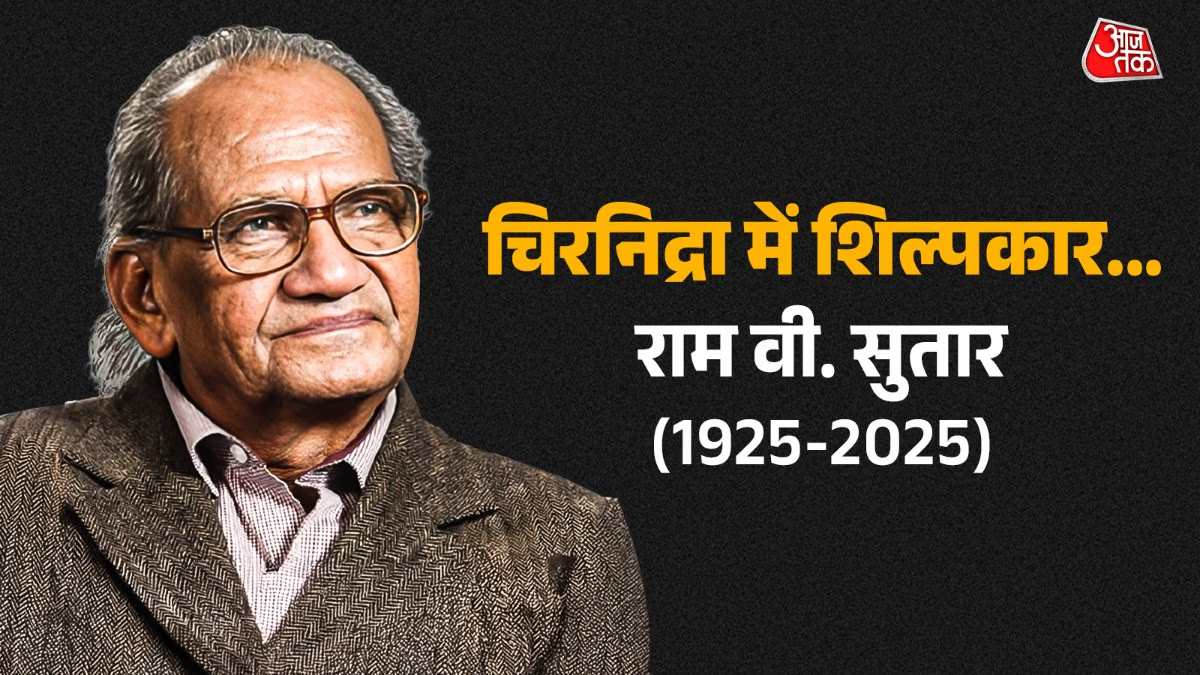
'Sculpture isn't like painting; it often demands immense physical effort. I believe I can continue creating for a long time,' said the living legend of sculpture, Ram V. Sutar, in an interview with foreign media. Estimated to be 89 at the time of the interview, Sutar's vitality and dedication were evident.
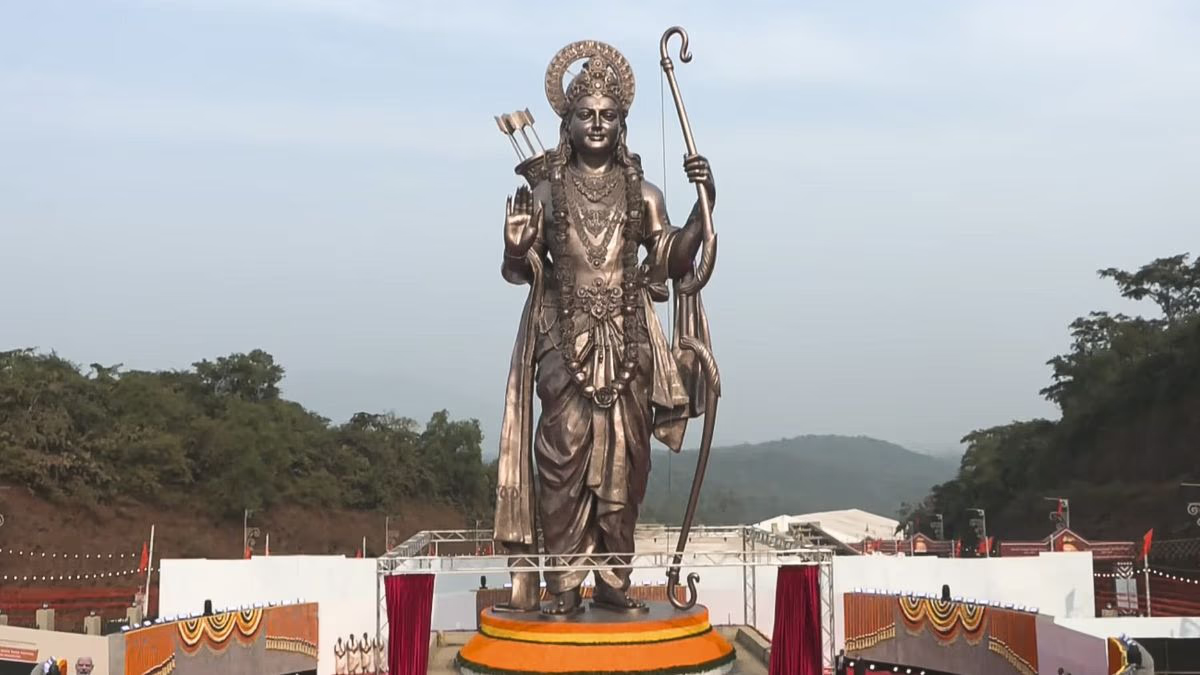
His life exemplified the essence of purpose and vitality, as turning 89 remains remarkable today. Remarkably, Sutar was deeply engrossed in his art even beyond the century mark. Around 20 days before his passing, Indian PM Narendra Modi unveiled a statue of Lord Ram in Goa, conceptualized by Sutar himself.
Source: aajtak
From Murals to Monumental Sculptures
Sutar was as active as ever, firmly immersed in his dedication to sculpture. Born in a small village of North Maharashtra in 1925, Ram Sutar's artistic journey commenced with murals sculpted from mud and cow dung on household walls.
His talent won accolades when he crafted a deity on a school slate, earning him a prize in a Bombay art competition. Finishing his education at the esteemed J.J. School of Arts with friends' financial support, he contributed to preserving ancient sculptures in the Ajanta and Ellora caves.
Enshrining the River Goddess Chambal
His career took a significant leap when he sculpted a 45-foot-high river goddess near a dam in northern India for just 10,000 rupees, with few believing he could achieve it. Moving with his family to the site's remote location, Sutar spent 18 months in the early 1960s sculpting a colossal concrete structure.
Recognition with the Chambal River Statue
It was the monumental Chambal River Goddess statue at Madhya Pradesh's Gandhi Sagar Dam that first captured public attention. Envisioning a river as a deity was a formidable challenge. Yet, many Indian myths depict rivers as goddesses. Sutar artistically anthropomorphized the river into a maiden adorned with tribal jewelry and holding a symbolic pot that nurtures her domain.
This magnificent 45-foot statue emerges from a single boulder, transforming the river in the arid central Indian ravines into the nurturing 'Mother Chambal' for Madhya Pradesh and Rajasthan, encapsulating India's spiritual and ecological essence.
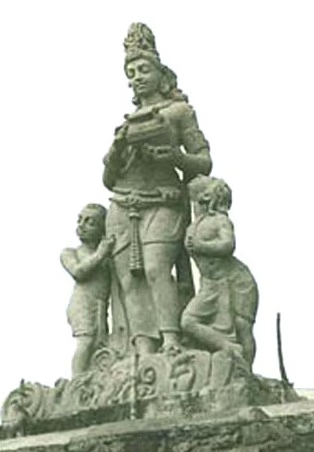
Source: aajtak
The statue's cultural significance and intricate detailing drew attention naturally, even the Prime Minister at the time, Pandit Nehru, was captivated. Consequently, Nehru enlisted Sutar for several major projects, introducing him to the country's eminent leaders, including Indira Gandhi.
Sutar's landmark creation of a serene bronze Gandhi statue has had its replicas gifted to cities worldwide by the Indian government, while others stand in India's Parliament and legislative assemblies.
The Intricate Art of Sculpting
Beginning every statue with clay models, Sutar's creations demand about two months of precise labor. Plaster casts follow, leading to fiberglass replicas, with modern technology accelerating historic drafting processes.
A Remembrance of the Swadeshi Movement
Reflecting on his poignant sculptures relating to Mahatma Gandhi, Sutar shared intimate stories. Born in the era of independence struggle, Sutar grew up with Gandhi's influence. A memorable tale from 1930-31 involves a foreign hat burned during the Swadeshi movement outside his school.
This symbolic moment crystallized Gandhi's image in Sutar's mind, a testament culminating in countless statues and sculptures dedicated to Gandhi, enriching the world with over 400 renditions.
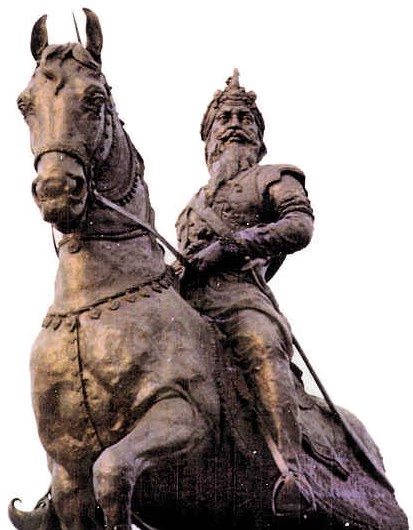
Source: aajtak
Sutar offers an enriched portrayal of Gandhi from an artist's vision, preserving the essence while opening avenues to interpret Gandhi beyond the static perceptions.
The Inception of Sardar Patel Sculptures
The masterpiece 'Statue of Unity,' India's tallest sculpture, etched Sutar's name in history. His first Sardar Patel statue was crafted in 1998 for the Indian Parliament. Sutar's seated Gandhi statuary in Parliament reshapes tradition, presenting Gandhi's serene demeanor beyond typical portrayals.
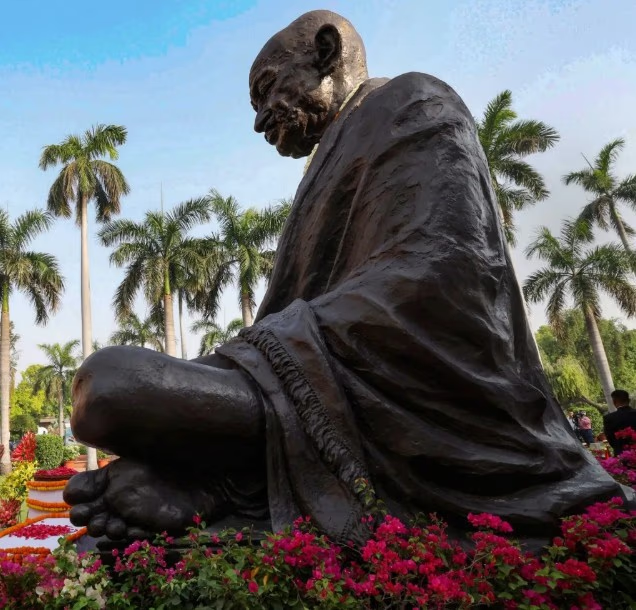
Source: aajtak
Ram Sutar's Legacy: Living Through Monuments
Sculpture for Sutar was a profound journey, merging expression and sincerity. His declarations testify to a genuine resonance with personal truths within historical context, fostering inspiration through global installations.
Although no longer with us, Sutar's monumental works stand testimonial to his artistry across the world, echoing Indian sculpture's narrative from bustling city squares to renowned projects.