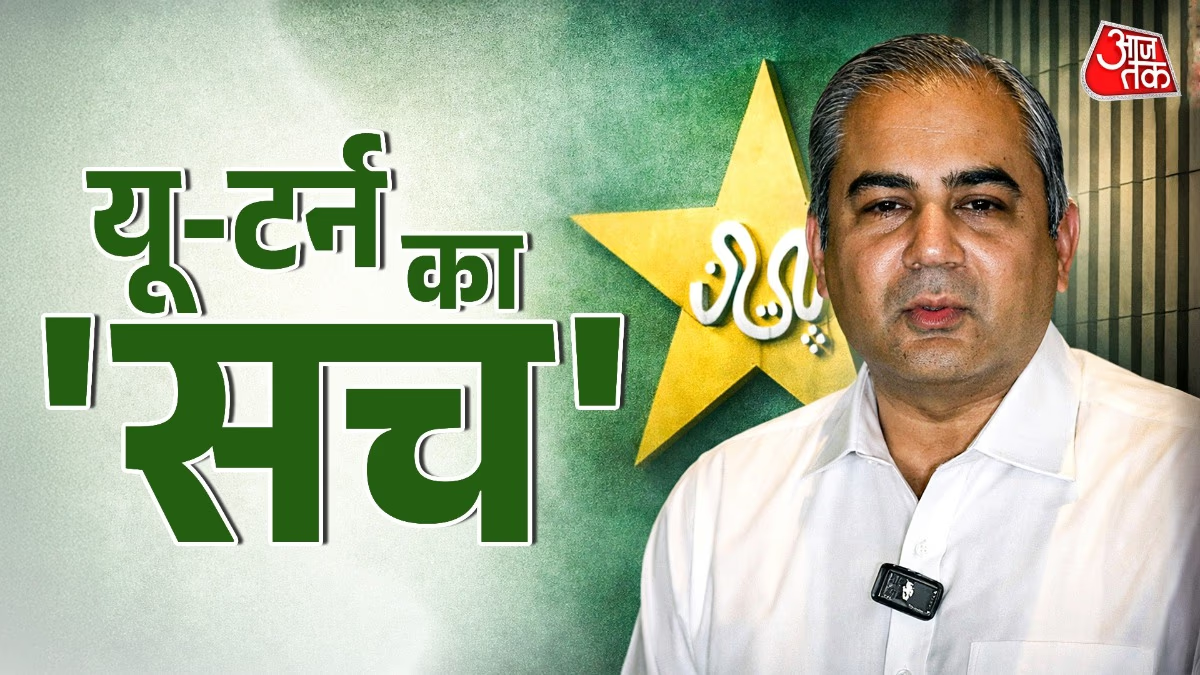
The political and cricketing drama surrounding the India-Pakistan T20 World Cup clash has finally reached its conclusion. Pakistan, stepping back from its strict initial position, confirmed to play the group match against India on February 15. However, behind this outwardly formal decision, lies an equally uneasy story—fronted by the Pakistan Cricket Board (PCB) chairman Mohsin Naqvi.
Initially, the Pakistan government declined to play against India, citing solidarity with Bangladesh, which had been ousted from the tournament by the International Cricket Council (ICC). Following the same line, PCB also talked about boycotting the India match. But with time, as pressure mounted, that very pressure resulted in a U-turn.
What Changed Behind the Scenes?
In recent days, continuous discussions took place between Pakistan, Bangladesh, ICC, and other cricket boards, including the UAE and Sri Lanka. Following these talks, on Monday, Pakistan officially changed its stance.
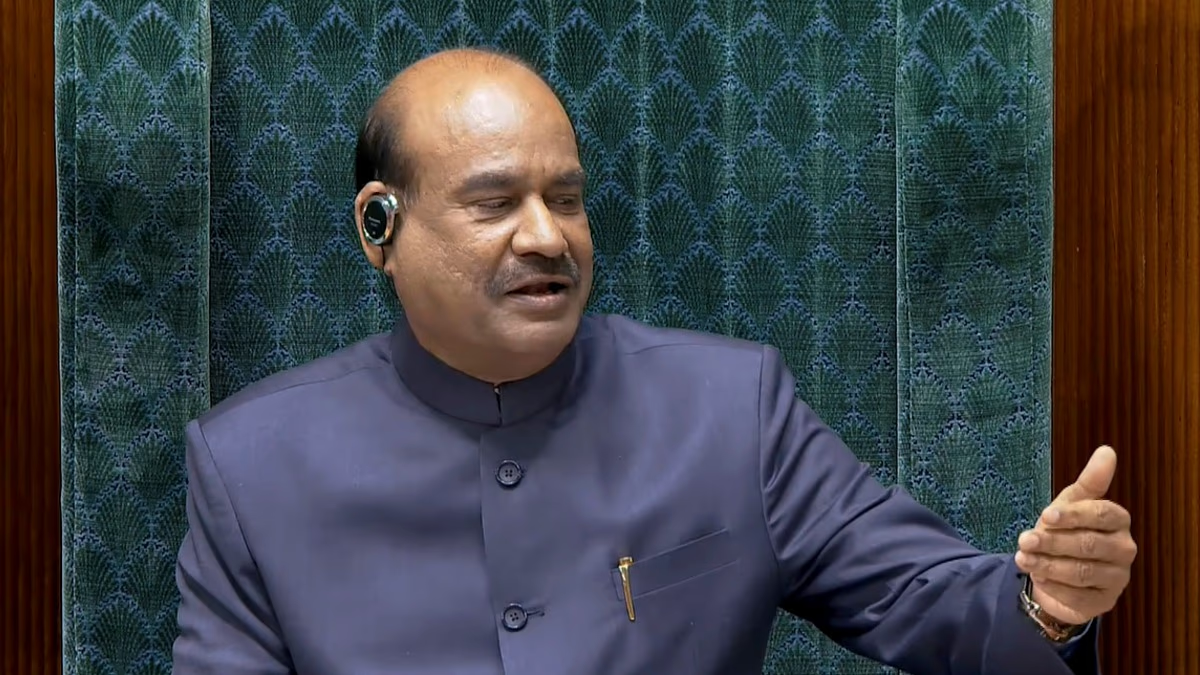
The fascinating part was that just before the official announcement, Mohsin Naqvi faced direct questions at a PSL press conference. In a follow-up interview, he was asked about the 'boycott' and ICC discussions, seeking insider insights. Naqvi's answers almost clarified the script of the U-turn.
- Naqvi said, 'The decision will be made shortly.'
- When asked if good news was expected, he replied, 'We always bring good news.'
- Naqvi added, 'You must have seen Bangladesh's statement. Bangladesh requested Pakistan to play this match, indicating their issues have been resolved, which is why they've made this demand.'
- When asked, 'Did Pakistan gain anything from this controversy?' his response was, 'We took a stand for Bangladesh… we didn't do it for ourselves.'
Naqvi also mentioned that Bangladesh directly requested Pakistan to play, showing their matter with ICC has been settled. However, this statement also raised questions about PCB's entire stance—if nothing was gained, why take such a firm stance?
ICC's Clear Message
After weeks of controversy, ICC issued a statement making it clear that the dignity and commitment of the tournament would not be compromised. ICC stated that all member countries have agreed to play under the tournament's terms and ensure its success.
According to sources, ICC rejected three main demands of PCB, including the demand to restart the bilateral series against India. So, the stern talk of a boycott resulted in almost zero outcomes.
Politics vs. Cricket... And Finally, The Field
The India-Pakistan clash has never been just about cricket. But this time, the confrontation was played more in boardrooms and statements than on the field. Ultimately, international cricket's compulsions and commercial realities made PCB bend.
On February 15, India and Pakistan will face off. The question is not whether the match will happen—it's what Pakistan cricket lost and gained in this entire saga... and at the center of this debate is the PCB Chief Mohsin Naqvi, whose 'didn't do it for ourselves' statement made the whole U-turn even more awkward.