It has been 24 years since the world lost Pakistan's illustrious Qawwali singer, Nusrat Fateh Ali Khan (October 13, 1948 - August 16, 1997). Yet, his majestic qawwalis resonate everywhere, with even today's youth eager to understand and embrace the essence of this legendary artist's music. Although the young generation might bemoan never having seen him perform live, his influence endures. On August 16, 1997, while undergoing treatment in London, Nusrat Fateh Ali Khan passed away, casting a shadow over the music world. His fan following spanned not just Pakistan and India but reached into Western nations, fostered by live shows and memorable tracks adorning Hollywood films and special albums.
Even today, in both Pakistan and India, the conversations about Nusrat Fateh Ali Khan's qawwalis continue, validating his status as the Emperor of Qawwali. His music continues to bring tranquility to ears across various settings, times, and generations. However, beyond his qawwali mastery, as a music composer, he accomplished many remarkable feats that remain unforgettable.
Towards the end of the 80s and the onset of the 90s, Nusrat's influence permeated Asia, and his demand rose among the Indo-Pak communities in Europe and America. This surge in interest paved the way for a growing appreciation of his music and unique voice.
Click here: Nusrat Fateh Ali Khan: A Journey Inspired by Sweets and a Father's Passing, Becoming the 'Emperor of Qawwali'
Michael Brook and Nusrat's Epic Collaboration...
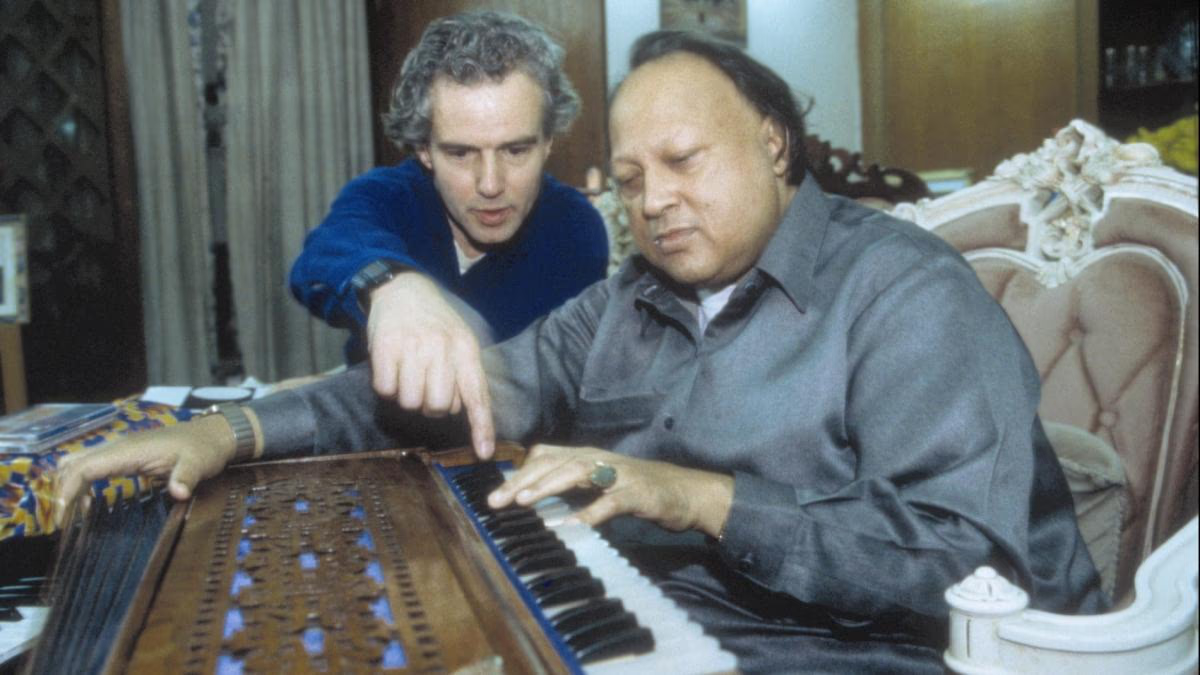
The Canadian guitarist and composer, Michael Brook, experimented with tunes in an album that resonated with Asian music. This collaboration opened a gateway for him to work alongside Nusrat Fateh Ali Khan. Together, this duo crafted the ‘Night Song’ album, which ascended to become a monumental hit of the time and even earned a Grammy nomination. This album remains a revered masterpiece, showcasing their synergy on guitars and harmoniums—a sight available on YouTube.
Besides his collaboration with Michael Brook, Nusrat's music flourished with American and British singers/composers. In the late 80s, Nusrat's Western performances were fueled by musician Peter Gabriel, paving the way for his Hollywood entry.
Acclaimed filmmaker Martin Scorsese's The Last Temptation of Christ (1988) featured Nusrat’s soulful aria, embodying the scene's emotional depth. Another brilliant collaboration was with American singer Eddie Vedder in the film Dead Man Walking with songs like The Face Of Love and The Long Road. Nusrat's music, qawwalis, and arias also feature in films such as Natural Born Killers and Bend It Like Beckham. Explore these wondrous works on YouTube.
Bollywood's connection with Nusrat's legacy...
To introduce the new generation to Nusrat's Bollywood influence, one might cite 'Dhadkan' featuring the iconic songs 'Dulhe Ka Sehra' and 'Mere Rashke Qamar.' Over time, Nusrat contributed directly or indirectly to Bollywood, with tracks featured in films like Bandit Queen, Choti Se Umar, and others such as Love Story 2050 and Kachche Dhaage. Many of his original songs have been adapted in Bollywood, like 'Dum Mast Qalandar' and Anu Malik’s 'Mera Piya Ghar Aaya.'
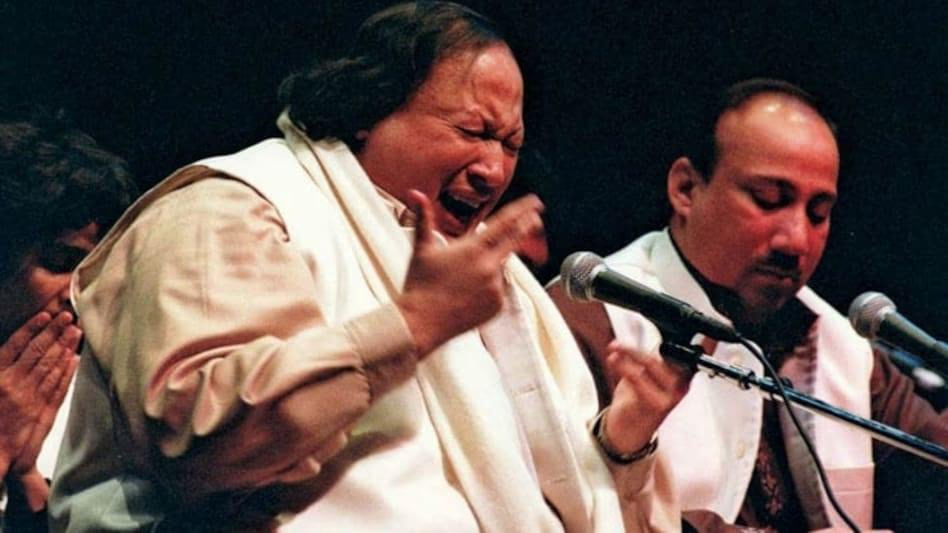
Source: aajtak
For instance, the song 'Haq Ali Maula' was integrated into the 1981 film Nakhuda, and later, Nusrat's composition 'Choti Si Umar' appeared in Shekhar Kapur's Bandit Queen. Beyond these, his tracks graced numerous Bollywood films, including Border and Kachche Dhaage. Furthermore, several Bollywood renditions drew inspiration from Nusrat’s originals, notably 'Tu Cheez Badi Hai Mast' and Anu Malik’s rendition incorporated as 'Mera Piya Ghar Aaya.'

Source: aajtak
Nusrat Fateh Ali Khan: A Journey Inspired by Sweets and a Father's Passing, Becoming the 'Emperor of Qawwali'
A voice transcending borders and generations...