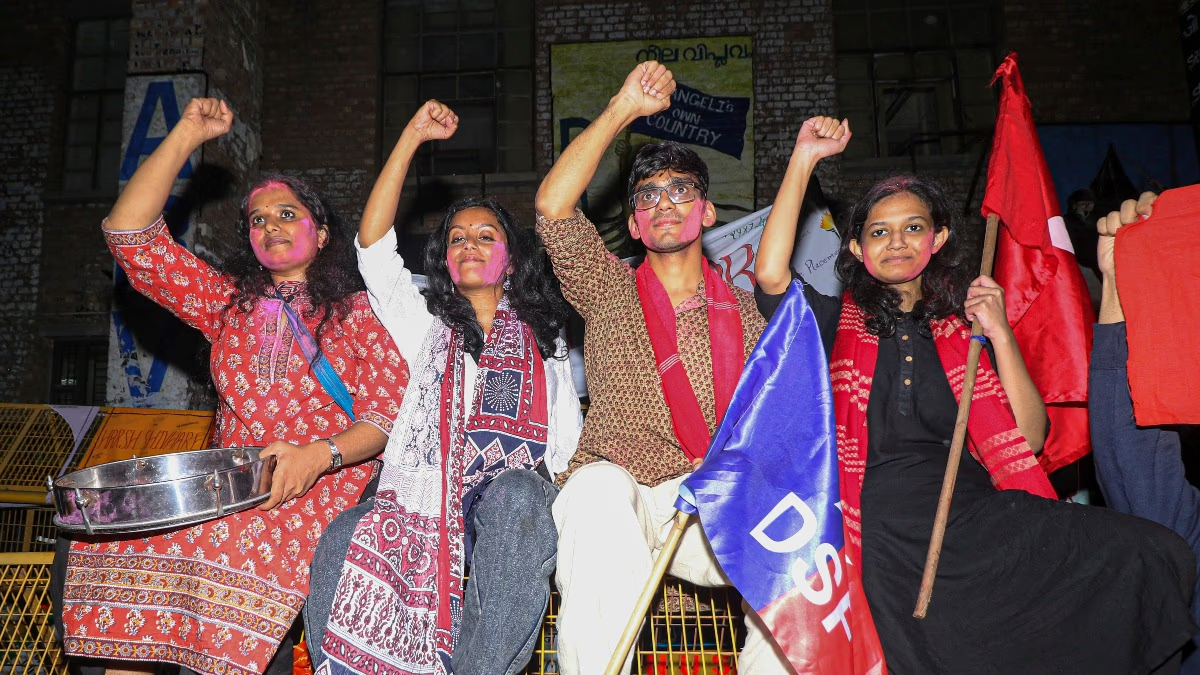
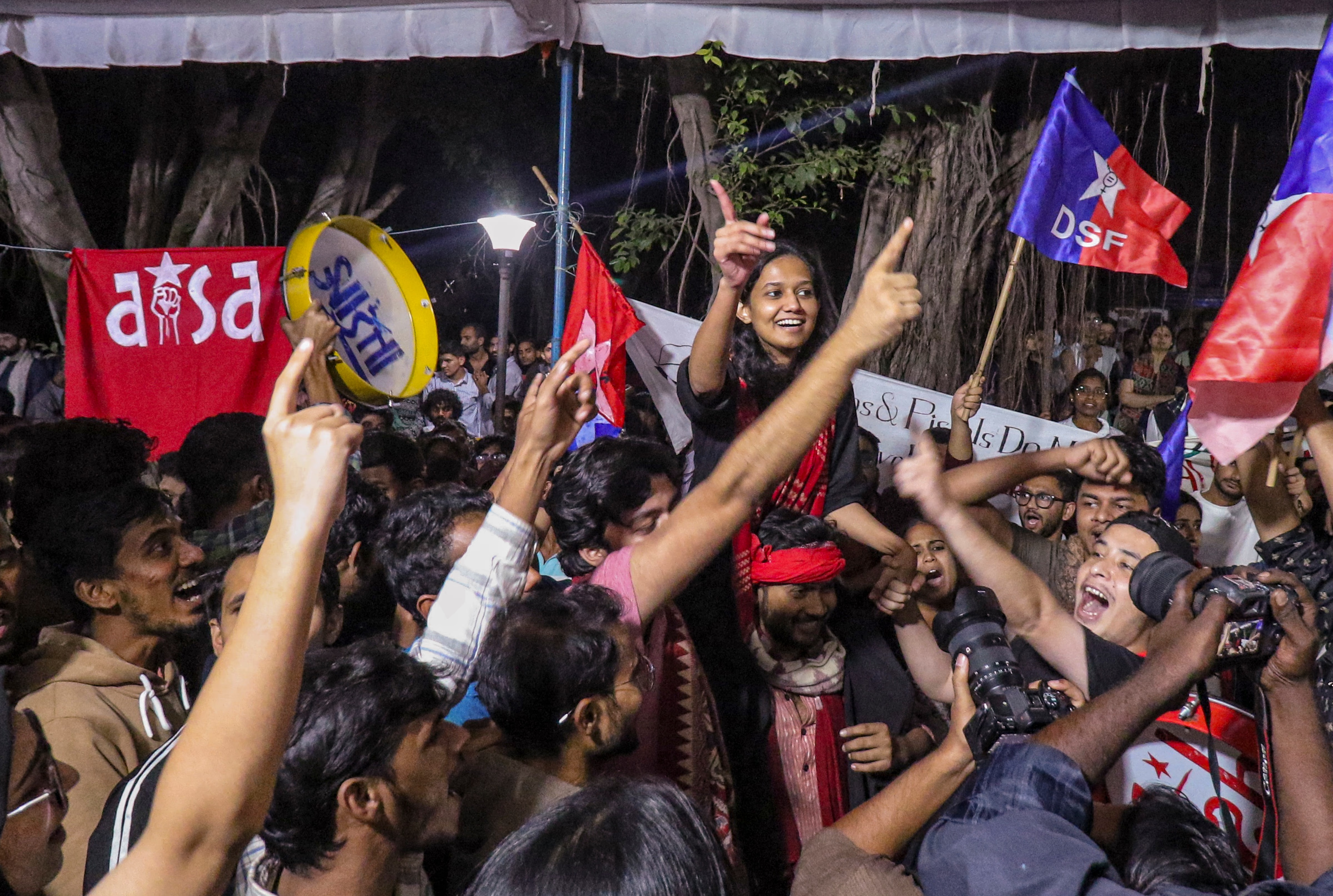
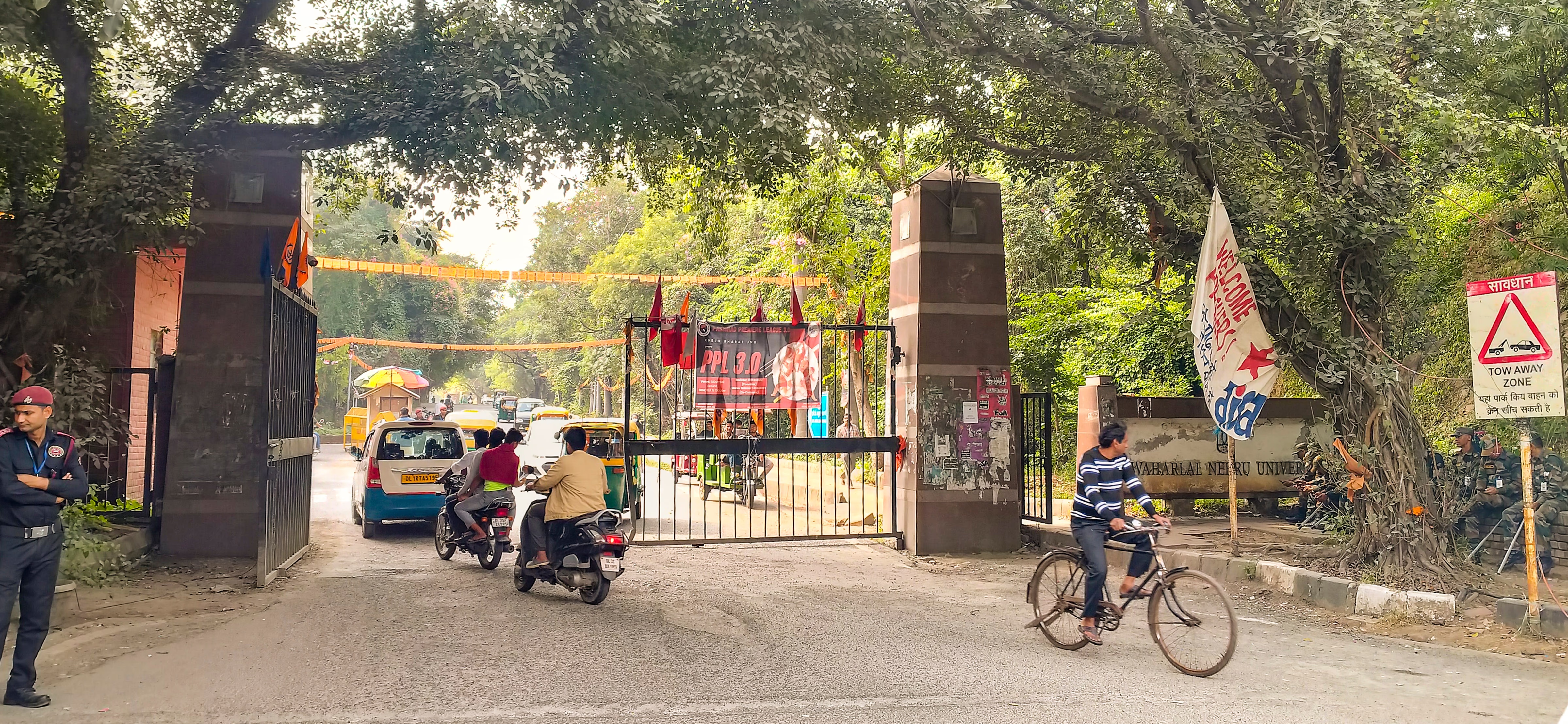
The reverberating chants of 'Lal Salaam' were once again raised high by the students in the prestigious halls of Jawaharlal Nehru University (JNU). On November 6, the 'Left Unity' alliance hoisted their banner high, claiming all four positions in the JNU Students' Union (JNUSU) Central Panel elections. This time, Aditi Mishra leads as President, K. Gopika Babu as Vice President, Sunil Yadav as General Secretary, and Danish Ali as Joint Secretary. The right-wing found no foothold in the Central Panel, affirming the Left's enduring influence in JNU's student politics.
Source: aajtak
The 'Left Unity' coalition consists of the All India Students' Association (AISA), Students' Federation of India (SFI), and the Democratic Students' Front (DSF). This unity was particularly striking after a rift in the previous April student elections, where the ABVP secured a seat due to Left fissures.
JNU has historically been a stronghold of Left ideologies, where various organizations have often stood against one another. Notably, only once has the ABVP won the president's seat in student union history.
JNU was established in April 1969, with its student union (JNUSU) coming into being in September 1971, soon holding its first elections. O.N. Shukla became the first president. By the 1972 elections, V.C. Koshy was elected president.
Between the first elections and 1978, the Students' Federation of India (SFI), affiliated with the Communist Party of India (Marxist), dominated the campus. SFI candidates secured all four central panel positions in 1971, 1972, 1973, 1974, 1975, 1976, 1977, and 1978. The 1972 elections were suspended due to the Bangladesh war.
In 1975-76, D.P. Tripathi became JNUSU president, recognized for his staunch opposition during the Emergency. Quick-witted and sharp, Tripathi became the face of student resistance in the '70s.
In 1978, the SFI struck an electoral deal with the AISF (All India Students Federation, CPI's student wing) to share seats, creating a strong political force from 1978 to 1990. Their coalition saw victory across all four positions in 1981, 1983, 1984, 1986, 1987, and 1988.
Read More:
The first major crack in Left Unity appeared in 1993, leading to the rise of the All India Students' Association (AISA), which separated from the SFI-AISF alliance to contest independently. AISA, aligned with the CPI (Marxist-Leninist) Liberation, made history in 1996 by winning the presidency for the first time—marking the first presidential win without Left Unity. Previously, in 1993 and 1994, AISA had secured the General Secretary position. Left Unity reconciled in 1997, reclaiming all four seats, continuing their stronghold at JNU.
The RSS-affiliated student organization ABVP emerged in the late 1980s, securing its first Central Panel position in 1991 as Joint Secretary. Its initial landmark victory occurred in 1996, winning Vice President, General Secretary, and Joint Secretary posts, and narrowly missing the presidency by four votes.
In 2000, ABVP's Sandeep Mahapatra made history by overcoming the odds to claim the presidency. Subsequently, Left-wing student leaders have consistently held the presidency.
Source: aajtak
In 2015, the Left was dealt a rare blow as ABVP's Saurabh Sharma ended a 14-year drought by winning the Joint Secretary post. Yet, that year still saw Left leaders like Kanhaiya Kumar (President), Shehla Rashid (Vice President), and Rama Naga (General Secretary) assume key positions.
United, SFI, AISA, DSF, and AISF formed 'United Left.' Since then, excluding one election, United Left has consistently secured all four Central Panel positions. Vaibhav Meena revived the organization's presence by winning the Joint Secretary seat in the last election after a decade-long absence.
Read More:
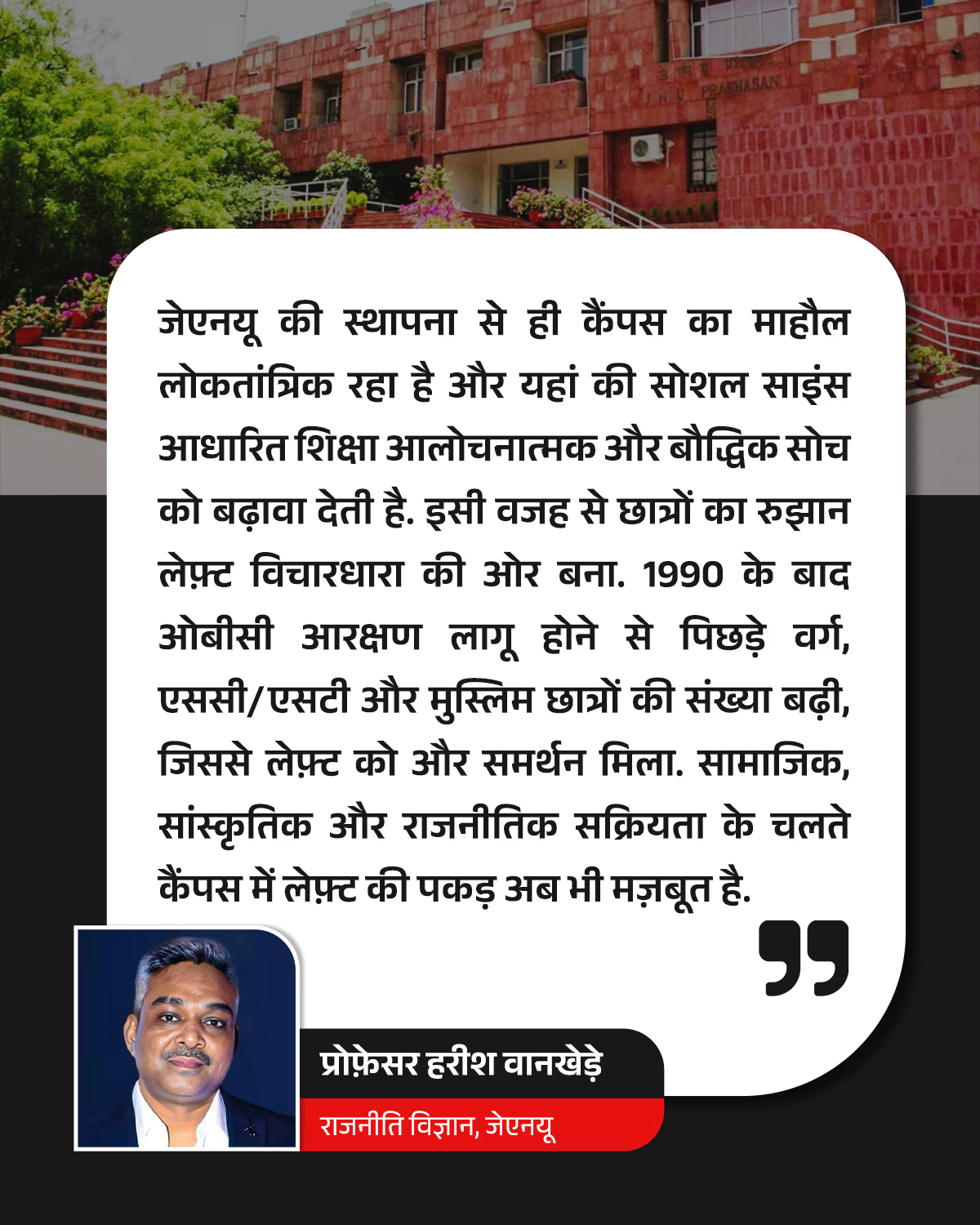
Professor Harish Wankhede from the Department of Political Science at JNU reflects in an interview with aajtak.in, "From the university’s foundation, JNU has thrived on a democratic atmosphere. As a social science university, it imparts an education focused on critical thinking, global perspectives, and intellectual rigour. This makes it easier for students to resonate with leftist ideologies, fostering a deep connection. Consequently, students have consistently supported the Left from the onset till today."
Source: aajtak
Discussing other factors, Professor Harish Wankhede further explains, "JNU attracts students from lower-middle-class and underprivileged backgrounds, whose political concerns align with Left ideologies, thus garnering support. After OBC reservations were implemented in 1990, OBC, SC/ST, and Muslim student presence surged. This demographic heavily supports Left ideologies."
He elaborates that leftist organizations operate year-round, hosting numerous social, political, and cultural events that engage students effectively, leaving Left strongholds largely unchallenged.
Source: aajtak
'Half Strong Left, Half ABVP...'
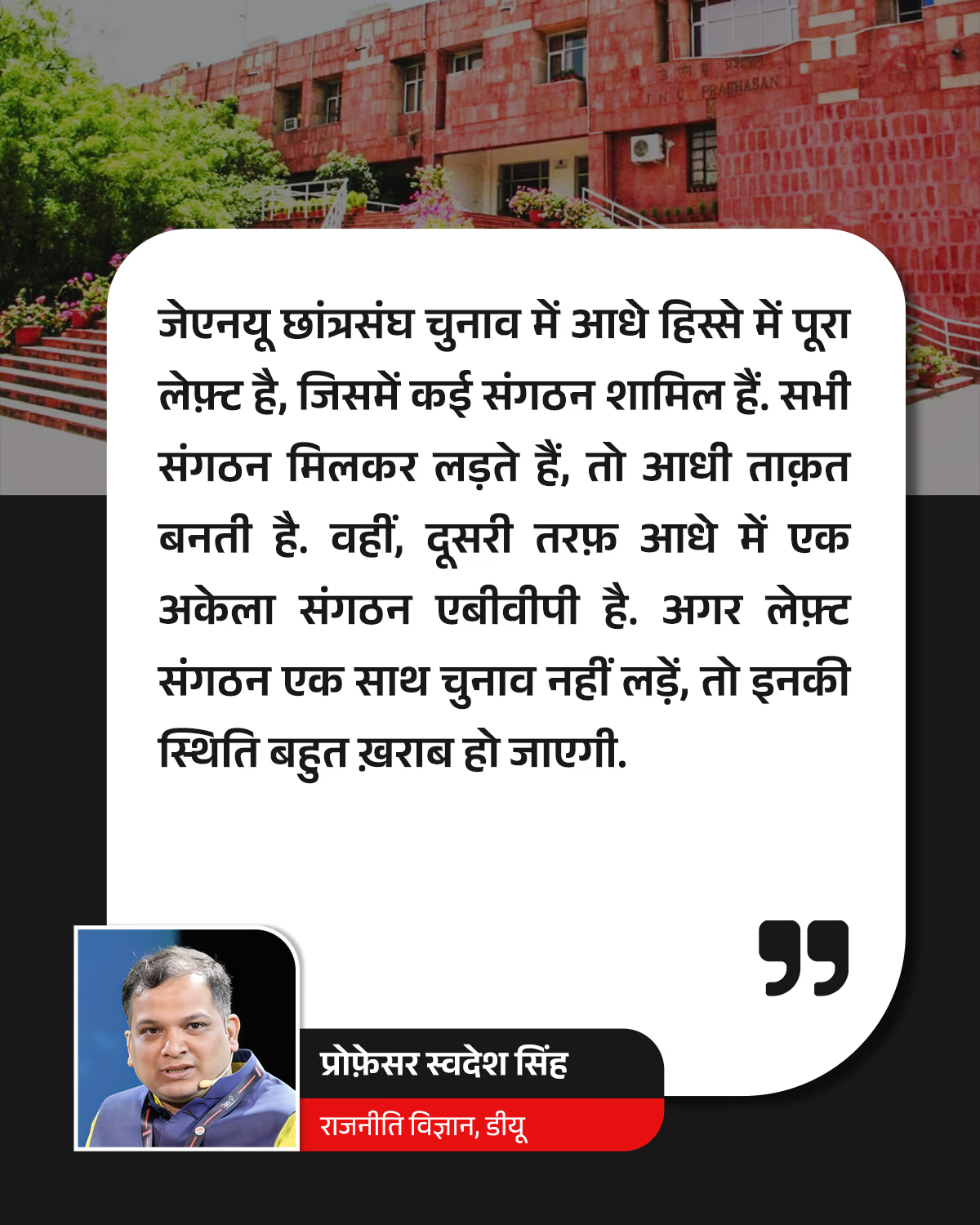
Professor Swadesh Singh from Delhi University, an expert in right-wing politics, observes, "In JNU elections, where half comprises multiple Left organizations collectively making up 'Left Unity,' the remaining half is singularly represented by ABVP."
According to Professor Swadesh Singh, during elections, all communist student organizations unite under 'Left Unity,' preventing vote splits and ensuring victory. Without a united front, their situation would drastically differ.
Read More:
'To Claim a Complete Left Dominance Is an Overstatement...'
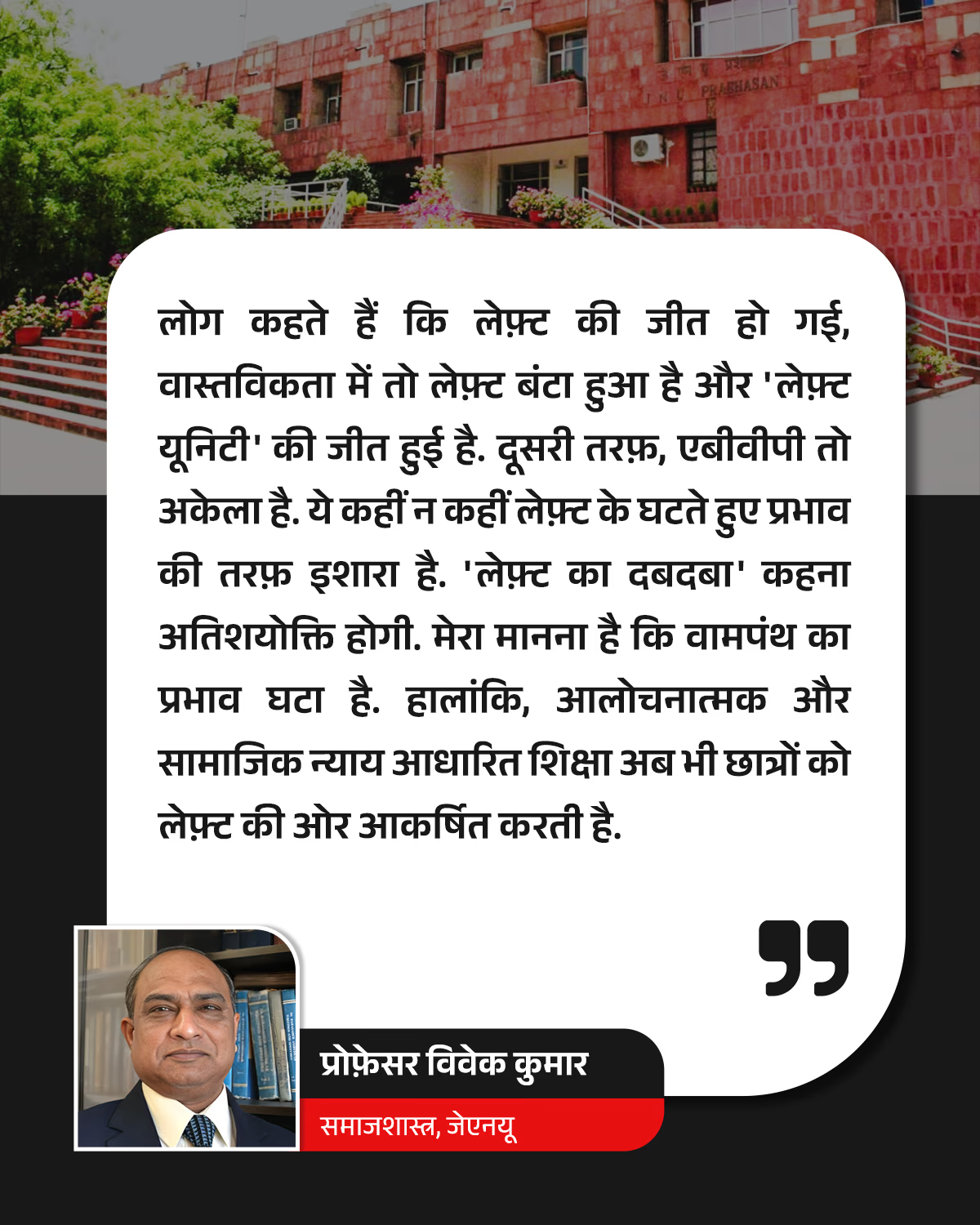
In the view of Professor Vivek Kumar from JNU's Department of Sociology, "All communist organizations cannot be generalized as a single left entity. Post-Mandal Commission, SFI and AISF have formed alliances due to a weakened Left. Yet, ABVP has remained solitary, hence it's inaccurate to claim Left's total control over JNU student elections. Though divided, the Left competes against a single right force, ABVP. Analyzing combined votes, Right seems resilient."
Source: aajtak
Professor Vivek Kumar continues, "Current JNU politics suggests Left appears victorious, but realistically it's divided with 'Left Unity' prevailing. Conversely, ABVP stands alone, signifying diminished Left influence. NSUI and BAPSA remain separate, with fragmented support for social justice causes. The reality is Left strength isn't increasing. The influence of leaders like Kanhaiya Kumar has waned. Declaring the Left's dominance is hyperbolic and misrepresents the truth."
Read More:
Discussing leftist politics within JNU, Professor Vivek highlights the institution's education system's focus on critical inquiry, fostering questioning, and a scientific outlook, which resonates with students interested in social justice and attracts them to left ideology.
Source: aajtak
'Progressive and Questioning Minds...'
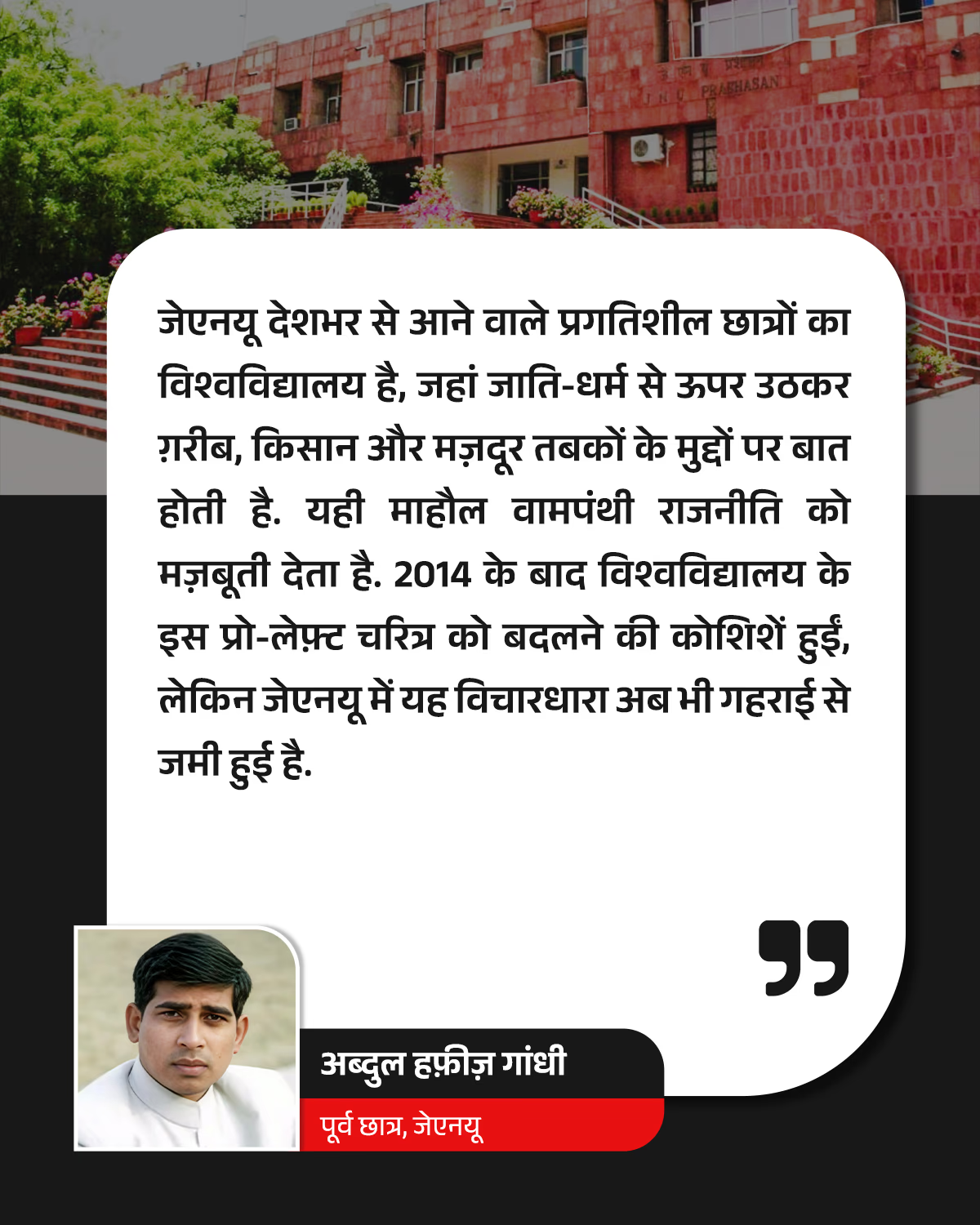
JNU alumni and expert on Left politics, Abdul Hafeez Gandhi, states, "JNU is a unique institution attracting individuals from every corner of India who are progressive and do not let caste or religion interfere. Their mission is advocating for the marginalized, the poor, and the labor class. In JNU, a prevailing culture exists to support the farmer, laborer, and impoverished, making Leftist influence predominant."
He adds that post-2014, government efforts aimed at shifting JNU's pro-Left character and silencing its critical voice, where questions to the government were customary. Although these efforts are temporally effective, JNU's intrinsic pro-Left nature prevails, making such ideological shifts challenging.