
Scientists have made a remarkable discovery. Bacteria found in the gut of the Japanese tree frog (Dryophytes japonicus) have shown tremendous effectiveness in combating cancer. In trials conducted on mice, a specific bacteria completely eradicated tumors with no severe side effects.
Frogs, lizards, and other amphibians and reptiles rarely suffer from cancer. Researchers at the Japan Advanced Institute of Science and Technology hypothesized that these gut bacteria might have beneficial effects when transferred to mice.
Check this out:
In their research, they selected 45 different bacteria from frogs, newts, and lizards. Among them, nine exhibited good cancer-fighting capabilities, with the bacteria Ewingella americana from the Japanese frog proving most effective.
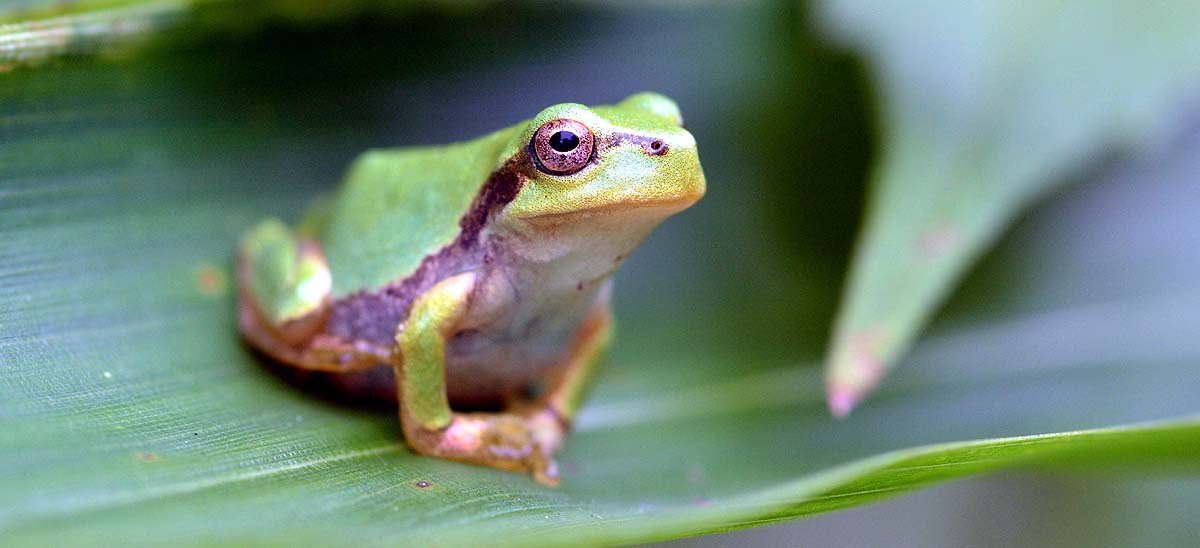
Source: aajtak
Just one dose led to the complete disappearance of tumors in mice.
Even after reintroducing cancer cells 30 days later, tumors did not form in the following month.
This bacteria operates in two ways:
Directly attacks tumors.
Strengthens the body's immune system – activating T cells, B cells, and neutrophils.
Tumors are often low in oxygen, rendering chemotherapy less effective. Yet, this bacteria thrives in such low-oxygen environments.
Discover more:
In mice, the bacteria quickly cleared from the bloodstream.
It proved more effective than the existing chemo drug, doxorubicin.
No long-term harm occurred, nor did it impact healthy organs.
Scientists suggested this bacteria might be a safe candidate for clinical trials.
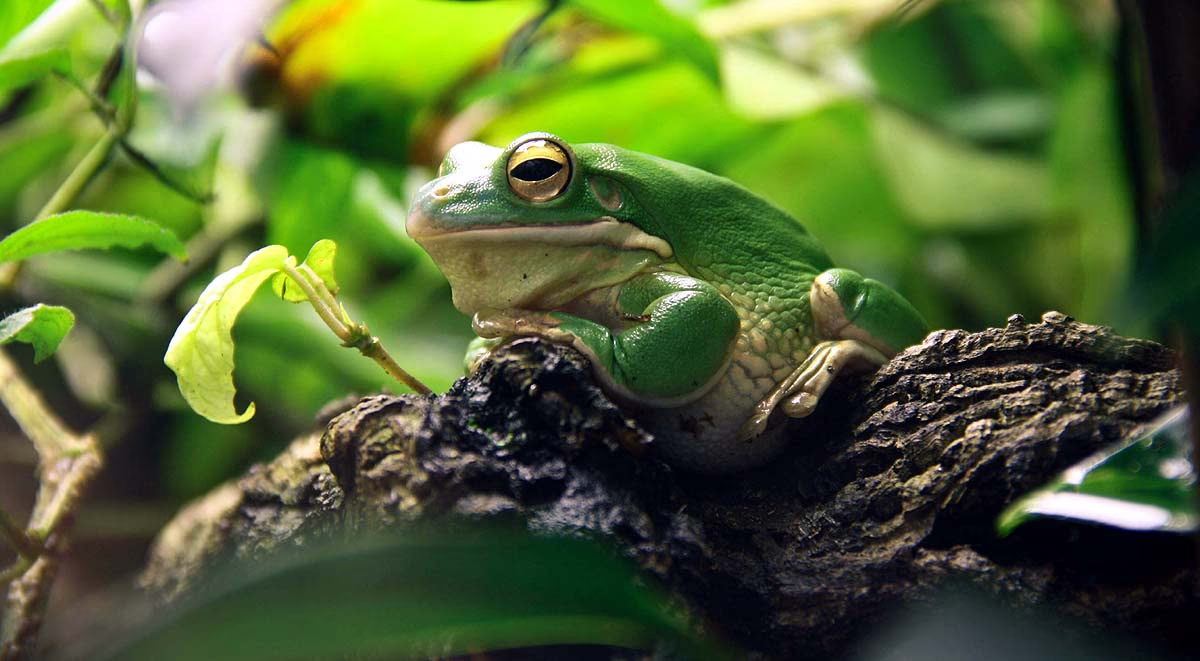
Source: aajtak
This discovery has so far been limited to mice. Further testing is required to ascertain its effectiveness in humans. Researchers now aim to test it against various cancer types, assess its interactions with other drugs, and explore methods for better drug delivery.
Safety remains the primary concern, as Ewingella americana might also cause infections in humans necessitating careful handling during clinical trials. Notably, a bacterial therapy is already in use for treating bladder cancer. Creatures like frogs could potentially introduce groundbreaking cancer medications.
Read more:
Scientists underscore the abundance of hidden medicines within nature's biodiversity. Preserving it is crucial for discovering new drugs. This research, published in the '
' journal, ignites fresh hope for cancer patients.