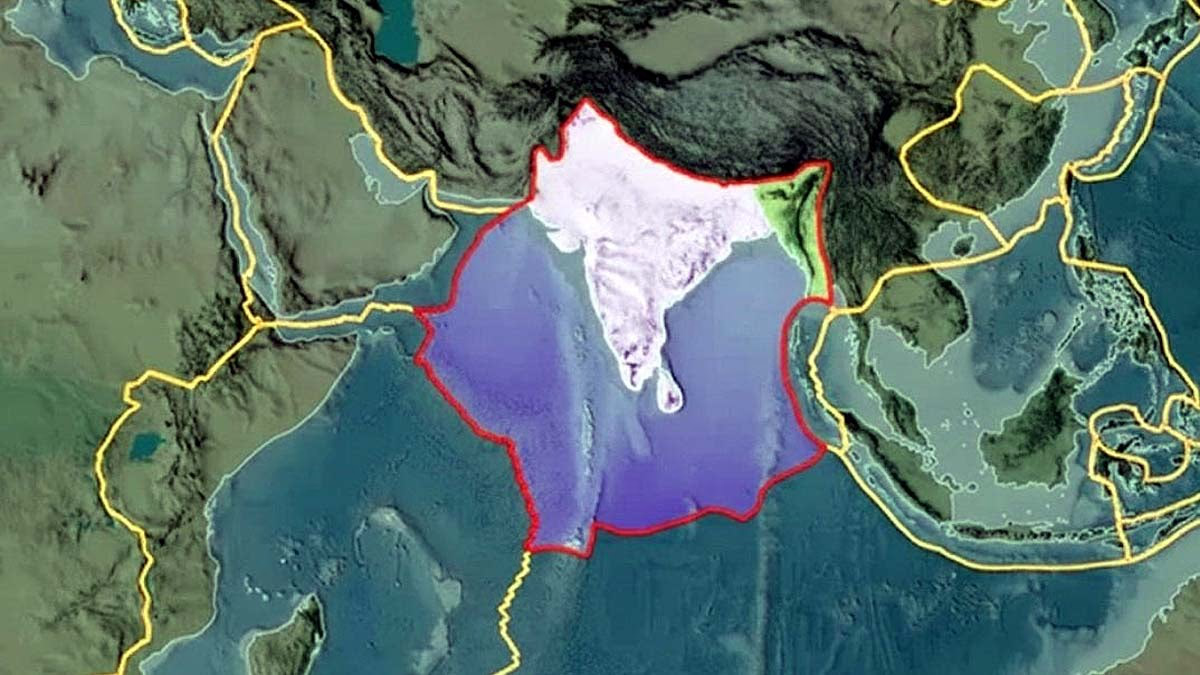
The Indian tectonic plate, which supports the entirety of India, is splitting into two sections. Scientists have discovered that its dense lower part is separating and descending into the Earth's mantle. This process, known as 'delamination', could alter earthquake patterns in the Himalayan region, challenging long-standing beliefs in Earth science.
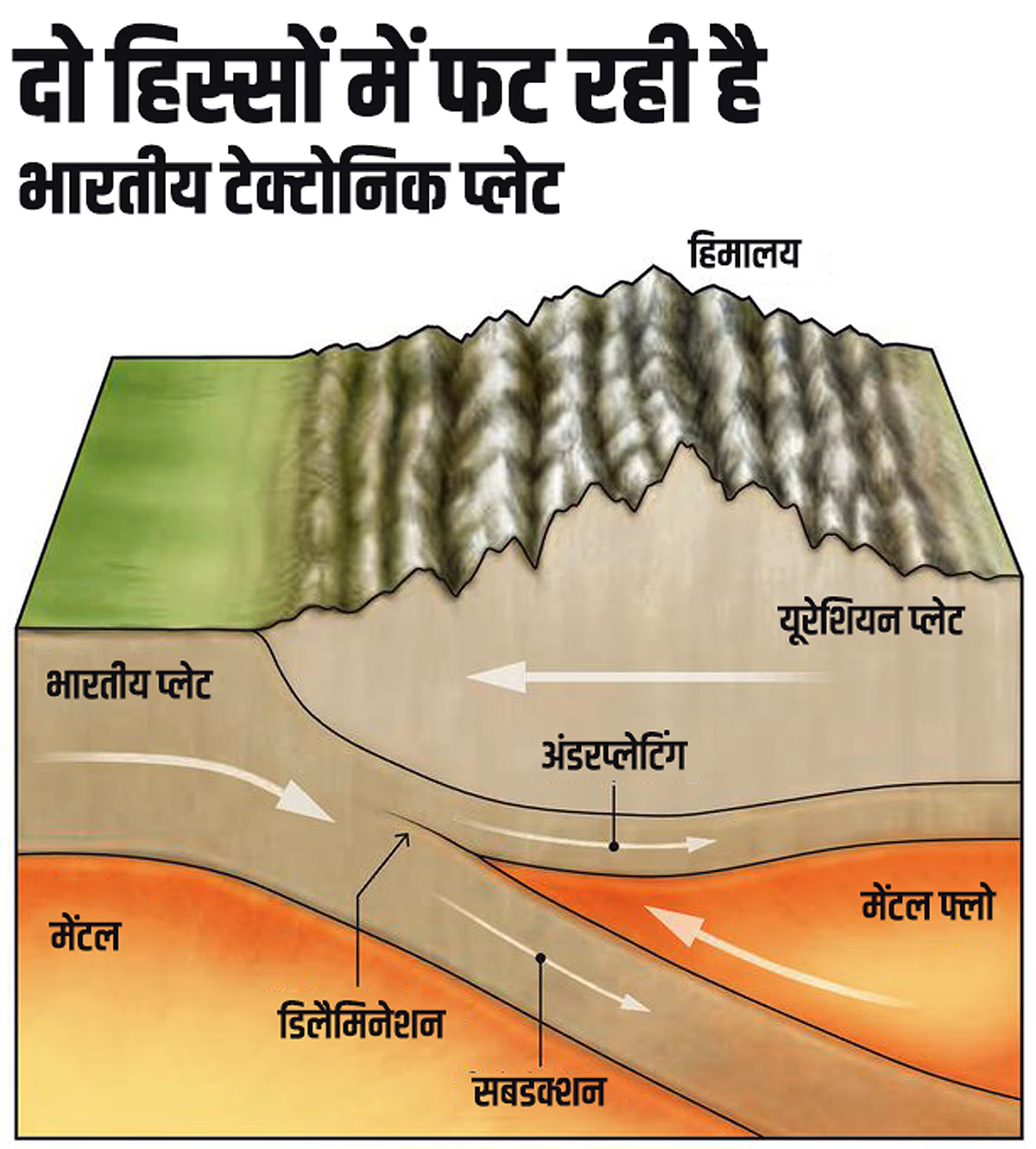
The collision between the Indian and Eurasian plates began around 60 million years ago, forming the Himalayan range. Initially, scientists believed the Indian plate was entirely sliding beneath the Eurasian plate. However, recent research indicates that the plate isn't homogeneous. The lower, denser, and heavier section beneath Tibet is detaching from the upper portion, submerging into the mantle, while the lighter upper half continues to move forward.
Read also: No New Mining Permits in Aravalli, Conservation Area to Expand Amid Controversy - Major Decision by the Center
Scientists analyzed seismic waves and studied helium isotopes from hot springs in Tibet to probe this phenomenon. Helium-3 gas, originating from the mantle, indicates substantial fracturing of the plate. Hot mantle rocks are surging upwards. This study, conducted by Stanford University's geophysicist Simon Klemperer and his team, was presented at the American Geophysical Union (AGU) meeting.
Source: aajtak
According to Utrecht University's geodynamicist Douwe van Hinsbergen, this is an unprecedented discovery as continents were not thought to behave this way. It fundamentally alters our core understanding of Earth science. The process is primarily taking place beneath eastern Himalayas and Tibet, potentially associated with deep fissures like the Kunlun-Sangri Rift.
The Himalayan region is already earthquake-prone. The ongoing delamination could create new stress points, leading to more frequent and intense earthquakes. Simon Klemperer warned that the splitting and sinking of the plate could introduce novel pressures in Earth's upper layer, potentially triggering significant earthquakes, particularly around places like the Kunlun-Sangri Rift on the Tibetan Plateau.
Read also: Over 27,000 Illegal Mining Cases in 5 Years - The Truth About Aravalli
Source: aajtak
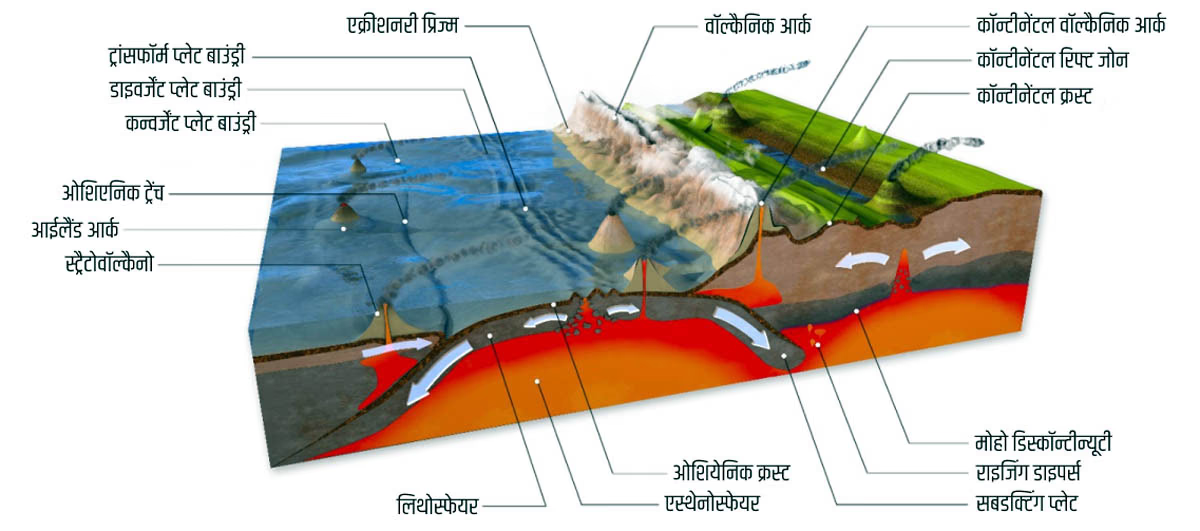
Tectonic plates, like Earth's crust fragments, float on magma. India's plate drifts northward by 5 centimeters each year. Instead of subduction (sinking), it's undergoing rifting (breaking) beneath Tibet.
How Discovered? Earthquake waves alter traveling through the plate. Scientists used GPS and satellite images to observe the raising of Tibet.
Why Happening? Increased pressure on the plate. The upper part continues to elevate the Himalayas (by 5 mm annually), yet the lower part remains immobile.
What's Next? New plates will form due to this fracturing, potentially elevating or flattening the Himalayas over time. The process is slow, but the impact is long-lasting.
Read also: 29 Districts, 50 Million People, 20 Sanctuaries - The Aravalli’s Lifeline...
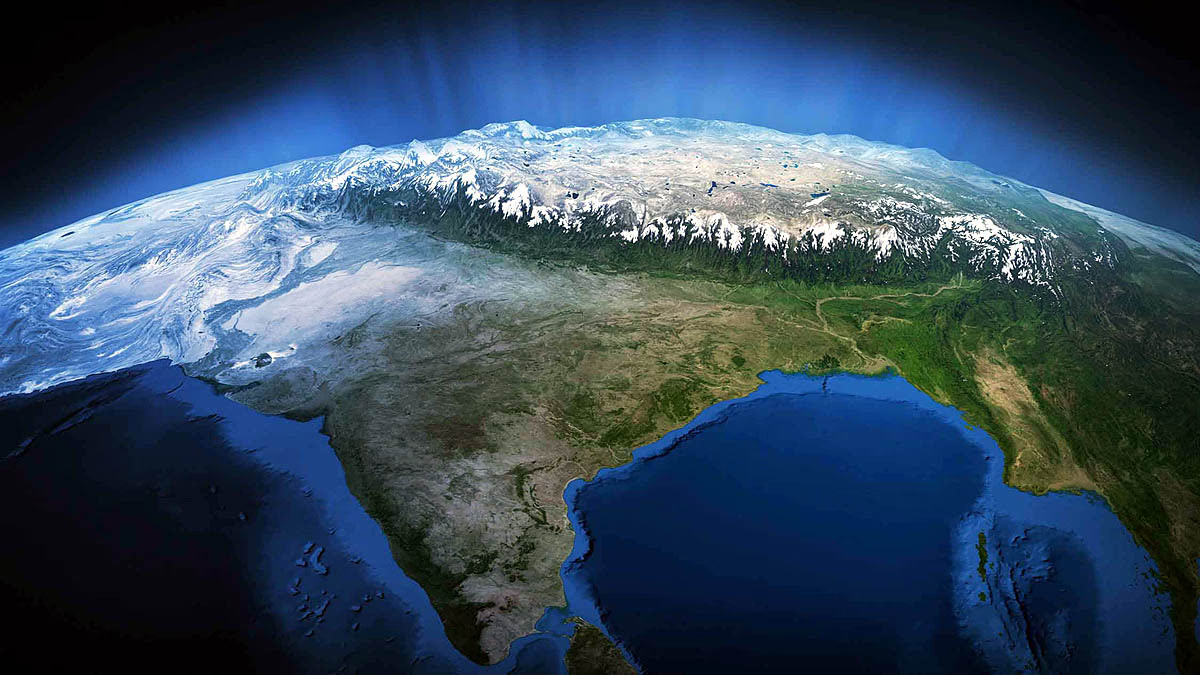
Earthquake Threat: 80% of the world's major quakes occur in the Himalayan belt. Millions of homes in India, Nepal, and China could be affected. The 2015 Nepal earthquake claimed 9,000 lives.
Volcanoes and Floods: Rising magma could spawn new volcanoes. Glacier melt may lead to floods in Ganges-Brahmaputra rivers.
Human Impact: Over 100 million people reside in the Himalaya region. Tremors could reach Delhi-NCR. Economic damages could reach 1 trillion rupees.
Environment: Himalayan biodiversity is at risk. Climate change will accelerate.
Source: aajtak
This discovery challenges the old theories about tectonic plates. It was believed continental plates don't easily descend into the mantle, but this new understanding reveals their complex behaviors. It aids in comprehending how the heights of the Himalayas and Tibetan plates have increased.
Monash University's geodynamicist Fabio Capitanio noted that these are preliminary findings. More data is essential. However, if substantiated, similar processes could be occurring in other mountain ranges like the Andes or Rocky Mountains. It may enhance future earthquake predictions and provide new insights into Earth's internal activities.
Read also: Aravalli: Ancient History Now Faces an Existential Crisis
Scientists are now seeking similar processes globally. This finding underscores Earth's dynamic nature and the secrets still hidden within its layers.
This study serves as a reminder that Earth's ever-changing landscape requires adaptability. Preparing for earthquakes and constructing resilient buildings is increasingly vital in affected areas.