Today, a luxurious skyscraper named
'The Azure'
stands tall in Dhaka's upscale area of Banani. Made of glass and steel, it is visible from afar. However, nearly two decades ago, the same land housed Hawa Bhawan. This building was not a symbol of modernity but a hub of power and terror.
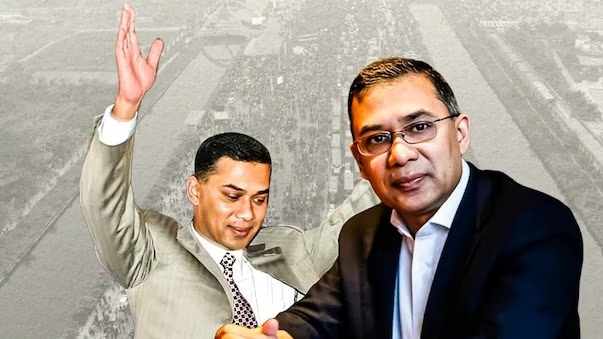
Hawa Bhawan served as the controversial political office of the Bangladesh Nationalist Party's (BNP) leader, known as the 'Dark Prince', Tarique Rahman. Between 2001 and 2006, during BNP's governance, Hawa Bhawan functioned as an alternative power center in Bangladesh. Situated just six kilometers from the Presidential Palace (Ganabhawan), it was alleged that Tarique Rahman exercised actual control from Hawa Bhawan.
Diplomats, intelligence officers, journalists, and even BNP leaders acknowledged that real government decisions were made at Hawa Bhawan. The notorious 2004 Dhaka grenade attack, aimed at assassinating then Awami League leader Sheikh Hasina, was plotted here.
Reports suggested that Bangladesh's government operations were run from Hawa Bhawan. Major plans and schemes originated from this building. Early in 2004, aided by intelligence and government officials, a shipment of arms was smuggled into India for the separatist organization ULFA via the Chittagong port. Files moved faster than in the Prime Minister's Office. Businessmen lined up for favors. Political opponents were managed. State institutions were manipulated. After nearly 17 years, former PM Khaleda Zia and former President Ziaur Rahman's son, Tarique Rahman, returned to Bangladesh on Thursday.
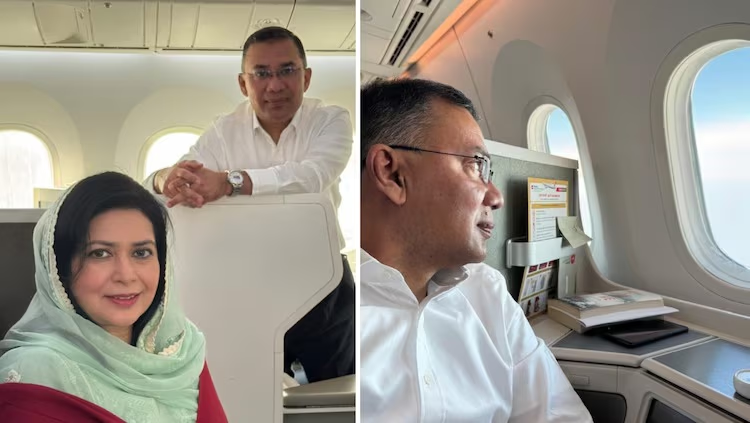
Source: aajtak
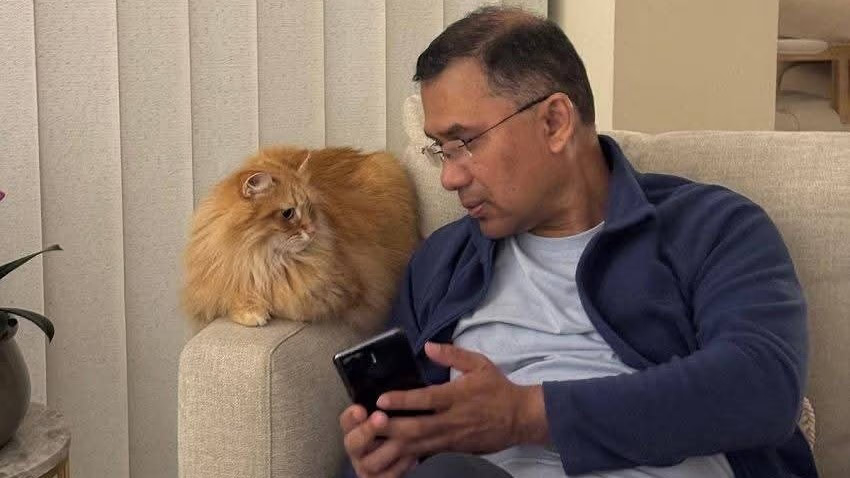
The 60-year-old Tarique Rahman was managing as BNP's Executive Chairman from London. His mother, Khaleda Zia, has been hospitalized since November 23.
Today, the 'Dark Prince's' Hawa Bhawan no longer stands. Yet, the shadow of unchecked power, corruption, and violence lingers. Experts ponder whether this marks a chapter of redemption or repetition in Tarique Rahman's political journey.
But where did the 'Dark Prince' moniker come from?
The term was not coined by Bangladeshi media or the Awami League. It originated from the US. In December 2005, Acting US Ambassador in Dhaka, Judith A. Chammas, referred to Tarique as the “Dark Prince,” highlighting his lineage, political cunning, and wealth amassed from Hawa Bhawan's business dealings.
Former US Ambassador James F. Moriarty described him as symbolic of Bangladesh’s kleptocracy and violent politics. According to WikiLeaks (2011), he accused Tarique of openly demanding bribes in exchange for government contracts, appointments, and legal relief, recommending barring his entry into the US. These public cables helped solidify the international image of the Hawa Bhawan era.
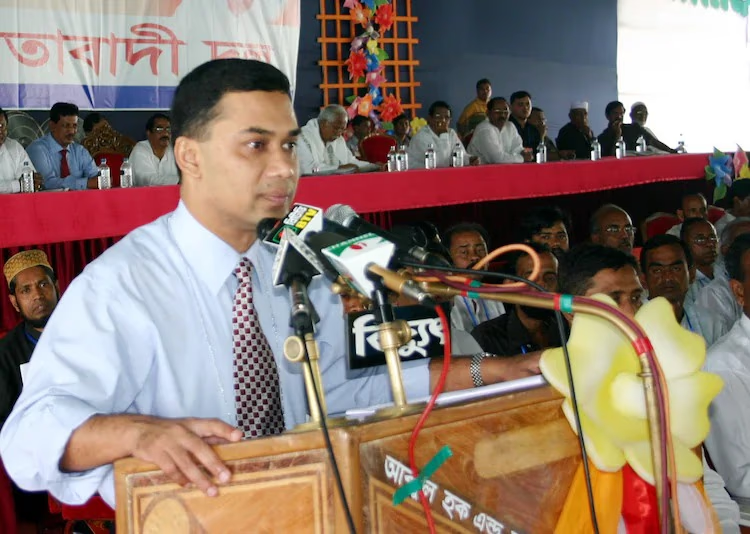
In 2005, Transparency International labeled Bangladesh as the most corrupt country for five consecutive years. The World Bank cited corruption when canceling funding for three major development projects. According to the US Embassy, Tarique amassed hundreds of millions through extortion, bribery, and commissions.
Source: aajtak
Siemens was accused of paying a 2% commission on all deals to Tarique and his brother Arafat Rahman Koko. Chinese company Harbin reportedly paid $750,000 for an 80 MW power project. Monem Construction allegedly paid $450,000. Accusations included accepting 2.1 crore Taka for intervening in a businessman's son’s murder case. Funds from the Zia Orphanage Trust were reportedly used for land purchases and election campaigns.
Kamal Uddin Siddiqui, then Principal Secretary in the PMO, dubbed Tarique a
wind tunnel
. He described Khaleda Zia's protection of her corrupt son as her major political failure. By 2006, the cabinet expanded to 60 ministers. US Ambassador Patricia Butenis termed it a gang of Tarique's indebted followers.
During this period, US and Bangladeshi officials reported terrorist organizations receiving political protection. PMO Secretary Siddiqui disclosed Tarique's ties with JMB and JMJB, noting terrorist releases following Hawa Bhawan phone calls.
Was Tarique linked to the grenade attack?
Mufti Abdul Hannan, leader of Harakat-ul-Jihad-al-Islami Bangladesh (HuJI-B), testified that at Hawa Bhawan—Tarique Rahman instructed full support for the 2004 grenade attack plot. On August 21, 2004, Sheikh Hasina was targeted, resulting in the deaths of 24 Awami League members.
Sheikh Hasina's son, Sajeeb Wazed Joy, claimed Tarique ordered the assassination during the August 14 meeting at Hawa Bhawan. Subsequent charges included evidence tampering, aiding assailants’ escape, and withholding help from the injured. Later investigations identified Hawa Bhawan as the plot's origin. BNP-Jamaat rule witnessed widespread attacks on Hindus, Ahmadiyas, journalists, women, and tribal people.
Source: aajtak
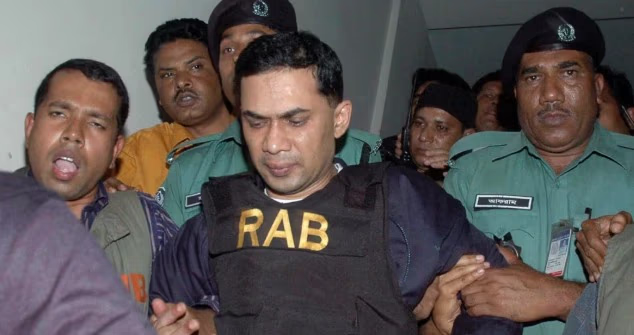
Post-2001 elections uncovered BNP-Jamaat leader involvement in over 18,000 violent incidents. After Sheikh Hasina regained power in 2009, Hawa Bhawan was demolished. Tarique faced 84 cases, arrested before his 2008 London departure with political restrictions as parole conditions. BNP claimed these charges were fabricated as political retribution.
Under Sheikh Hasina's rule, Tarique faced sentences for corruption, money laundering, and the grenade attack. Yet, in 2024, following the Awami League government's fall, Bangladeshi courts annulled all convictions, acquitting Tarique Rahman, paving the way for his political resurgence. Through video conferencing, Tarique continued addressing BNP leaders and activists over these years.
On Thursday, Tarique Rahman returned to a politically unstable Bangladesh, just weeks ahead of February elections where BNP is seen as a frontrunner. However, new challenges arise. Parties like Jamaat-e-Islami and the Muhammad Yunus-backed National Citizens Party are swiftly emerging, and though not openly supported, Islamist groups appear subtly endorsed.