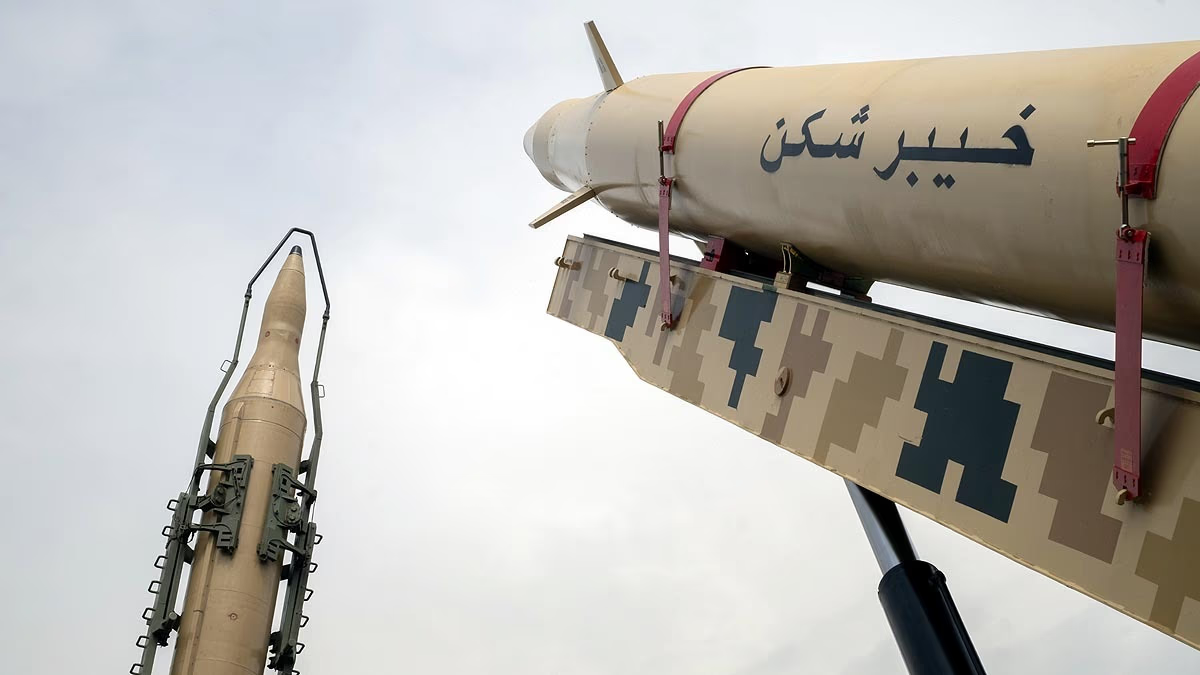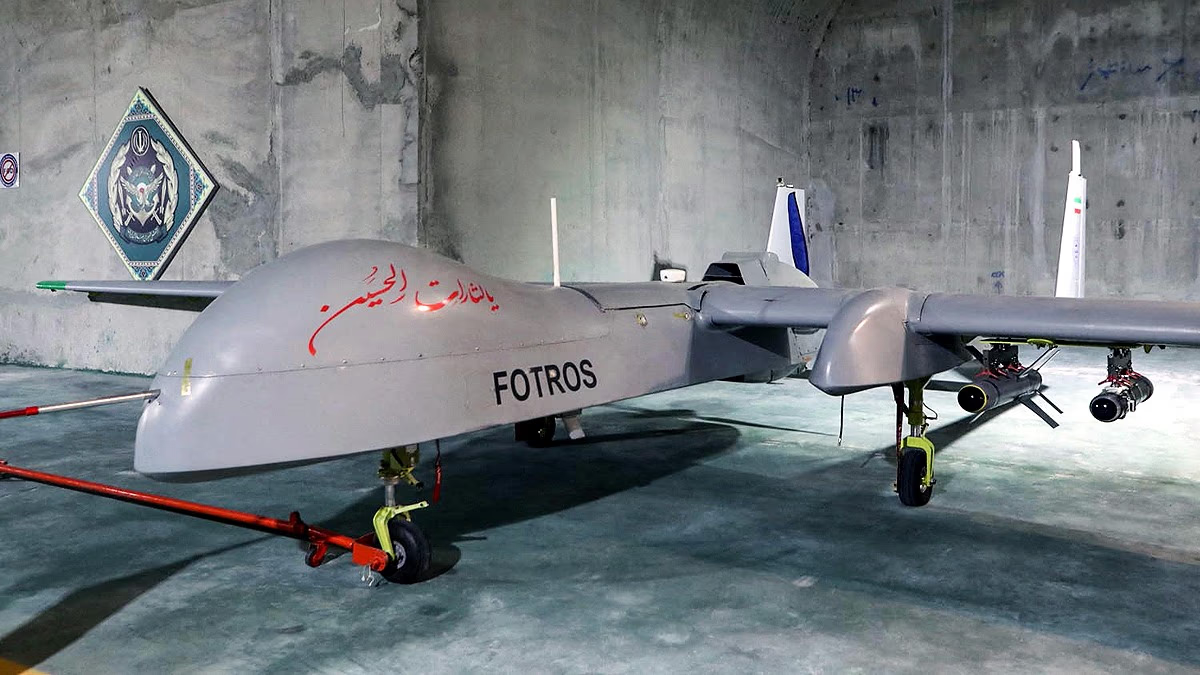
Over the years, Iran's military, specifically the Islamic Revolutionary Guard Corps (IRGC), has established numerous underground bases. Referred to as 'Missile Cities,' these fortifications are deeply embedded within the mountains and underground. They house drones like the Shahed-136, ballistic and cruise missiles, and various other armaments.
These bases are engineered to withstand aerial assaults. Though targeted under Operation Epic Fury, many remained intact. Iran claims these complexes are dispersed nationwide, reaching depths of up to 500 meters, though their exact numbers and locations remain undisclosed.
Explore More: From B2 Bombers to Reaper Drones... These 23 Weapons Have Mobilized Against Iran
Where Are Iran's Key Underground Drone and Missile Bases?
Iran has on occasion showcased these bases on state television. Some recognized sites include...
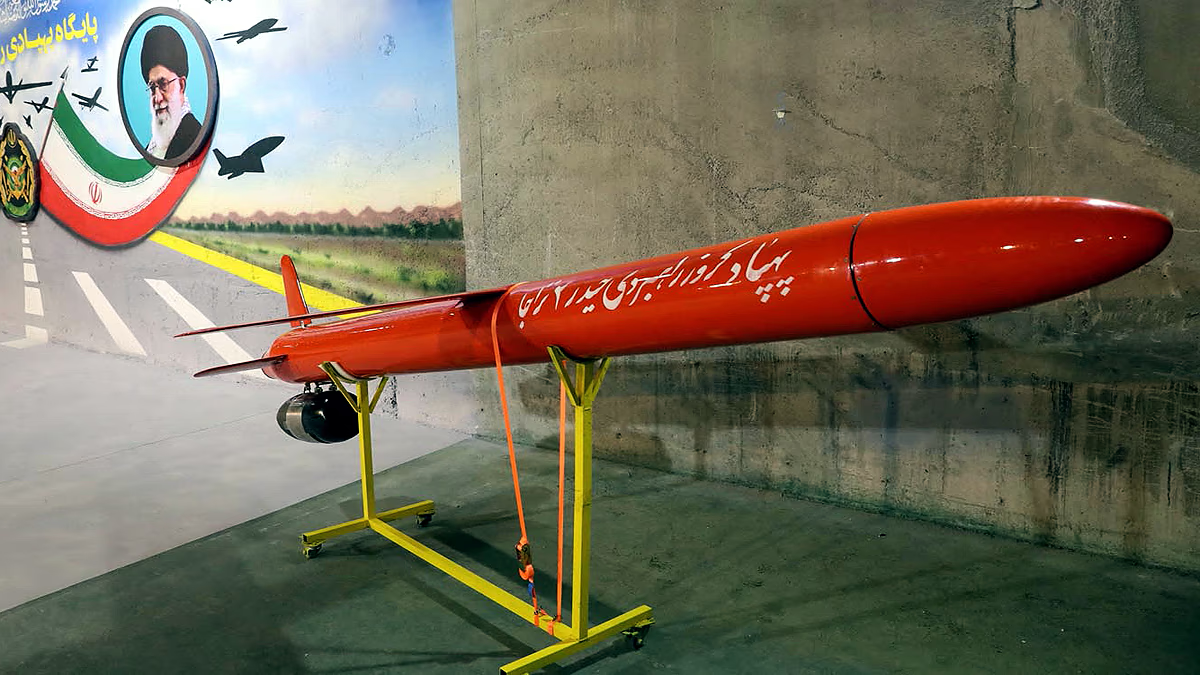
Source: aajtak
Shiraz (Fars Province):
Nestled in the Zagros mountains, this major underground UAV (drone) base accommodates drones like the Shahed. Israel released a video of it in 2023.
Khorramabad (Lorestan Province):
Boasts the highest number of missile silos, storing both drones and missiles.
Knesht Canyon (Kermanshah Province):
A principal IRGC underground base located in the north, equipped with drone and missile launch systems.
Discover More: Iran’s Looming Threat... Germany, Britain, and France Might Join U.S.-Israel in Assualt
Kohjir and Parchin (near Tehran):
Known for missile production and testing activities, these sites also manufacture and store drones. Parchin has undergone recent renovations.
Hormozgan, Semnan, Kermanshah, and Shiraz regions:
Between 2025 and 2026, Iran established four new Missile Cities, each spanning 500-700 meters, housing drones, fighter jets, and anti-B2 systems.
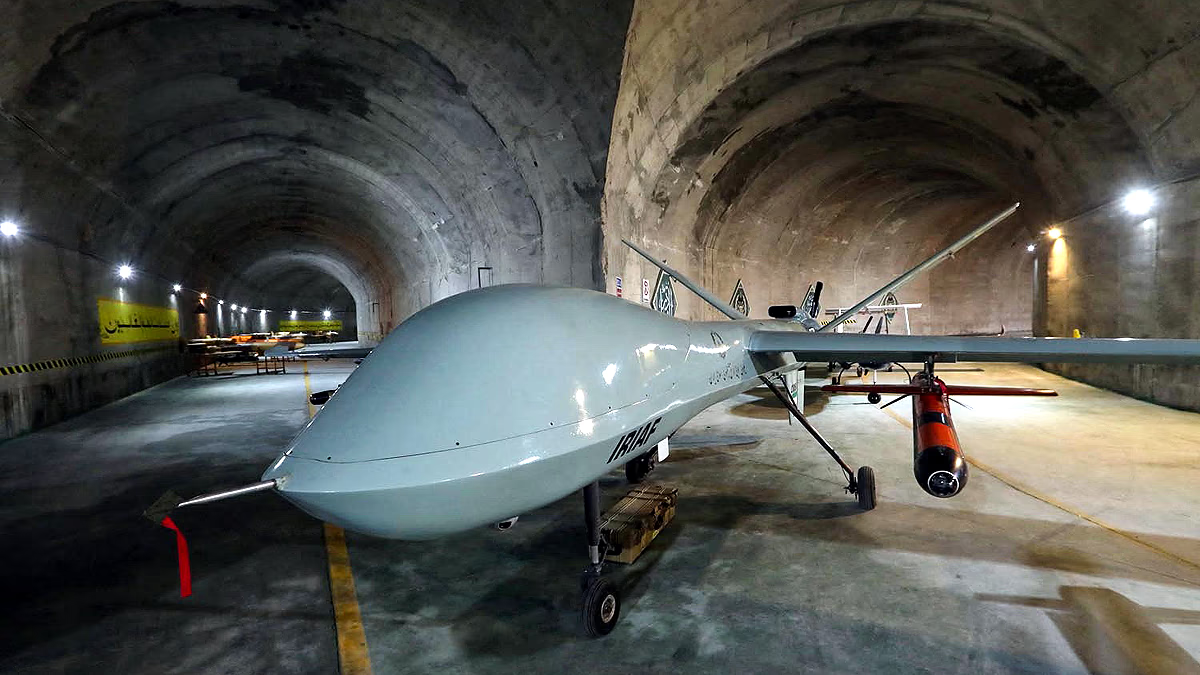
Source: aajtak
Southern Coast (Persian Gulf):
The underground naval base of the IRGC Navy contains missile-equipped speedboats and drones.
These bases are distributed across Iran — west (Kermanshah, Lorestan), south (Shiraz, Hormozgan), central (Isfahan, Qom), and around Tehran. Iran asserts such bases exist in every province.
How Many Secret Bases Are Launching Drone Attacks?
The exact number remains classified. IRGC Commander Amir Ali Hajizadeh mentioned that Iran has set up underground bases in every province and city. Estimates suggest 20-30 chief Missile Cities, many storing drones. In 2025, the IRGC unveiled three major bases, and by 2026, they had established four more. In total, dozens of these sites exist.
Explore More: The U.S. Inflicts a ‘Pearl Harbor’ Pain on Iran, Sinking 9 Naval Ships... Check Out the Satellite Images
Iran's drone attacks on targets like Israel and Gulf nations often originate from mobile launchers and underground bases. The Shahed drones can be easily and economically launched. However, in the 2025-26 strikes, U.S.-Israel targeted several bases, such as Shiraz, Kermanshah, and Khorramabad, but many persevered.
Why Can't the U.S. and Israel Completely Destroy These Bases?
These bases are formidable, entrenched up to 500 meters deep within mountains, due to several factors...
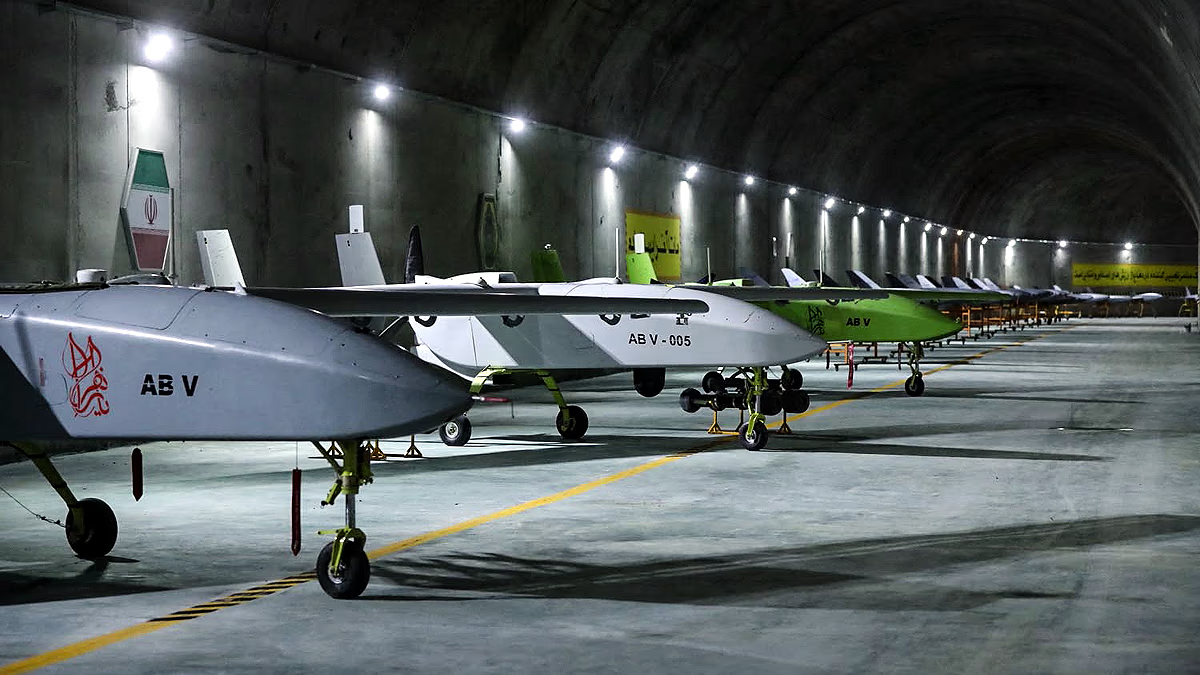
Source: aajtak
Depth and Fortification:
Constructed with rock and concrete, these bases challenge U.S. capabilities. While the U.S. possesses the GBU-57 Massive Ordnance Penetrator (bunker buster), deployable by B-2 bombers, some bases remain undamaged due to their profound depths. In 2025, sites like Fordo and Natanz were only superficially damaged.
Concealment and Deception:
Iran strategically constructs decoy bases and employs mobile launchers, complicating satellite detection. Many bases reside in remote locales.
Intelligence Deficiency:
While the U.S. and Israel use satellites, espionage, and cyber tools, Iran excels in base concealment.
Find More: After Indian Attack, Even Before the Cement Has Dried, Afghans Unearth Pakistan’s Noor Khan Base
Geographical Challenges:
Iran’s topography, dominated by mountains, naturally shields these bases. Even under Operation Epic Fury’s assault using B-2 Bombers, Tomahawk missiles, and LUCAS drones, many underground bases survived. Iran asserts these bases are geared for second strikes, capable of responding post-attack.
This situation is precarious. Prolonged conflicts could see Iran launching more drone and missile attacks from its remaining bases. It will require extended warfare and greater force for the U.S. and Israel to neutralize these installations entirely.