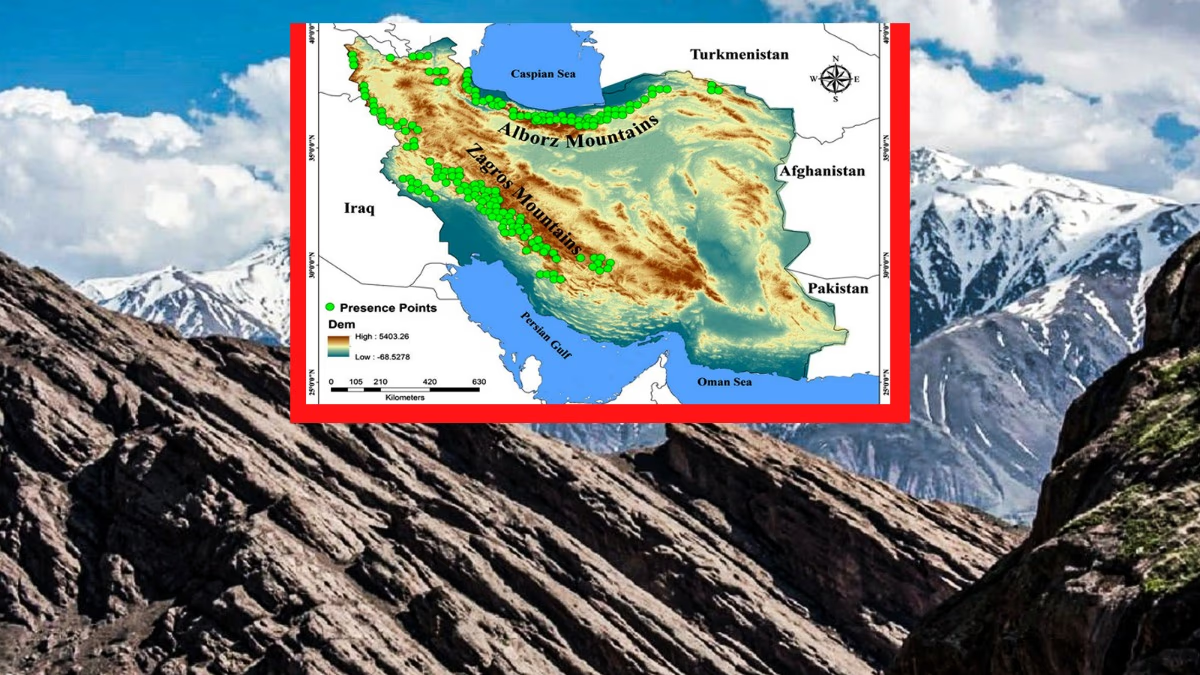
To the west, the jagged peaks of the Zagros Mountains; to the north, the formidable and rugged Alborz range; to the east, a chain of mountains near the Afghan border; and centrally, vast deserts define Iran's geography. This natural fortress makes a ground invasion of Iran nearly impossible.
Throughout history, Iran's resilient geography played a key role in its defense. During the Iran-Iraq war, Saddam's forces were ensnared in the Zagros hills.
It's important to note that even powerful conquerors like Alexander the Great and the Mongols found their triumphs hard-earned here.
So, how does Iran's geography transform it into a natural fortress?
Mountainous Shield
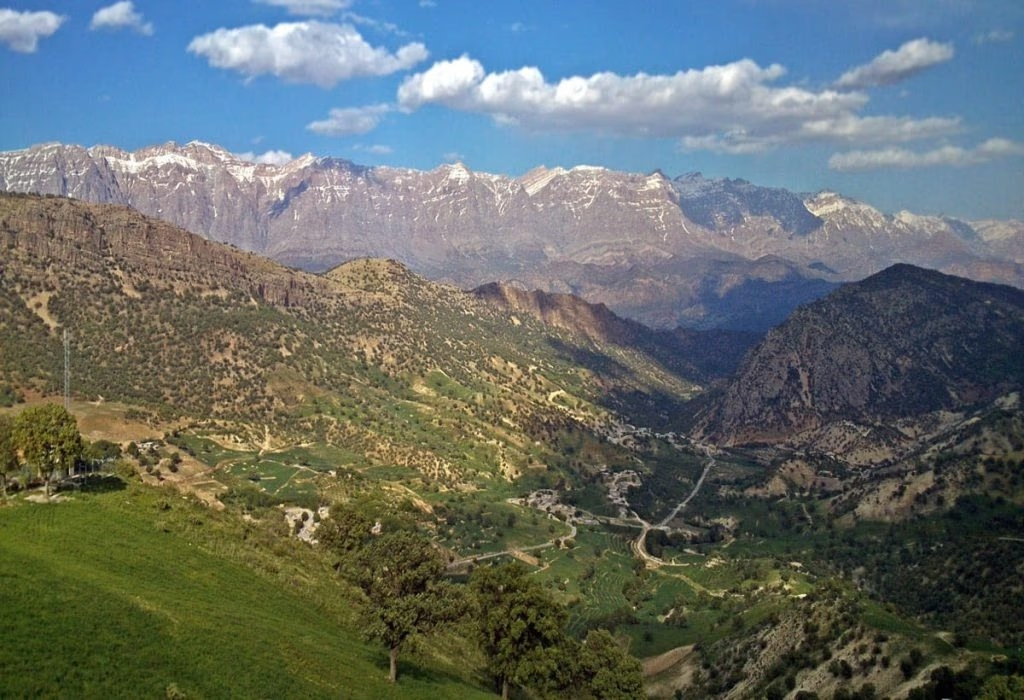
Iran's geographical defense lies in its mountainous bastions, deserted expanses, and narrow passes, turning invasions into prolonged conflicts. The Zagros mountain range bisects the country from northwest to southeast, with many peaks rising 3,000-4,000 meters.
Source: aajtak
The Zagros Mountains form a natural barrier along the Iraq and Turkey border, where towering cliffs and narrow gorges stall tank advances. The harsh climate, with snow-laden valleys in winter, turns into a deadly trap for invading forces.
In the Iran-Iraq war, Iraqi forces got stuck in the Zagros passes, suffering significant losses due to Iranian resistance, which protected Iran from external attacks for years.
Source: aajtak
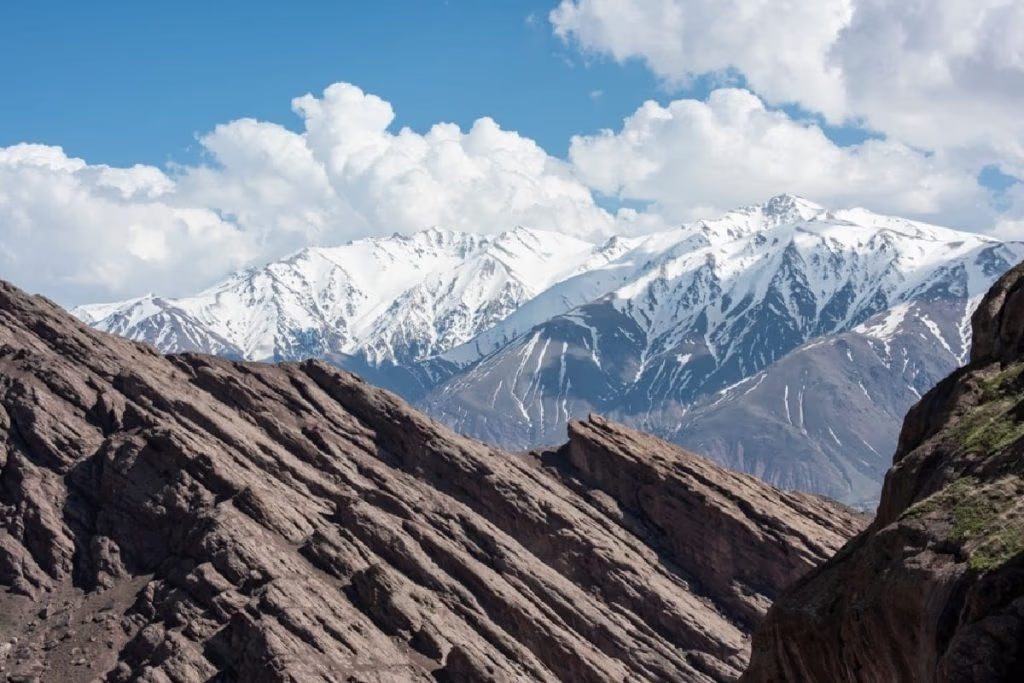
In the north, the Alborz mountain range safeguards the Caspian coast. This significant mountain range stretches over 970 kilometers from northwest to southeast along the southern shore of the Caspian Sea, and it features the Middle East's highest peak, Mount Damavand, standing at approximately 5,610 meters.
This range acts as a climatic barrier between the Caspian Sea and the Iranian plateau, creating lush forests on the northern slopes and arid conditions on the southern side, complicating coordination for any foreign military.
To the southwest, the marshy plains of Khuzestan present additional barriers. The Khuzestan marshy plains form a triangular lowland stretching along the Persian Gulf and merging with the Mesopotamian plains at the foothills of the Zagros Mountains.
The strategic significance of the Khuzestan marshes was evident during the Iran-Iraq war when Iraqi armor got detracted in the marshlands. Despite housing 80% of Iran's oil fields, its defense is simplified by mountainous barriers surrounding it.
Iran's security isn't solely derived from mountains and seas. The country's desert expanses further bolster its defense. The Dasht-e Kavir (Great Salt Desert) and Dasht-e Lut stretch over the central plateau and border the eastern regions (Afghanistan-Pakistan), where vehicles sink and water sources are scarce. These deserts remain mostly uninhabited, rendering unauthorized entries infeasible.
Pummel the Earth from the sky? Iran resists through its complex topography, deep tunnels, and decentralized military network anchoring resilience. Vital resources remain secure in the 80% mountainous, desert, and subterranean expanse of Iran.
Iran's military forces are robust, boasting substantial air defense systems and long-range missiles. During last year's skirmish, Iran showcased striking capabilities by targeting the U.S. military base in Qatar.
While aerial assaults can damage infrastructure, they alone cannot dismantle governance. Iran's potential to mobilize substantial guerrilla warfare forces warrants acknowledgment. Military history, such as the conflicts in Syria and Vietnam, evidence that air power, devoid of ground incursion, seldom ensures complete victory.