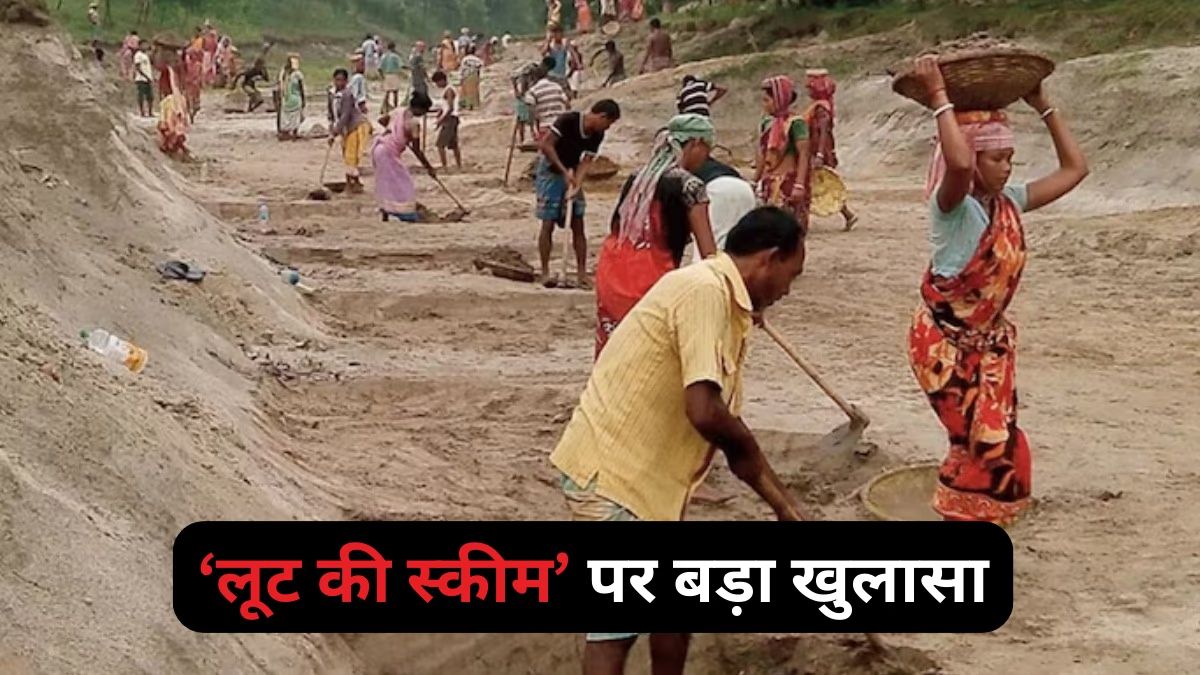
The central government may have rechristened the Mahatma Gandhi National Rural Employment Guarantee Act (MGNREGA) to 'Developed India - G RAM G', yet the ground reality remains mired in the old quagmire of corruption. 'Aajtak's' exclusive investigation across five states has exposed the frail and flaw-riddled system of MGNREGA, where the deceased 'work', ponds exist only on paper, and middlemen feast on the hard-earned money of laborers.
Images from Uttar Pradesh, Bihar, Madhya Pradesh, Chhattisgarh, and Jharkhand highlight that the scheme's benefits aren't reaching those in need. Central Minister Shivraj Singh Chouhan stated that the name change of MGNREGA was due to rampant corruption. He mentioned the use of machines instead of laborers, reliance on contractors, inflated estimates, repetitive work, and fake job cards. He asserted that corruption under MGNREGA has been eradicated.
This raises the question: Does merely changing the name to 'G RAM G' halt this entrenched exploitation? 'Aajtak's' special investigation unveils a startling reality of pilfered public funds and usurped rights of the impoverished, shaking the system to its core. What was meant to be a 'guarantee' of employment has become a 'guarantee' of corruption.
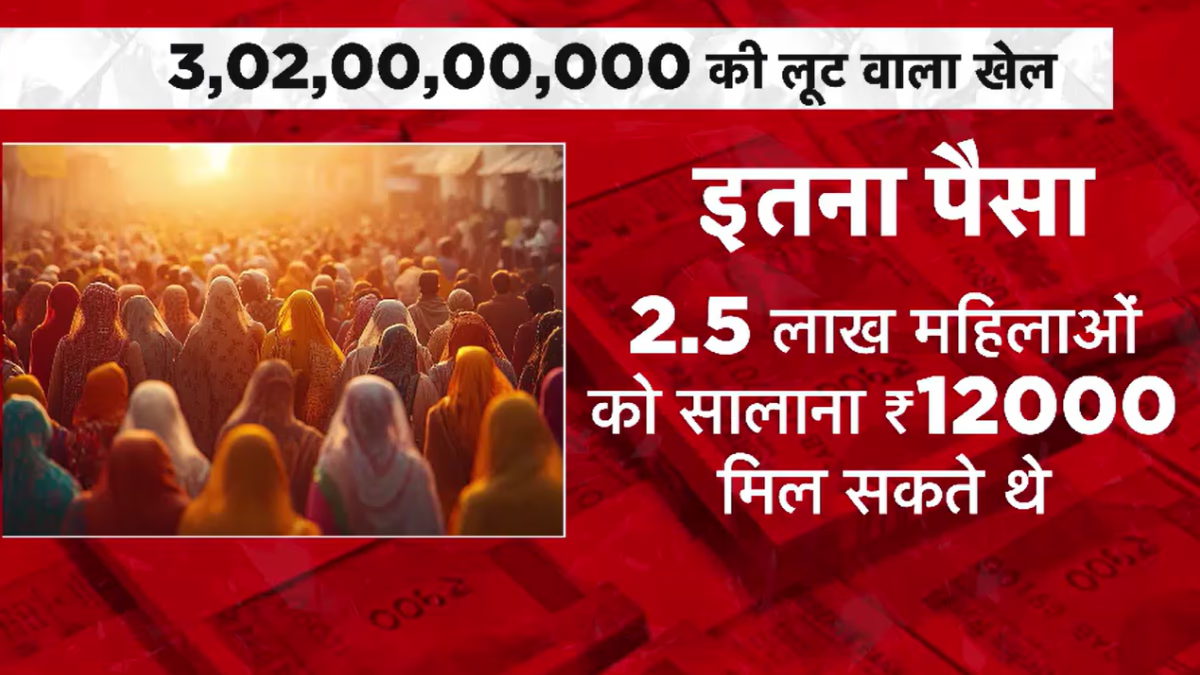
A recent audit by the ministry also identified significant irregularities within MGNREGA. According to reports, financial discrepancies amounting to 302 crore rupees were discovered within just eight months (April 2025 to November 2025). Despite this, shocking visuals from the five states portray an alarming picture.
Source: aajtak
Uttar Pradesh: Phantom Projects in Maharajganj
In Maharajganj district of Uttar Pradesh, alarming irregularities under the renamed 'G RAM G' have surfaced. When 'Aajtak's' team conducted a reality check in Shikarpur village of Siswa Block, serious questions were raised concerning the works displayed under the Employment Guarantee Scheme. According to the information at the MGNREGA site, it showed over 100 laborers across 13 muster rolls working on tasks like soil filling from Tinku Srivastava's fields to the drain and cleaning the same drain.
However, upon the team's arrival, the site was eerily silent with no laborers in sight. Moreover, there were zero signs of any work having been carried out on that day.
When questioned, the village chief's representative, Ramdayal, claimed work had indeed taken place, but due to a festival, laborers had left early. This raises numerous questions—if the festival was ongoing, why was work logged on the same day? Meanwhile, the village representatives avoided the camera, attempting to remove microphones. They claimed about 50 laborers were present, yet denied having details on the muster rolls.
One recorded laborer, Santaraj, mentioned that work had occurred but was unable to specify how many laborers were actually working.
On this grave matter, MGNREGA district coordinator Gauravendra Singh noted that they were informed about work being depicted on paper while laborers were absent at the site. A thorough investigation will be initiated, and strict punitive measures will follow against the culprits. Currently, Lokayukta police are also probing the case, with significant actions expected soon.
Source: aajtak
Bihar: A 2 Billion Rupee Scam Unveiled in Bhagalpur
A massive fraud of approximately 2 billion rupees has surfaced in the Sanor Panchayat of Jagdishpur block, Bhagalpur district, Bihar, under MGNREGA. Allegations are that no work was executed on the ground, yet plans were portrayed on paper to siphon government funds. According to locals, no irrigation drains were built, no ponds refurbished, and no fields leveled, despite being displayed on informational boards across the village, without actual realization.
Subsequent investigations led to the dismissal of the Panchayat Employment Servant. The investigation further exposed the manipulation of public funds through false vendors, revealing property acquisitions by the accused officer under names of his kin, valued over Rs 5.9 million.
According to investigation agencies, funds extracted through a vendor named ‘Nishant Traders’ were deposited into the joint accounts of the accused officer and his wife. Although his contract has been terminated, he retains the right to appeal within 30 days.
Bihar: Questions Raise Over Water-Damaged Crops, Uncleaned Irrigation Channels in Munger
Similarly, in Bihar's Munger district Azarganj block, the Chaura Village Panchayat has encountered severe MGNREGA irregularities. Farmers state that funds meant for channel excavation were withdrawn thrice; yet no work was done on the ground.
Locals report that water unexpectedly released from a dam inundated fields, destroying crops like wheat and corn. Farmers allege that in the past decade, channels remained uncleaned, even as MGNREGA reported lavish spending in this category.
The sub-area officer has stated that an inquiry order has been issued. Estimated losses will be compensated, and if irregularities are detected, strong actions against responsible officials and personnel will be pursued.
Source: aajtak
Jharkhand: Scheme Turns into Cash Cow for Middlemen in Sahibganj
In the Mirzapur Panchayat of Barharwa block, Sahibganj district, Jharkhand, the goat shed construction plan under MGNREGA has put corruption in the spotlight. Villagers allege middlemen exploited the program to extort money as a tactic to secure benefits.
According to residents, beneficiaries were illicitly charged 3,000 rupees each. In several cases, projects were approved under others' names, leaving the actual beneficiaries with incomplete constructions. Allegedly, full funds were withdrawn without finalizing sheds.
Beneficiaries also reported that to ensure payments, boards bearing others' names were erected for photo ops, which were uploaded as official documents. This facade presented the illusion of completed work on paper, while the actual scene was starkly different.
Responding to the claims, Sahibganj's Deputy Development Commissioner (DDC) acknowledged the issue had garnered administrative attention, prompting an investigation. Necessary actions against culprits are anticipated post-inquiry.
Meanwhile, a meeting was held at Ranchi addressing better implementation of the G RAM G scheme replacing MGNREGA. With Manohar Lal Khattar presiding, BJP leaders assured the enforcement of foolproof security measures to maintain transparency and prevent similar malpractices.
Chhattisgarh: No Work For Two Years Despite Job Cards
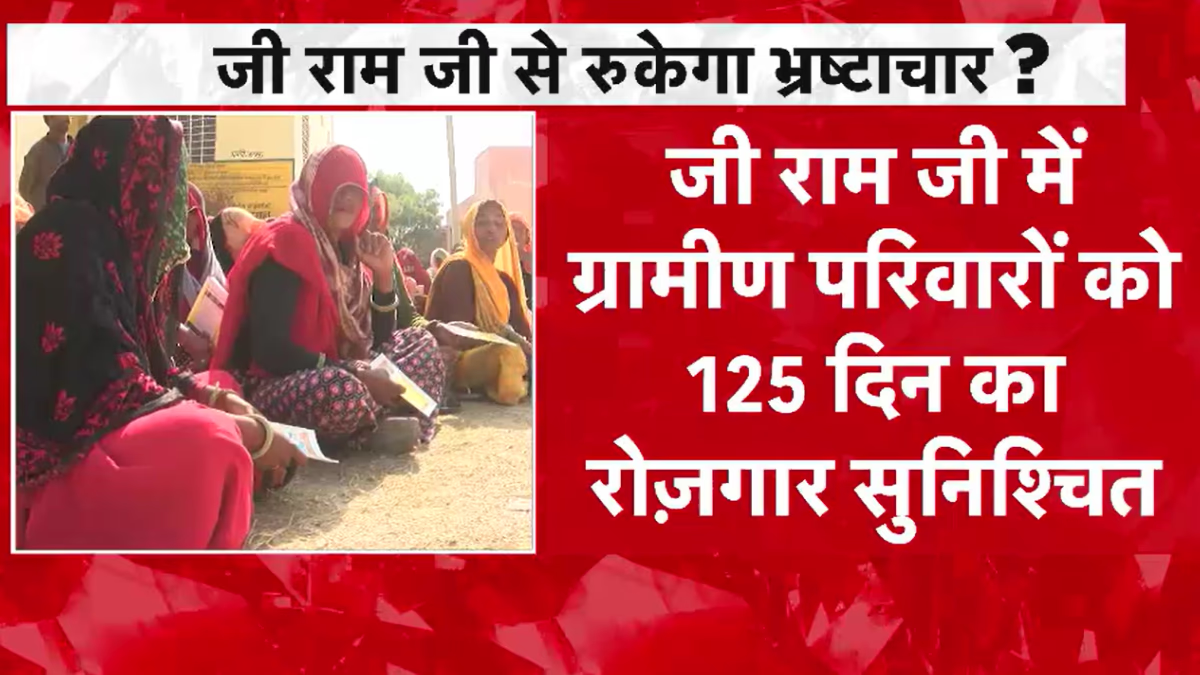
In Chhattisgarh's Manendragarh-Chirmiri-Bharatpur (MCB) district, the ground reality of MGNREGA in Pasori Panchayat depicts a worrisome picture. Residents claim to possess job cards, yet no work has been assigned for the past two years. Despite the increase in guaranteed employment days from 100 to 125, numerous job cardholders neither received employment nor an unemployment stipend.
According to villagers, they repeatedly approached the Panchayat office demanding work, only to receive empty promises every time. Women and the elderly shared that the lack of employment has made meeting daily needs a struggle. It directly affected children's education, healthcare, and household expenses.
During 'Aajtak's' investigation, Panchayat and concerned officials avoided speaking on camera. At ministerial level, the new 'G RAM G' scheme introduction was cited. Yet, its benefits are yet to noticeably reach the grassroots, raising critical questions about MGNREGA's effectiveness.
Source: aajtak
Madhya Pradesh: Payments Made in the Names of the Deceased
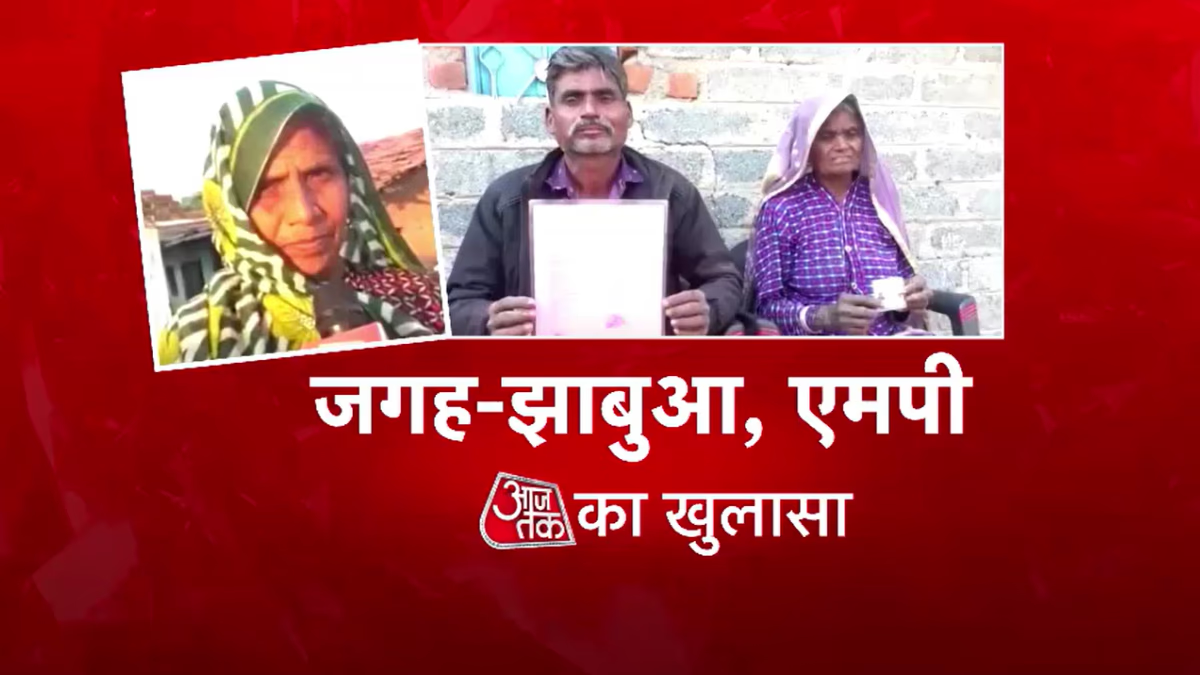
Corruption linked to MGNREGA has been under scrutiny since 2020 in Madhya Pradesh's Jhabua district. Allegations suggest false payments were processed under deceased individuals, and payments were made to individuals who never worked under MGNREGA.
Even after consistent complaints when local measures remained absent, the matter escalated to the High Court. Displaying urgency, the High Court's Indore Bench directed the Lokayukta police to probe.
A complainant produced a death certificate for his father, indicating his death occurred in 2017, yet MGNREGA records showed payments in his name in 2020.
Similar allegations have emerged from four development blocks, raising concerns about MGNREGA's functioning across the district. The results of the probe are awaited to identify those accountable for the purported scam and the next steps.
302 Crore Anomalies in MGNREGA over Eight Months
Notably, the Ministry of Rural Development's audit report uncovered irregularities across 55 districts in 25 states and union territories between April 2025 and November 2025. Over 1.1 million cases of irregularities amounted to a financial misappropriation of 302.45 crore rupees, of which around 293 crore rupees have reportedly been recovered. States implicated include Tamil Nadu (10 districts), Andhra Pradesh (4), Kerala (6), Punjab (5), Uttar Pradesh (2), Haryana, Uttarakhand, Gujarat, Jammu and Kashmir, Chhattisgarh, and Bihar (one district each). The report states work had not occurred on the ground despite payments being completed.
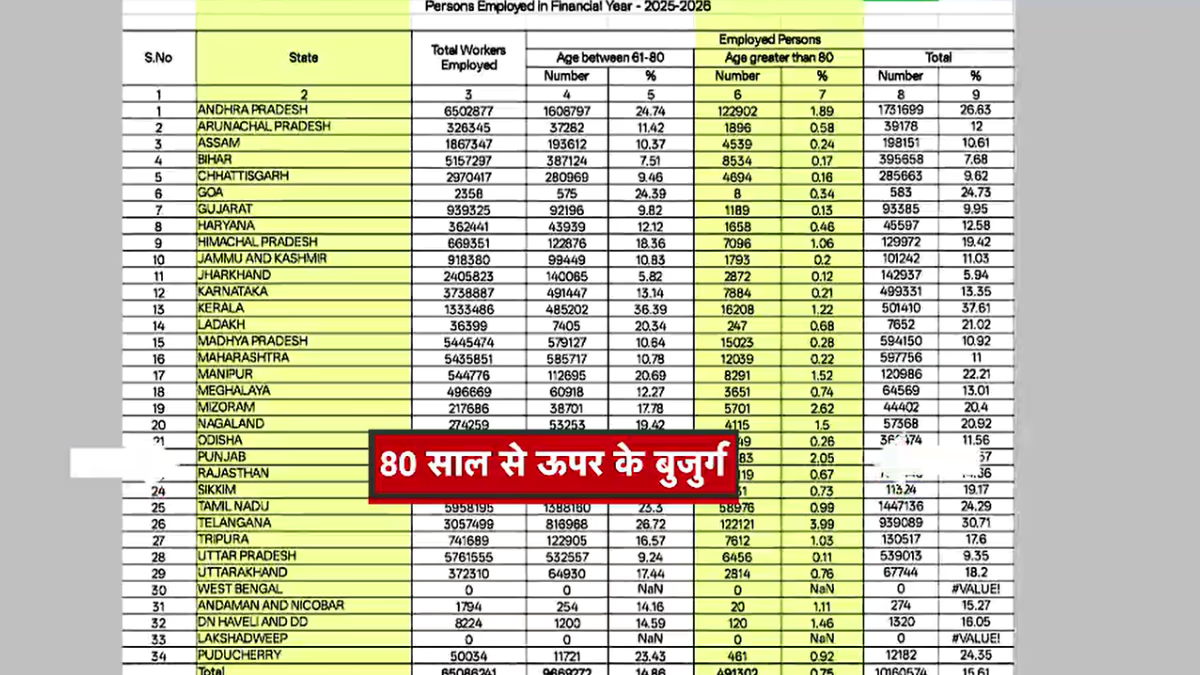
The investigation revealed contractors still carried out work despite bans, large projects were divided to secure approvals at lower levels, and workers over 80 were shown working under MGNREGA. Numerous cases involved purchasing from repeat vendors or duplicating payments against the same tender. Some files lacked royalty payment and GST documents.
Contractors, Officials, and Bank Managers in Cahoots
The audit reviewed over 1,000 work sites. 1,114,627 irregularities included expenditure without ground work, unauthorized work, financial irregularities and fund misuse, partitioning projects deliberately for approvals, and contractor and third-party work against explicit restrictions.
The report implicated officials, contractors, and even bank managers. Many works existed on paper alone. Most cases arose in Andhra Pradesh, Tamil Nadu, and West Bengal. Governance and monitoring revealed significant flaws. Fake and inactive job cards, inflated muster rolls, incomplete and shoddy work, and disconnected local assets were repeatedly listed.
The Ministry investigation also identified initially weak MGNREGA monitoring and record-keeping. Crores of work displayed on paper had no roads, ponds, or dams existed. No photos, no geolocation, and no accurate records were found. Often, one individual had multiple job cards, and payments even occurred in deceased names. Middlemen interfered, diverting funds away from genuine laborers.
By January 2014, only 7.6 million workers had linked Aadhaar numbers to MGNREGA records, despite crores being registered. Panchayat-level record management found gaps. Field staff maintained 22 to 29 different registers, inviting errors, manipulation, and misuse, resulting in fake muster rolls and incorrect payments.
Post-2014 Measures: Aadhaar, Geo-tagging, and Direct Payment Systems
Post-2014 efforts aimed to enhance the system. Asset geo-tagging under MGNREGA became mandatory in 2016. Work visuals and GPS locations began uploading into the system. Emphasis was placed on Aadhaar seeding for laborer identification. Currently, over 12 crore active workers are linked to MGNREGA via Aadhaar. Payments now channel directly into bank accounts using the Aadhaar Payment Bridge System and the National Electronic Fund Management System. E-payment has transformed from 37% to 100%.
Input:
Govind Kumar (Munger), Rajeev Siddharth (Bhagalpur), Praveen Kumar (Sahibganj), Dheerendra Vishwakarma (MCB), Chandrabhan Singh Bhadoriya (Jhabua), Amitesh Tripathi (Maharajganj)