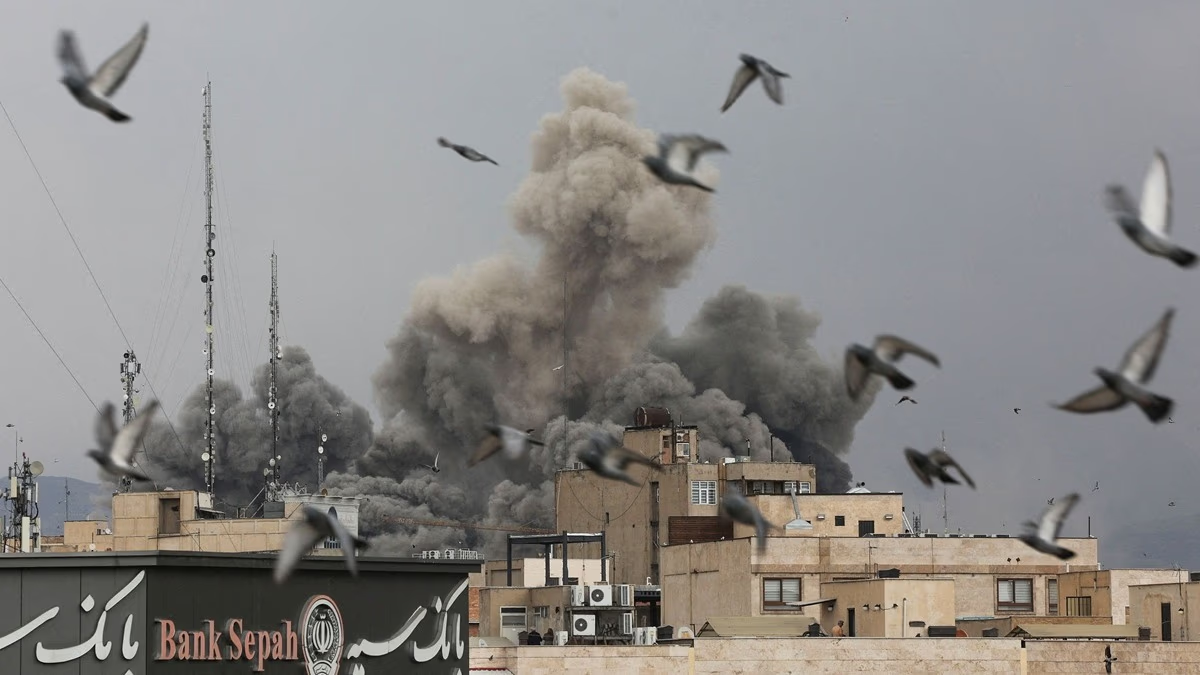
Now on the third day of combat, Iran's retributive actions are growing increasingly brutal and deadly. In the unfolding conflict, Iran has targeted the very sector integral to the Gulf nations' affluence: energy. Blatantly, Iran has started targeting the energy sectors on the third day, bringing to a standstill two of the world's massive oil and gas plants.
One of Iran's most significant strikes landed on the giant Saudi Aramco, leading it to cease production. Additionally, Iran launched a formidable attack on Qatar's economy backbone, the LNG production plant, crippling its operations.
What happened at the iconic Saudi company, Aramco?
In the Middle Eastern conflict, Iran has caused a storm by drone-striking major energy centers in Saudi Arabia and Qatar. Iran's counteraction seems beyond expectations.
On March 2nd, Iran unleashed Shahed drones on the Ras Tanura refinery, a key facility of Saudi Aramco, which rolls out a refining capacity of approximately 550,000 barrels daily, equating to about 87.44 million liters of oil. As a precautionary measure, Saudi Aramco opted for a shutdown due to the Iranian assault. While Saudi's defense halted two drones, debris ignited a fire now under control.
This attack has profoundly influenced the vital export terminal, sparking a major escalation in global oil prices. Extended downtime could further disrupt Saudi Arabia's oil output capacity.
Assault on Qatari gas and power plants
On Monday, Iran executed a grand attack on two facilities of Qatar's national energy company, Qatar Energy. The sites, Ras Laffan Industrial City and Mesaieed Industrial City, represent Qatar's industrial hubs. The resultant disruption led Qatar Energy to halt production at these key plants.
Reports revealed a drone impact on a power plant's water tank and another on an energy facility, leading to substantial damage.
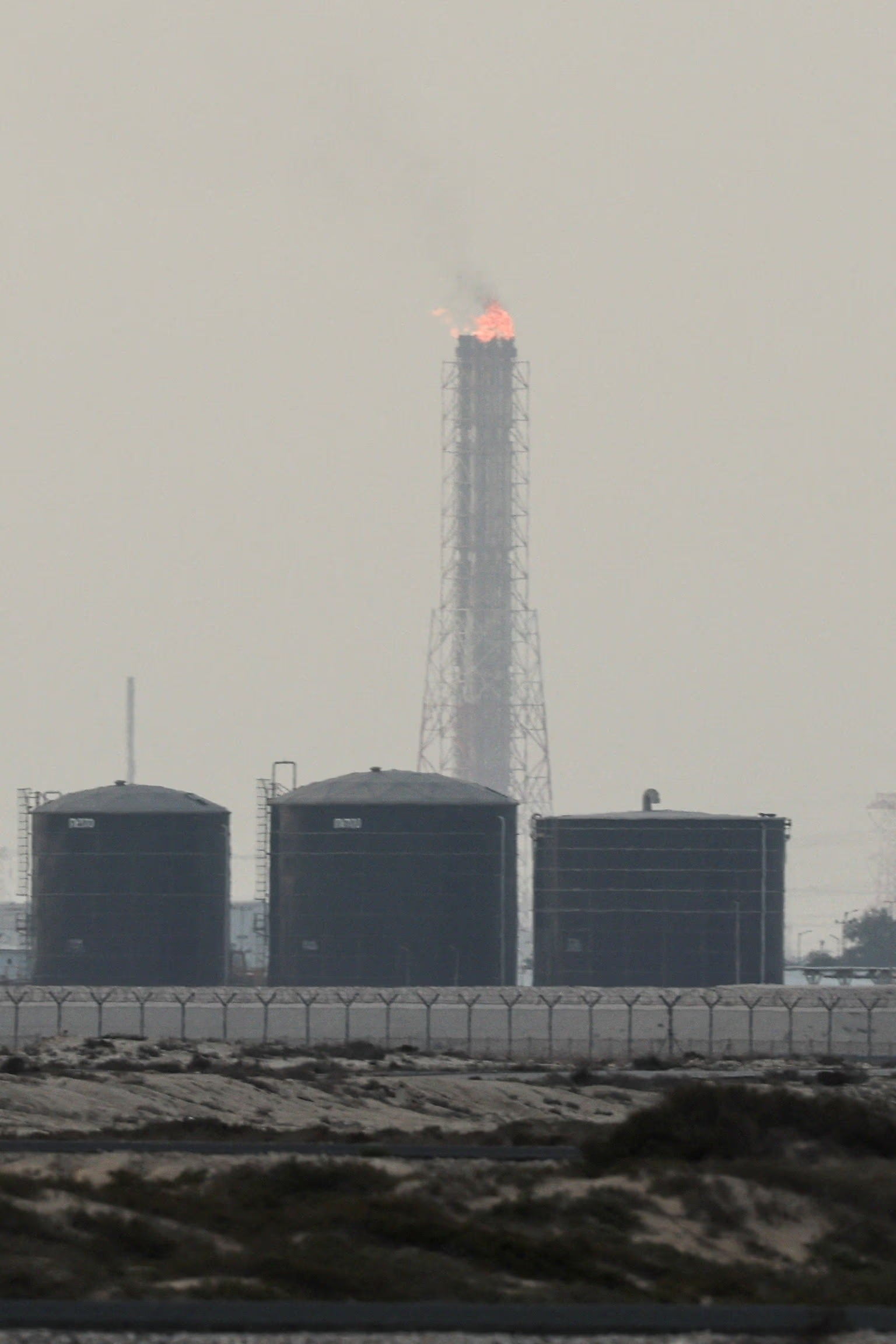
Source: aajtak
In a statement, the company confirmed the cessation of LNG and associated product outputs due to military strikes on facilities in Qatar's Ras Laffan and Mesaieed Industrial Cities.
Ras Laffan Industrial City stands as the globe’s largest LNG export hub, supplying about 20% of the world's LNG. The timing of this production freeze marks a significant escalation in Gulf hostilities.
Iran's vendetta escalated, targeting essential infrastructure within this energy-rich arena, undermining some of the largest oil and natural gas facilities globally.
Significance of Qatari gas for India
India relies heavily on Qatar for LNG imports, standing as the fourth largest LNG importer globally. In 2024, India imported nearly 36 bcm of LNG.
Qatar serves as India's prime LNG supplier, accounting for 38-40% of imports. Petronet LNG Ltd. enjoys a robust long-term contract with Qatar, importing 7.5 million tons annually, strengthened by a 20-year extension.
From January to November 2024, India's imports from Qatar amounted to 9.82 million tons, forming 38.8% of the total.
Price Surge
In retaliation to US-Israel strikes, Iran's actions have surged oil and gas prices. Early Monday trading saw a 13% spike, pushing crude oil above $82 per barrel briefly, marking the highest since January 2025. Prices later steadied around $79-$80, reflecting a 8-10% increase.
The natural gas market in Europe (TTF benchmark) witnessed a stark 45-50% rise as Qatar halted LNG production. Asia’s spot LNG prices also climbed swiftly. Prolonged turmoil could induce further spikes.
India's Response
India, importing 88% of its crude oil needs and almost half of its natural gas requirements via the Strait of Hormuz, which remains blocked presently, has reacted promptly. The Union Minister of Petroleum, Hardeep Singh Puri, reviewed the supply status of crude oil, LPG, and other petroleum products with senior industry officials.
He reassured, “We are closely monitoring evolving circumstances and ensuring the availability and affordability of key petroleum products in the country.”