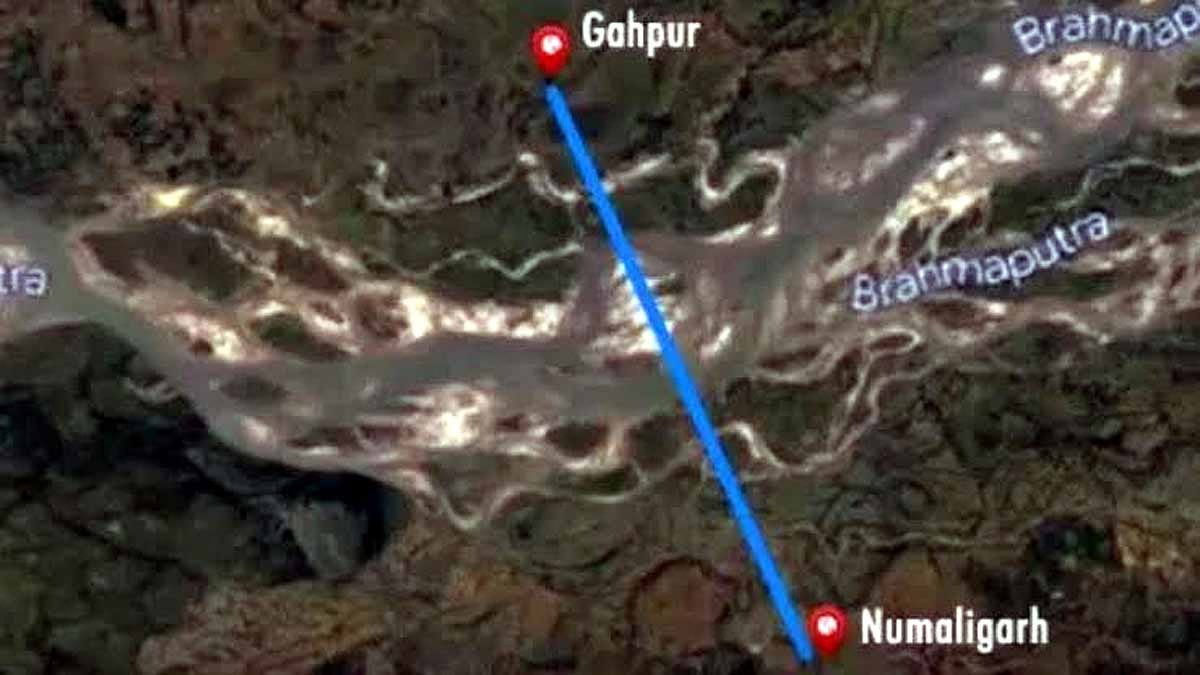
The Indian government is gearing up to construct a world-class underwater road-rail tunnel beneath the mighty Brahmaputra River. This remarkable tunnel will link Gohpur (North Bank) with Numaligarh (South Bank) in Assam, at an estimated cost ranging from ₹18600 to ₹19000 crore. Once completed, it will become India's pioneer tunnel to feature both road and railway systems. The central cabinet is poised to approve this project soon.
Main Features of the Tunnel
Length and Design: The submerged assembly will house two distinct tubes beneath the Brahmaputra River – one devoted to roadways and the other to railways.
Time Efficiency: Currently, it takes 4 to 6.5 hours to traverse the river using boats or bridges. The tunnel aims to slash this time down to merely 30 minutes.
All-Weather Functionality: The underwater structure will remain operational during floods, rains, or other natural calamities, ensuring unyielding passage.
Economic Benefits
Trade and Tourism Upsurge: Swift transportation of goods like produce, tea, and other items will thrive, while tourists can explore with ease.
Cost-Effective Logistics: Direct river crossings for trucks and trains will minimize detours and reduce expenses.
Inflow of Investments: The improved connectivity is set to attract private companies to establish industries and businesses throughout Assam and the broader Northeast, fostering economic expansion.
Employment Opportunities: Construction, maintenance, and related sectors will generate thousands of jobs.
Strategic and Defense Importance
Strategically positioned at India's eastern frontier – adjacent to China (Arunachal), Bangladesh, and Myanmar – Assam demands swift propagation of troops, arms, and supplies.
Rapid Military Movement: In emergencies, soldiers and equipment can traverse the river swiftly, within 30 minutes.
Reduced Reliance on Bridges: Vulnerable to floods or enemy assaults, bridges may falter, yet the tunnel will endure as a secure alternative.
Siliguri Corridor (Chicken Neck) Substitute: This narrow passage connecting the Northeast to the rest of India poses challenges if disrupted. The tunnel provides an alternative, lessening reliance.
Enhanced Northeast Security: Robust road and rail networks reinforce military logistics, expediting disaster relief.
Lieutenant General Rajeev Chaudhary (retd.), former Director General of the Border Roads Organization, claims that by constructing this tunnel beneath the Brahmaputra, India is not just building the world's longest under-river rail-road tunnel; it’s establishing a strategic lifeline linking the Northeast to the national mainstream. This symbolizes transforming geographical hurdles into avenues of opportunity.
This tunnel forms a crucial facet of a broader integration scheme for the Northeast involving highways, railways, waterways, and other optional routes. Historically hindered by challenging geography, the region now anticipates a surge in industry and flourishing tourism, promising ample job prospects for youth while fortifying both defense and development.
The Brahmaputra underwater tunnel is more than an engineering marvel. It's a monumental stride towards integrating the Northeast with India's mainstream, bolstering security and facilitating swift, affordable travel for the common people, improved trade for merchants, and robust defense benefits – truly a transformative achievement across all fronts.