During the announcement of the recent trade agreement between the United States and India, the Office of the U.S. Trade Representative (USTR) posted a map depicting Pakistan-occupied Kashmir (PoK) and Aksai Chin as parts of India. This move caught Pakistan off-guard.
Pakistan promptly reached out to the U.S., describing it as 'incorrect' and requested rectification. Eventually, America deleted the post entirely, an action seen as indicative of the Trump administration's softer stance towards India.
Also Read:
What Happened?
India and the U.S. unveiled a trade framework last week aimed at reducing tariffs and opening up over a $30 trillion economy.
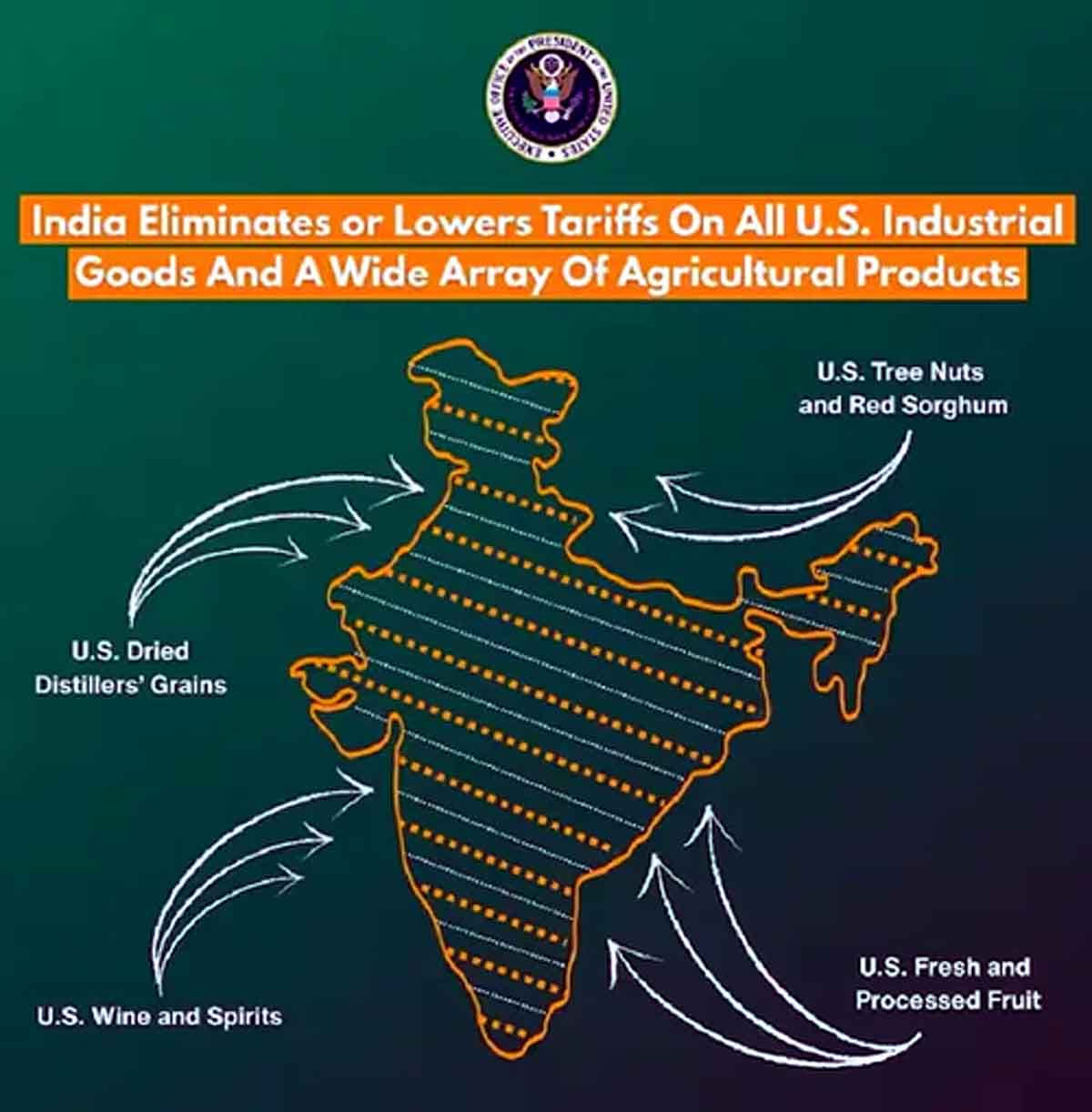
While sharing details, USTR's official account X posted a map of India.
This map featured the entire region of Jammu and Kashmir (including PoK) and Aksai Chin (claimed by China) as parts of India.
This was a departure from America's longstanding policy, as the U.S. typically views Kashmir as a disputed territory and remains neutral.
Pakistan's Reaction
Pakistan faced significant embarrassment from this map. The Ministry of Foreign Affairs swiftly issued a statement...
Source: aajtak
Pakistan contacted U.S. officials insisting the map was 'incorrect'. Spokesperson Tahir Andarabi mentioned they informed the U.S. that the map was not accurate, referencing the UN-recognized map which shows Jammu and Kashmir as disputed, to be resolved through a referendum as per the UN resolutions. Pakistan appreciated the U.S. for making the necessary amendment and deleting the post.
Why Did America Delete the Post?
Once posted, social media buzzed with questions if it was a mistake or a deliberate policy under the Trump administration. Recognizing India's territorial sovereignty was a departure from the U.S.'s traditional neutrality. With increasing pressure and controversy, the USTR office removed the entire post to put an end to the debate.
Also Read:
The Impact of Trump's India Policy
The Trump administration focuses on strengthening ties with India, marking the trade agreement as part of this strategy. Showing PoK and Aksai Chin as part of India (even if inadvertently) was a setback for Pakistan, signaling that the U.S. might lean towards India on issues like Kashmir. Pakistan fears India's growing closeness with the U.S. under Trump could weaken Pakistan’s stance.
This incident may seem trivial but indicates profound shifts in the relationships between India, Pakistan, and the U.S. Though Pakistan was quick to correct the map, Trump’s policy towards India is a source of its unease. In the coming days, we may witness the strengthening of India-U.S. trade and defense collaboration.