The recent election results in Bangladesh paint an intriguing and worrying picture from an Indian perspective. Nationally, the Bangladesh Jamaat-e-Islami hasn't achieved significant success, with many regions showing its decline. Yet, the real question is where it has won, and that might be a concern for India.
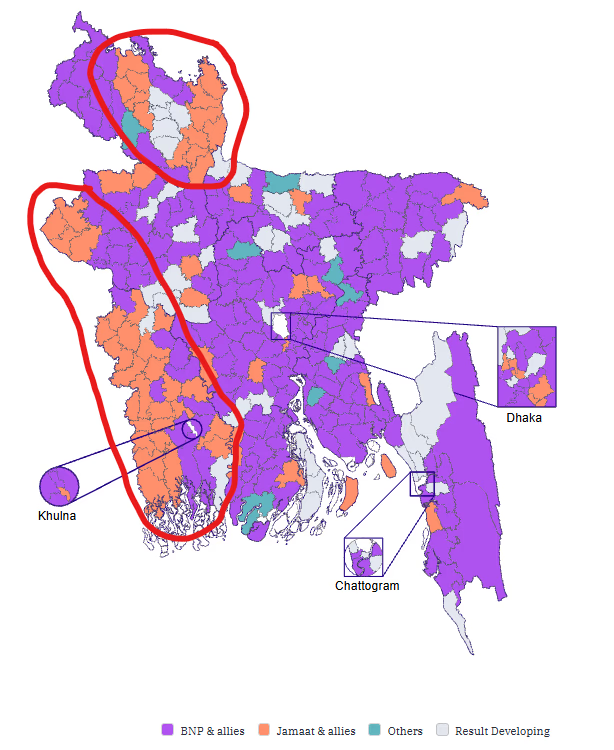
In the Bangladesh parliamentary elections for 299 seats, the BNP under Tariq Rahman's leadership has secured a commanding victory, winning over two hundred seats. In contrast, the opposition Jamaat and its allies were confined to just 68 seats. However, Jamaat has gained noteworthy ground in two critical divisions: Rangpur and Khulna, both near India's borders. Rangpur is adjacent to the 'Chicken Neck,' known as the Siliguri Corridor—the narrow strip of land connecting India's northeast states to the rest of the country. Khulna borders the southern region of West Bengal. Jamaat also achieved several victories in the Rajshahi Division between these two regions, showing its influence from north to south close to West Bengal.
Source: aajtak
In Rangpur Division, Jamaat is ahead in 13 out of 33 seats, while in Khulna, it has already bagged 23 out of 36 seats, with some results pending. Trends are clear—Jamaat maintains its presence near the border. While its national influence might seem limited, Jamaat's foothold in border areas is a strategic concern for India, driven by more than electoral math—it's about geography, ideology, and security. At its core, it's not just about politics but voter tendencies.
Rangpur directly confronts the corridor known as the 'Chicken Neck,' crucial for connecting Assam, Arunachal Pradesh, Meghalaya, Manipur, Mizoram, Nagaland, and Tripura with the rest of India. Any discord or fundamentalist uprising here could directly impact India's security.
Jamaat's history with India has been fraught. During the 1971 Liberation War, its leaders stood with Pakistan, adopting an anti-India stance. Even in subsequent years, its leaders accused India of meddling in Bangladesh’s internal affairs, going as far as describing India as treating Bangladesh like a colony. While such accusations aren't new in Bangladeshi politics, their electoral support in border areas amplifies their impact.
The Chicken Neck Challenge
There have been provocative statements from fundamentalist Jamaat factions regarding the Chicken Neck, aired on social media and at rallies, branding the corridor as India's weakness, suggesting it could apply pressure in times of regional tension. Despite not being an official policy, such rhetoric alerts India's security apparatus.
Similarly, a narrative among fundamentalist groups suggests fomenting secessionist sentiments in India's northeast. Jamaat's leader Shafiqul Rahman's Islamic fundamentalist and misogynistic comments went viral, but his anti-India views concern India more. Among his supporters, he seeks to reinterpret 1971 history, casting India as a 'looter.' Jamaat's NCP leader Hasnat Abdullah has been overheard threatening to 'cut off India's Chicken Neck' and liberate the seven northeastern states. In this election, Hasnat secured victory with over a lakh votes, highlighting Jamaat's intentions, which are less overt on public platforms, but evident in ideology. Jamaat's strength in regions like Rangpur raises natural concerns for political cushioning of such thoughts.
Tensions for 24 Parganas
Khulna Division's situation is no less sensitive. This area adjoins the southern part of West Bengal, especially 24 Parganas. Previously, illegal infiltration, smuggling, and radical networks have kept security agencies alert here. If parties like Jamaat gain substantial support, boundary management challenges could escalate. Regardless of being distant from national power, Jamaat could influence local administration, education institutions, and social organizations here. If radicalism grows in border districts, its effect will certainly cross over.
India and Bangladesh's relationship has improved significantly over the past 15 years. Security cooperation has increased, solving border disputes, and coordinating on terrorism and extremism. But this cooperation largely hinges on Dhaka's government's political will. Any local surge of anti-India sentiments could pressure the central government.
Jamaat often operates on two fronts: electoral politics and religious mobilization. Post-defeat, it could stay active ideologically, especially where it secured seats, maintaining its agenda. Stringent rhetoric against India could unify its supporters.
The seats in Rangpur and Khulna may not cement Jamaat's parliamentary might, but they provide a stage to address border, river water sharing, trade imbalance, and minority issues within an anti-India framework, potentially breeding distrust between the two countries.
Challenges for Bangladeshi Hindus
In Rangpur and Khulna, while Jamaat asserts its dominance, several areas also have significant Hindu populations. Before, during, and after the elections, considerable violence occurred here. The outcome swayed local Hindus, usually Awami League supporters, to vote BNP out of fear of Jamaat. Consequently, religious polarization intensified. Now, potential Taliban-esque oppression from Jamaat supporters looms for Hindus, especially as Jamaat might pressure the new Bangladeshi government and India to advance its politics.
Though not a major force nationally in Bangladesh's elections, Jamaat's presence in Rangpur and Khulna signals something important. It indicates anti-India politics is not extinguished, alive even if limited. Jamaat's electoral setback hasn't eclipsed its political terrain, and one easy path for its politics could be stoking India-related controversies.