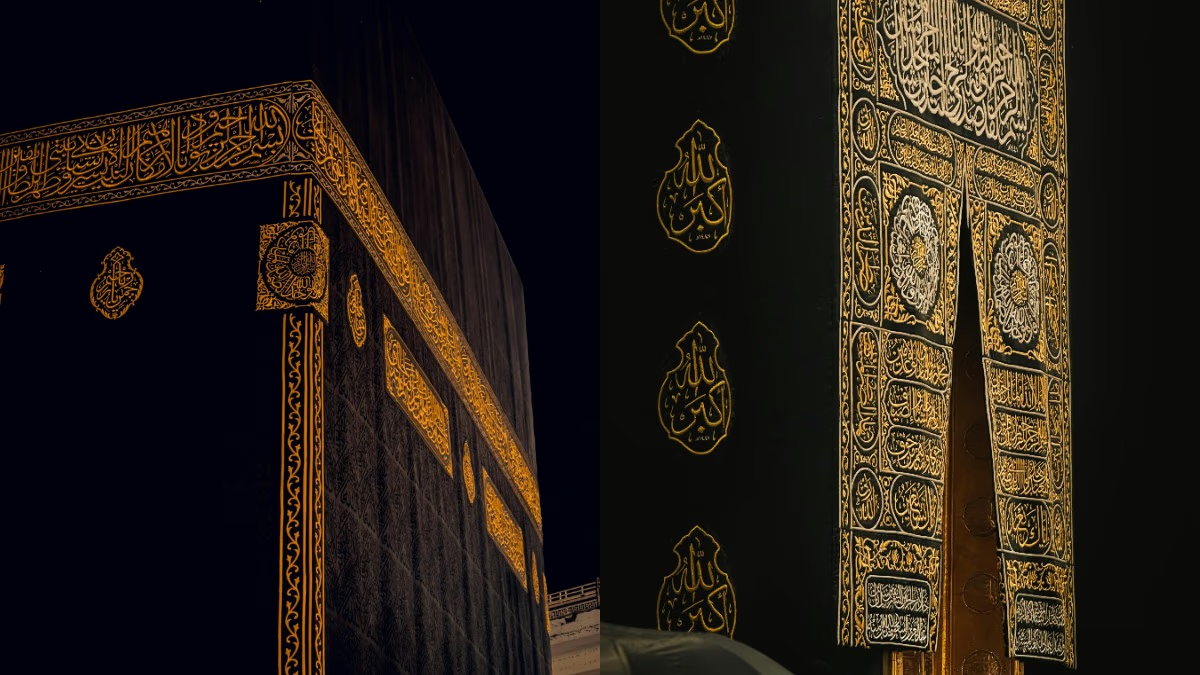
The Kaaba is among the most sacred places in Islam and is considered a focal point of faith for Muslims worldwide. The black silk cloth draped over the Kaaba is known as the Kiswah or the Ghilaf-e-Kaaba. Annually, it is replaced with a new Kiswah. However, revelations surfaced in the Epstein files about the Kiswah, causing global controversy.
Reports suggest that pieces of the Kiswah were sent to the United States in 2017, directly reaching the criminal Jeffrey Epstein. This claim has sparked serious questions concerning religious sentiments, security, and moral values among the Muslim community and worldwide.
What is the Kiswah and Why is it Sacred?
The Kiswah draped over the Kaaba is a black silk cloth embroidered with Quranic verses in gold and silver thread. It is regarded as the most sacred cloth in the Islamic world.
According to an Arab News report, the Kiswah is specially crafted from natural silk. It features intricate embroidery with 21-carat gold-plated and silver threads, weighing between 850 kg to 1415 kg. Its cost ranges from 17 to 25 million Saudi Riyals (approximately 4 to 6 crore INR).
When is the Kiswah Changed? A Major Tradition Shift
Previously, the Kiswah was changed on the 9th day of Dhul-Hijjah (Yawm al-Arafah) during Hajj. However, in 2022, the Saudi government revised this rule. According to Gulf News, the Kiswah is now changed annually on 1 Muharram (the first day of the Islamic new year). This process occurs either early morning or at night.
Where and How is the Kiswah Made?
The Kiswah is produced at the King Abdulaziz Complex for the Holy Kaaba Kiswah located in the Um Al-Joud district of Mecca, a prominent government complex. The entire production involves seven complex stages: washing and purifying the silk, weaving on a Jacquard machine, silk-screen printing, embroidering Quranic verses, working with gold and silver threads, final assembly, and inspection. Around 150 to 220 expert Saudi artisans dedicate 11 months to this process.
What Happens to the Old Kiswah?
The old Kiswah is removed from the Kaaba with utmost care. Gold and silver threads are separated, and it is cut into approximately 56 small pieces. These pieces are gifted to foreign dignitaries, Islamic organizations, ambassadors, and museums. Some parts are securely stored in government warehouses. They are considered highly valuable because millions of Muslims have touched them.
The Epstein Files Controversy: Religious and Ethical Questions
The Epstein files claim that pieces of the Kiswah were sent to the United States in 2017 and reached Jeffrey Epstein. This revelation raises two major questions: How could the world’s holiest cloth reach a criminal, and how does this impact Muslims' feelings? Although this claim in the Epstein files is yet to be fully verified, it has increased unease in religious communities and sparked global discussions on security and ethics.