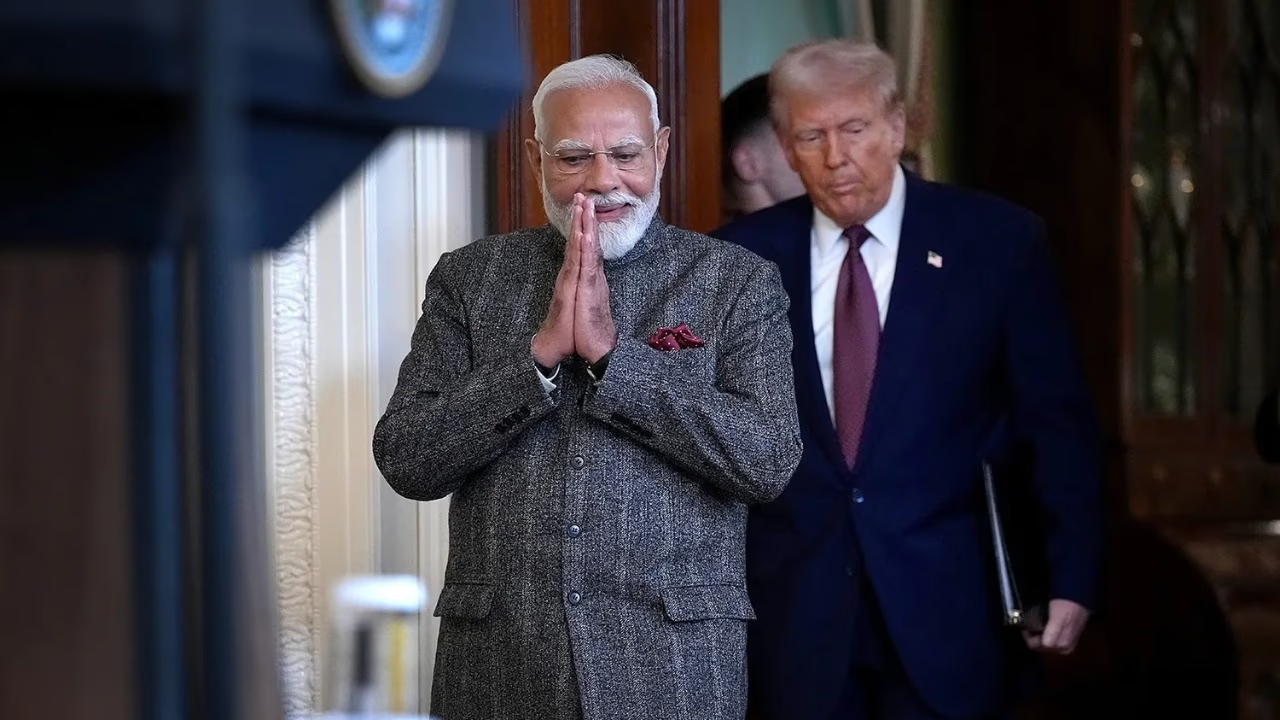
US President Donald Trump announced on Monday night a reduction in tariffs with India down to 18%. He also stated that both parties have reached a consensus on a trade deal. Prime Minister Narendra Modi welcomed this formal announcement on social media and expressed his gratitude.
No official announcement has been made regarding this deal yet. However, updates from India suggest that the deal is almost finalized between the two countries.
Several questions arise as to why Trump decided to reduce tariffs suddenly, especially when there was no clear information on the trade deal discussions... Was there any pressure on the US?
To understand this, we should look back a few months when India took several diplomatic steps, forcing the US to announce the trade deal swiftly. American companies were eager to enter the Indian market before competitors from other countries.
1. Trade Policy with BRICS Nations
When heavy tariffs were imposed by the US on India, India accelerated discussions on trade and collaboration with countries like China and Russia and built an international trade infrastructure with BRICS nations. During India's BRICS presidency in 2026, efforts to promote trade in local currencies gained momentum, challenging the dominance of the dollar. During the 2026 BRICS Summit, trade transactions with these countries increased, unsettling the US and its economic policies due to perceived threats to the dollar's dominance.
2. Putin's Visit to India and Defense Deals
The BRICS meeting with Prime Minister Narendra Modi, Vladimir Putin, and Xi Jinping, followed by Putin's visit to India in December, created additional pressure on the US. Russian President Vladimir Putin visited India from December 4-5, 2025. During this visit, emphasis was placed on strengthening energy, defense, and logistics cooperation. This visit not only indicated India's commitment to Russian partnerships but also challenged US strategies.
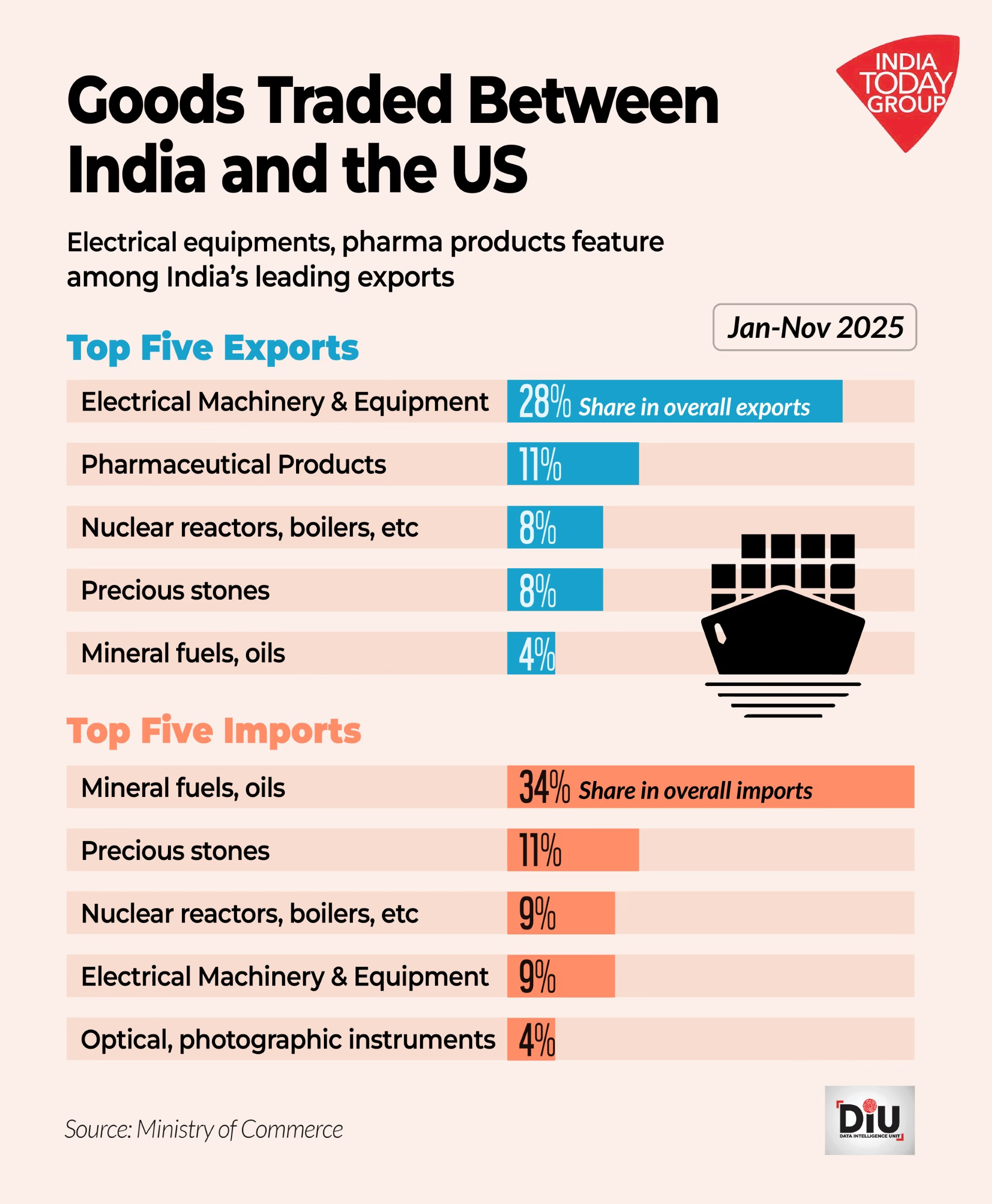
Source: aajtak
3. India-EU Trade Agreement
In January 2026, a landmark Free Trade Agreement was reached between India and the European Union after 20 years of negotiations. This agreement is seen as a monumental step in the global market. It positioned India as a viable alternative to the US market, reducing dependency on America. With the European Union as a source for technology, defense, and investment, this could be a significant blow to the US. The EU trade deal exerted substantial pressure on America.
4. Diplomacy and Energy Deals with the UAE
India also strengthened its connectivity and energy partnerships with the UAE and the Middle East. The visit by UAE President Mohammed bin Zayed Al Nahyan to India in January 2026 propelled energy and economic partnerships forward. Discussions during this visit focused on energy supply, LNG agreements, and strategic partnerships between India and the UAE.
Furthermore, the World Economic Forum at Davos 2026 emerged as a critical platform where open debates on trade, tariffs, and global economic policies took place. The US's attempts to increase tariff pressures faced significant opposition, as many countries emphasized fair trade agreements and regulations.
All these factors compelled America to consider hastening a trade deal with India.