Simply being Muslim shouldn’t mean that Kalat (Balochistan) becomes part of Pakistan...
On March 27, 1948, when Pakistan's founder Muhammad Ali Jinnah forcibly annexed Balochistan, it sparked significant resistance. Jinnah contradicted his own advice of allowing Balochistan autonomy by forcibly integrating the free state into Pakistan.
Pakistani historian Yakub Khan Bangash writes in his book, 'A Princely Affair,' that the resistance against remaining free was crushed by Pakistan, forcibly making Kalat part of it.
At independence, Kalat was recognized as an independent state. An agreement on August 11, 1947, between Kalat and the Muslim League made Balochistan a separate entity, under Pakistani protection. On August 12, Balochistan's ruler, Mir Ahmed Khan, declared his province independent. However, Balochistan's freedom was short-lived, lasting only 227 days.
On March 27, 1948, Mir Ahmed Khan’s signature on the merger with Pakistan marked the beginning of violence and conflict that persists even today.
BLA Shakes Pakistan with Attacks
Last Friday night, the armed group fighting for Balochistan's independence, the Balochistan Liberation Army (BLA), targeted around a dozen sites in the province in a series of attacks. The assaults continued into the next day, with a sequence of blasts sending shockwaves throughout Pakistan.
Approximately 200 BLA fighters, including women, split into small groups to launch simultaneous suicide blasts and shootings. They targeted police stations, homes, and military sites. The BLA claims over 200 Pakistani security personnel were killed in their strikes, while Pakistan states 17 soldiers and 31 civilians died in the attack.
The Pakistani military’s counteraction severely impacted the rebel fighters. In the army's retaliatory actions, 177 BLA fighters were reportedly killed.
Pakistan’s Defense Minister Khawaja Asif commented on the attack on Monday, emphasizing the need for a large military presence in Balochistan.
In parliament, Asif noted, 'Geographically, Balochistan spans more than 40% of Pakistan’s territory. Controlling it is more complex than any densely populated city. To control such a vast area, massive deployment of forces is necessary. Our soldiers are stationed there, fighting terrorists, but monitoring and patrolling such a wide region poses a significant challenge.'
It's the same Balochistan whose precious stones made Trump's eyes sparkle
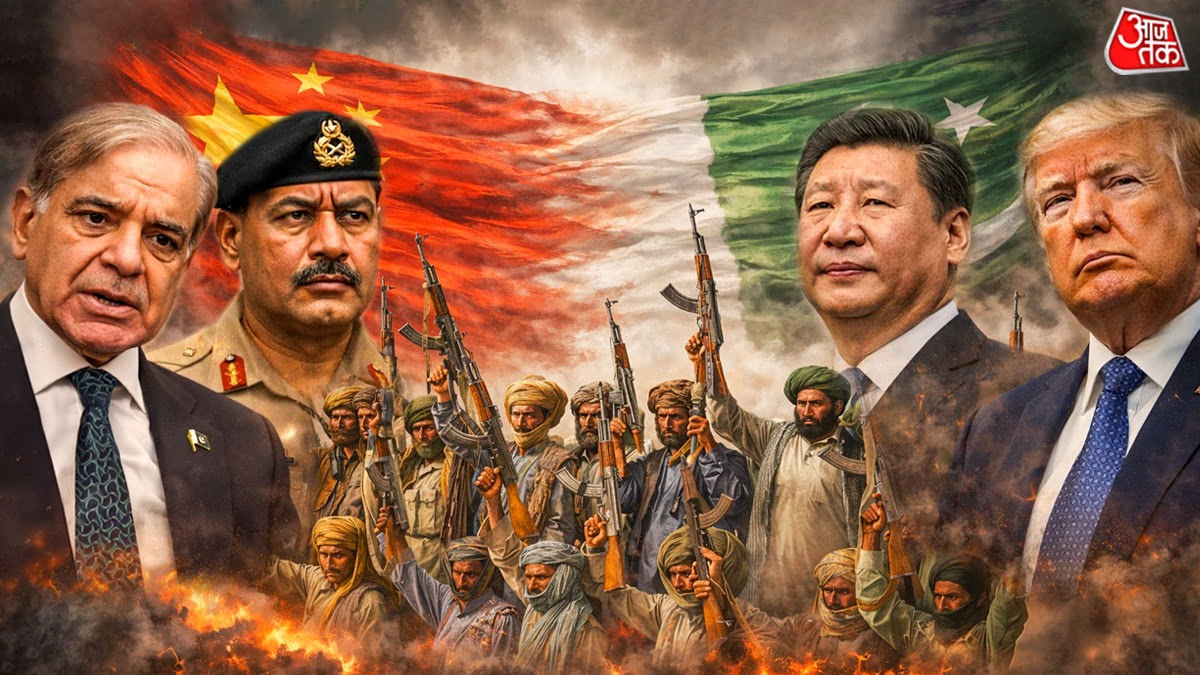
Last September, Pakistan’s military chief Field Marshal Asim Munir accompanied Prime Minister Shahbaz Sharif to the US, where they met US President Donald Trump at the Oval Office in the White House.
During the meeting, Munir presented Trump with a briefcase containing a set of sparkling precious stones and minerals. This gift was part of Pakistan’s latest offering to the US, signifying an openness to American investment in its mineral resources. And by its mineral resources, Pakistan meant Balochistan’s treasures.
Gas, Gold, Copper: Balochistan's Resource Wealth
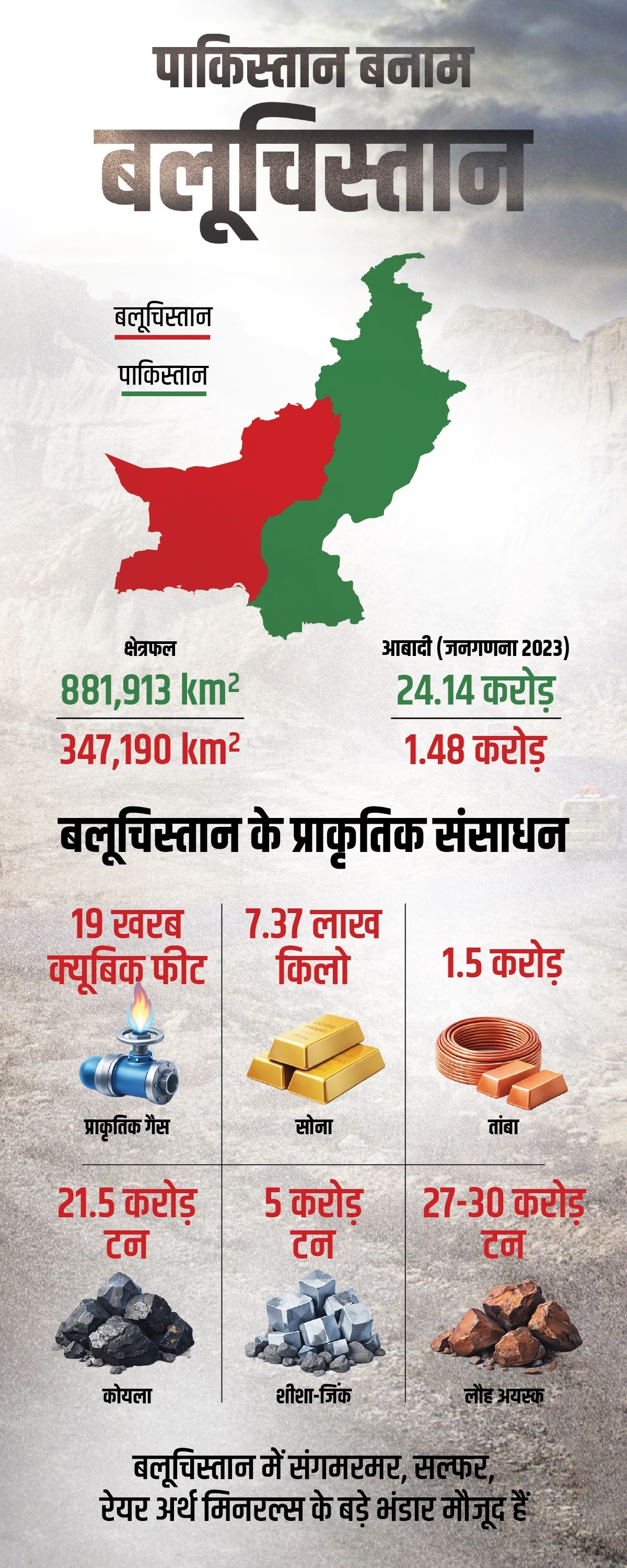
Balochistan, Pakistan’s largest province, is rich in natural resources. It accounts for about 44% of Pakistan's land, housing most of the country’s gas, coal, gold, and copper reserves.
The province is also abundant in precious stones, contributing to 90% of Pakistan's total gemstone output. Balochistan's marbles are famed for their high quality, with Ziarat white, black and gold marble being its signature. Additionally, Balochistan holds significant reserves of rare earth minerals...
Source: aajtak
The Iran and Afghanistan Angles
Despite being Pakistan's largest province, Balochistan has a sparse population. It is home to the Baloch tribes, who are the native inhabitants, alongside a minority of Pashtuns.
The region is divided among three countries: Pakistan's Balochistan province, Iran's Sistan-Baluchistan province, and Afghanistan's Nimruz, Helmand, and Kandahar. The borders Balochistan shares with these nations have always been unstable.
Though Iran and Pakistan typically maintain fraternal bonds, they often accuse each other of supporting Baloch insurgents. Both accuse mutual indigenous insurgent factions of inciting unrest.
On January 16, 2024, Iran launched missile and drone strikes on Pakistan’s Balochistan province, claiming to have targeted bases of the militant group Jaish al-Adl, which had attacked Iran.
In response, Pakistan initiated rocket and missile strikes inside Iran’s Sistan-Baluchistan province, targeting bases of the Baloch Liberation Army (BLA) and Baloch Liberation Front (BLF). This escalation brought considerable tension between the two nations. The border with Afghanistan remains consistently unstable.
Pakistan continually accuses Afghanistan's Taliban regime of failing to curb cross-border terrorist movements. Islamabad often accuses Afghanistan and sometimes India of being behind Balochistan's turmoil, failing to recognize that the region’s state is a result of decisions by successive local governments and military leaders.
The Poorest of the Wealthy
British colonial rulers, governing India (including modern-day Pakistan and Bangladesh) in the 19th century, coined a saying: 'Respect the Baloch, buy the Pashtuns, rule the Punjabis, and terrorize the Sindhis.'
This adage reveals that the British found victory over the Baloch challenging and opted for a respectful approach. Unfortunately, Pakistan's government didn’t adopt this understanding and forcibly seized Balochistan. Pakistan continues to face the consequences of this forceful annexation, with the Baloch still fighting for their dignity.
Despite Balochistan's rich resources, successive Pakistani governments have turned it into the poorest province. The wealth from its resources is exploited by Pakistan, with China now and previously with the US, without benefiting the Baloch.
While Pakistan forcibly took over Balochistan, it failed to gauge the people’s sentiment. The Balochi have always been displeased with federal administrations, and dissent has lingered since the merger. Discontent has significantly escalated with the government’s allocation of major Chinese projects in the region.
Post-Merger, Rebellion Ignite
The merger with Pakistan in 1948 marked the embryo of insurgent movements in Balochistan. The torchbearer of dissent was Kalat’s ruler Mir Ahmed Khan's brother, Prince Karim Khan, who formed a faction and initiated rebellion against Pakistan. This opposition was brutally crushed by Pakistan, imprisoning Prince Karim and his associates.
Unyielding, the Baloch continued to resist, staging insurrections aimed at acquiring their rights. The late 1950s, 1960s, and 1970s saw uprisings. Around 2000, the intensity of the rebellion surged. Initially directed at increasing local participation in provincial resources, the movement soon evolved into a demand for independence.
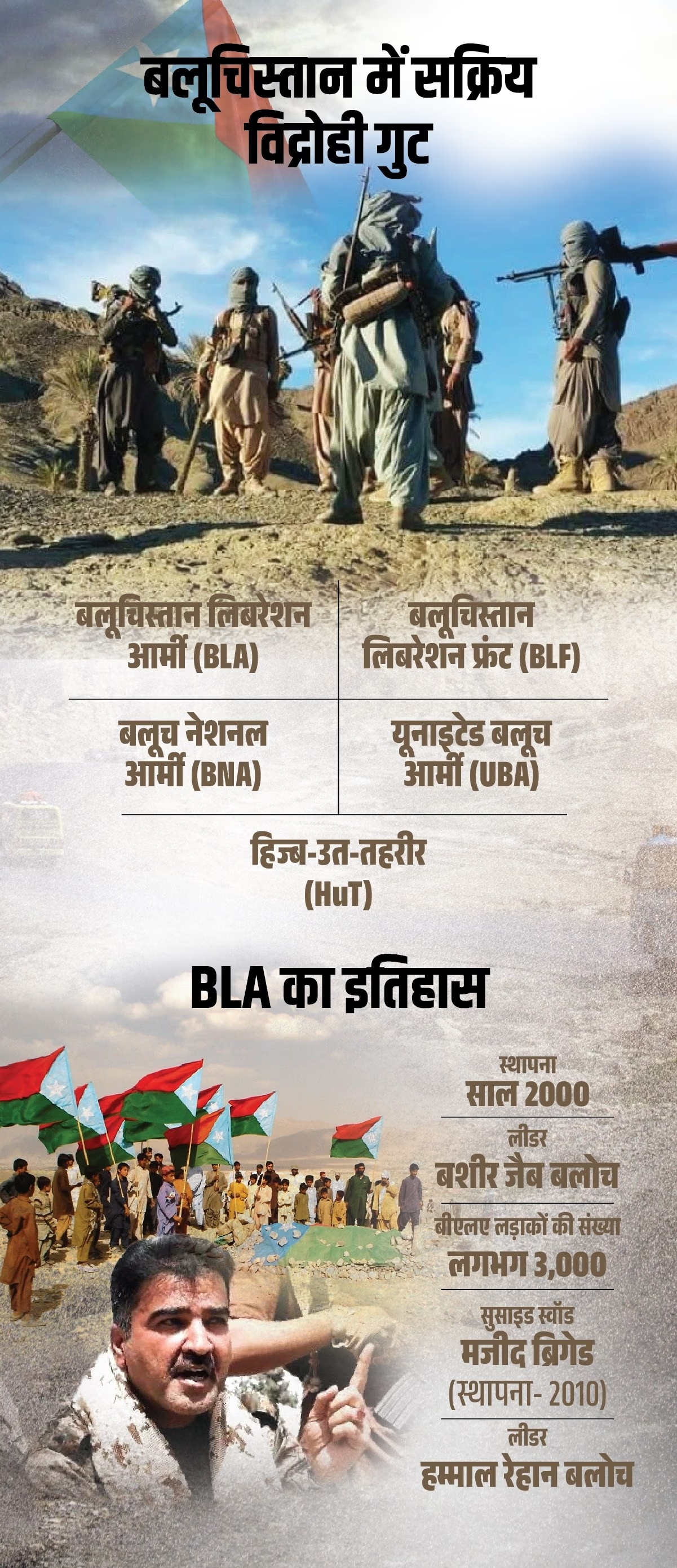
Growing frustrations with the Pakistani government led to the rise of numerous insurgent factions in Balochistan, including the Balochistan Liberation Army (BLA), Balochistan Liberation Front (BLF), Baloch National Army (BNA), United Baloch Army (UBA), and Hizb-ut-Tahrir (HuT).
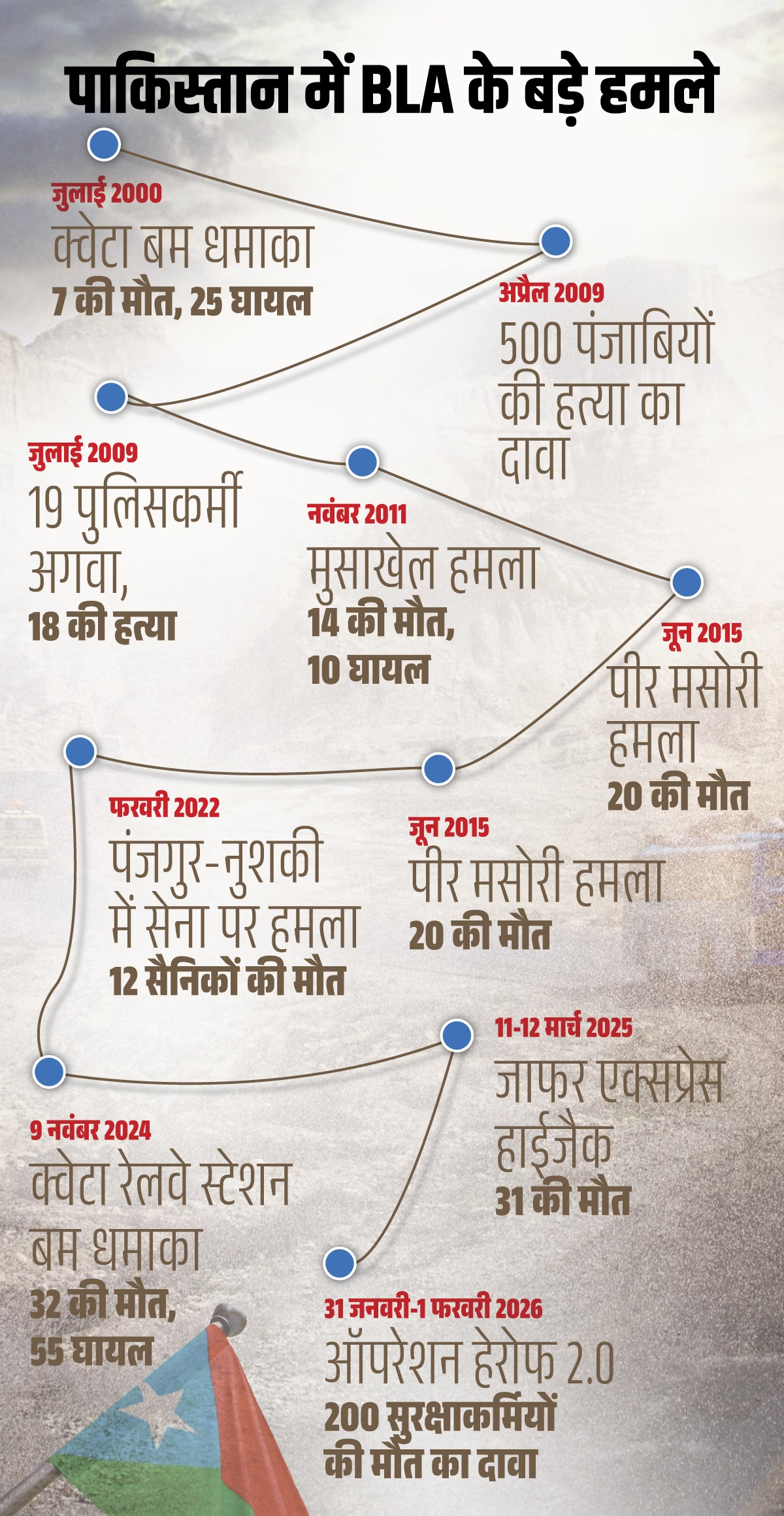
The BLA is the most active among these, having conducted several major attacks in Pakistan, primarily targeting military forces, bases, Chinese projects, and personnel related to them...
Source: aajtak
BLA: Embodiment of Rebellion
Founded in 2000, the Balochistan Liberation Army (BLA) was led by senior Baloch nationalist leader Nawab Khair Bakhsh Marri’s son, Balach Marri.
In 2006, during General Musharraf's rule, the state assassinated Baloch leader Nawab Akbar Bugti, igniting widespread insurgency across Balochistan. A year later, Balach Marri was also killed, leading the government to impose a ban on the BLA.
Painfully retaliatory measures have failed to suppress Baloch dissent, with human rights observers accusing security forces of killing or disappearing thousands on suspicion of separatist affiliations. The BLA has used widespread local dissatisfaction as its greatest weapon.
BLA's Strength Rises
The BLA has solidified itself as an entity demanding nothing less than Balochistan’s independence from Pakistan. Currently led by Bashir Zeb Baloch, the BLA claimed responsibility for hijacking the Jaffar Express last year.
This incident occurred on March 11, when Jaffar Express, a passenger train from Quetta to the northwestern province of Khyber Pakhtunkhwa, was hijacked, endangering some 400 passengers. After hours of negotiation, the passengers were rescued, though 31 people, primarily security forces, died.
According to the Pakistan Institute for Peace Studies, 2025 saw at least 254 attacks in Balochistan, a 26% increase from the previous year, claiming over 400 lives, mostly attributed to the BLA...
Source: aajtak
Regarding recent attacks, Michael Kugelman, Director of the South Asia Institute at the Wilson Center, commented on X, 'Viewing the Balochistan crisis only through the number of fighters killed amounts to policy failure. The real question is why so many fighters continually emerge. The BLA capital ates on local discontent against the government, recruiting large numbers of fighters and subsequently strengthening their organization.'
The Destruction Wrought by BLA's Suicide Squad
In 2010, the BLA formed its suicide squad, the Majeed Brigade. Initially inactive, in 2018, former BLA chief Aslam Baloch sent his son, who carried out a suicide attack on Chinese engineers in Dalbandin, wounding five people, including three Chinese nationals. Aslam Baloch’s son died in the attack.
Thereafter, a campaign targeting Chinese personnel and facilities intensified. November 2018 saw an attack on the Chinese consulate in Karachi, resulting in four deaths, including two police officers.
In 2022, a female suicide bomber named Shari Baloch targeted Chinese nationals at Karachi University, killing three Chinese citizens amongst four fatalities. This incident brought the Majeed Brigade to global attention.
The Majeed Brigade also played a key role in the recent Friday night and weekend attacks. The BLA released images of two jihadic female operatives involved, followed by shared images of a husband-wife pair, also jihadists, featured in the offensive.
Why Are Chinese Interests Targeted?
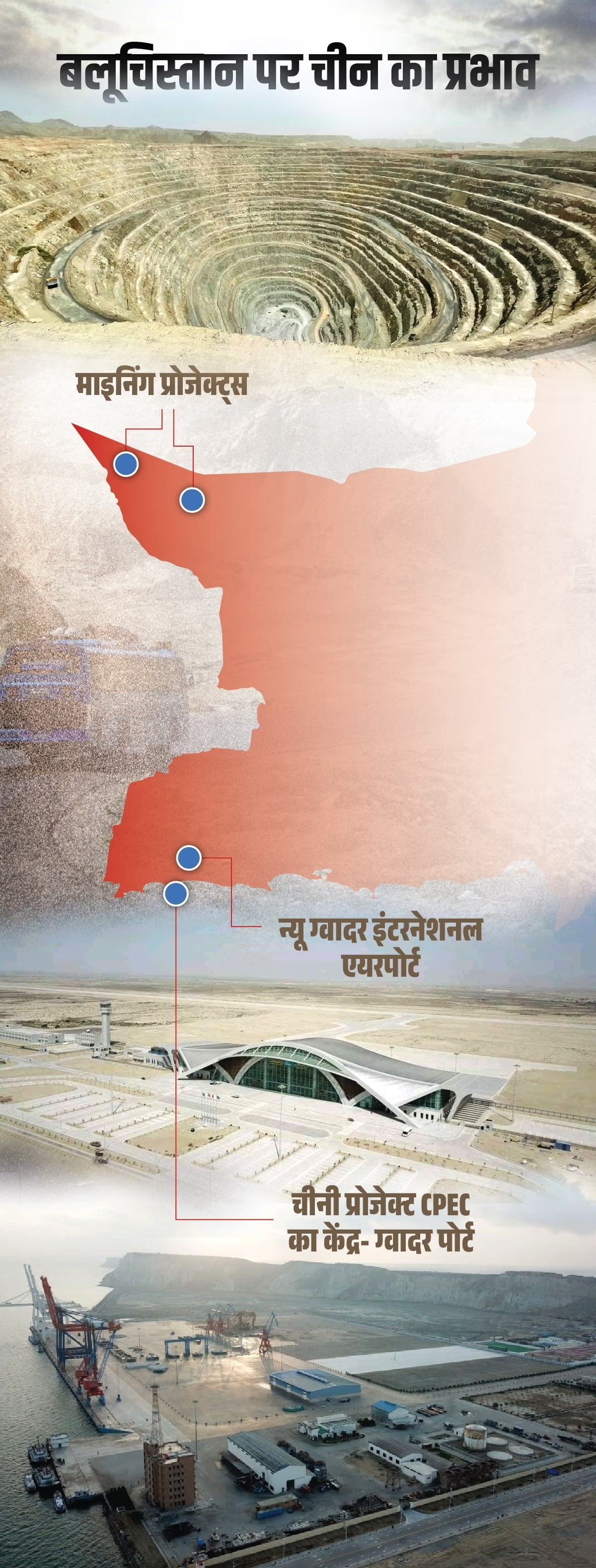
Balochistan is a major component of Chinese President Xi Jinping’s Belt and Road Initiative (BRI), with the China-Pakistan Economic Corridor (CPEC), a flagship project. Under CPEC, China has committed $62 billion in Pakistan to connect southwestern China with the Arabian Sea.
China is developing Gwadar Port, a deep-sea port in Balochistan's Gwadar city, launched in 2002, and has fueled the Baloch movement’s anger.
China has also built Pakistan’s largest airport, Gwadar International Airport, within the region. Moreover, it is engaged in numerous mining projects and energy developments within Balochistan.
To link Gwadar Port with the Makran Highway, China constructed the East Bay Expressway along with an intricate road network to facilitate trade.
Source: aajtak
China is also establishing a 1320-megawatt power plant, generating electricity from coal, in Balochistan. Local resentment erupts over these Chinese projects as residents accuse foreign entities of exploiting provincial resources without sharing any fiscal benefits. Hence, BLA insurgents aggressively target Chinese projects and personnel.
Eyes of Both China and Washington Set on Balochistan
While Pakistan shares part of Balochistan’s resources with its closest ally, China, the US, too, has shown interest. Last year, US President Trump endorsed a mining agreement with Pakistan, involving American mining company USSM, signing a $500 million memorandum of understanding in September.
However, Pakistan’s grand mineral vision shown to Trump may remain unfulfilled.
Geo-politics expert Brahma Chellaney posted on X, 'Pakistan presented Balochistan as a profitable mining haven to American companies, deceptively aiming for perceived stability. Yet, in reality, such stability is neither achieved nor readily guaranteed.'
He added that significant mining projects necessitate comprehensive security arrangements, including soldier placements, controlled corridors, and political guarantees — assurances that Pakistan isn’t effectively positioned to ensure.
Chellaney noted, 'Marketing Balochistan as a resource goldmine while administrating it as a militarized internal colony showcases policy instigating further revolt. The latest attack is further testament to this paradox.'
Michael Kugelman, a foreign affairs expert, also issued a warning to those planning Balochistan investments, emphasizing, 'Today’s Balochistan attacks are a cautionary tale for all, especially those in the White House intending to invest in Pakistan’s critical minerals. BLA's principal score lies in its opposition to external forces exploiting local resources.'
A Promise to Make Balochistan Like Dubai, Turned Fortress Instead
When signing the CPEC agreement with China in April 2015, Pakistan pledged turning Balochistan into a Dubai-like hub. But, with extensive military deployment, the province instead turned into a fortress. Gwadar locals accuse the government of transforming their city into a high-security prison. Tall fences surround Chinese projects, distinct zones created for Chinese workers, security checkpoints established, with police and military deployment reinforced.
Gwadarians recount being barred from accessing parts of the sea surrounding Gwadar Port. Fishermen lament restriction from fishing in their own waters.
British paper The Guardian, in an interview, quotes fisherman Dad Karim saying, 'We've lost the entire sea. It’s no longer ours... it belongs to the Chinese.'