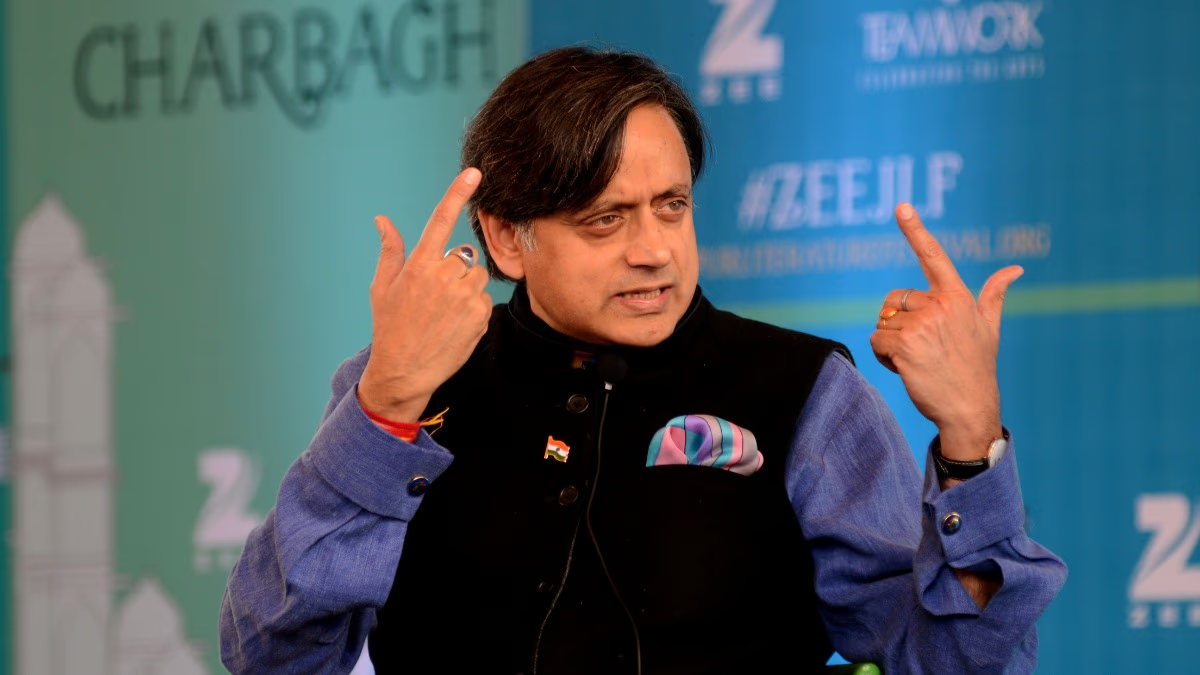
Recently, discussions have been circulating about a potential rift between MP Shashi Tharoor and the Congress leadership. At the Kerala Literature Festival, Tharoor decisively put these speculations to rest by presenting his perspective to the world. He clearly stated his position by affirming that he has never violated the official party line in Parliament.
In response to a question, Tharoor remarked, 'I came here to discuss the Constitution, not politics. However, I want to state unequivocally that if you examine my public statements and records, you will find no instance of me contravening my party's official stance in Parliament.'
There has been only one matter where a difference of opinion was publicly aired, and that was 'Operation Sindhoor'. My stance on this issue has always been transparent. I want to affirm that, without regrets, I remain steadfast in my statement today.
After the tragic incident in Pahalgam, I spoke out as an observer and commentator. As we know, Parliamentarians come from various fields—lawyers, doctors, businesspeople, and writers. I am a writer myself. In that capacity, I wrote a column in a newspaper titled ‘Hit Hard, Hit Smart’.
In the article, I explicitly stated that this attack could not be left unpunished. A decisive and necessary response was called for—direct action. We must clearly retaliate against terrorists.
Also Read: Shashi Tharoor skips Congress high command meeting, cites PM Modi’s rally in Kerala
Nonetheless, I also mentioned that India is on a development path and we do not wish to engage in a prolonged conflict with Pakistan. India's economy thrives on investment, which conflicts fail to attract. Therefore, we should act to ensure that India does not become a battleground.
I suggested targeting only terrorist strongholds with limited, controlled actions to send a clear message that India is addressing terrorism, not Pakistan. It’s crucial to clarify that these steps were taken due to Pakistan's inability and unwillingness to curb terrorism. Additionally, I had emphasized avoiding any provocation or escalation with Pakistan.
I articulated all this clearly in my article, which remains part of the public record. Approximately ten days later, the Indian government took precisely the steps I had recommended. How, then, can anyone expect me to criticize this action? Not only did I support 'Operation Sindhoor', but I also stood by the government's decision during foreign visits.
In conclusion, I want to reiterate that when national interests are at stake, we must rise above political differences and focus solely on the nation. As Jawaharlal Nehru asked, 'If India dies, who will live?' That remains my message.