In recent years, Chinese and Japanese fighter jets have been dangerously close in the East China Sea and around Taiwan. Reports often emerge of Chinese J-10, J-16, or J-20 jets locking fire-control radar on Japanese F-15 or F-35 jets. Japan views this as extremely serious and hazardous.
On December 6, two Chinese J-15 fighter jets locked fire-control radar twice on Japanese F-15 jets over the East China Sea near Miyako Island, close to Okinawa, where tensions are already high due to the Taiwan conflict. Japan's Defense Minister Shinjiro Koizumi described the situation as regrettable and dangerous.
This is likely the first instance of Chinese aircraft directly focusing radar on Japanese military jets. Japan immediately lodged a protest by summoning the Chinese ambassador. Australia urged for peace, while the US remained silent but supports Japan behind the scenes. But what exactly is radar lock, and why is it so risky?
Source: aajtak
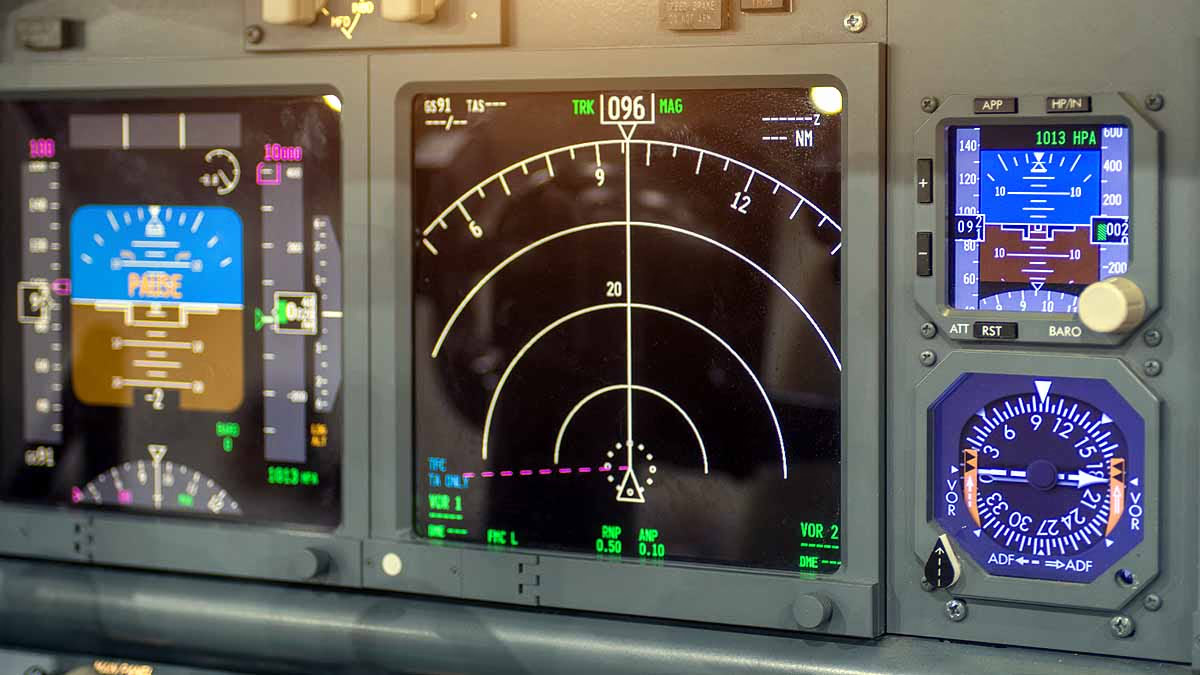
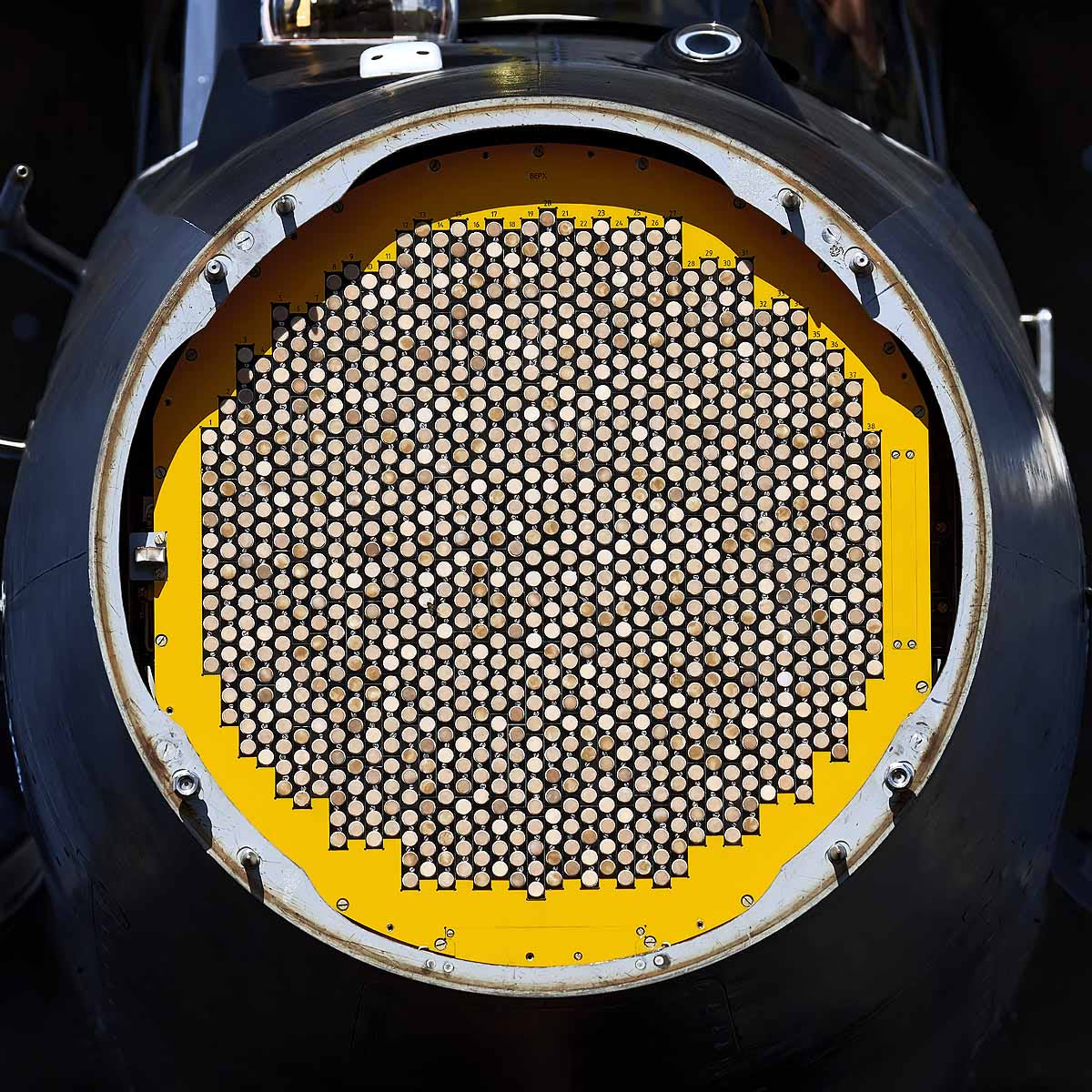
Modern fighter jets feature two primary radars...
Search Radar: Emitting a wide beam like a torch's wide light, covering 200-300 kilometers, though not highly accurate. Keeping it on is quite normal.
Fire-Control Radar: Emitting a narrow, precise beam like a laser pointer.
These accomplish two tasks...
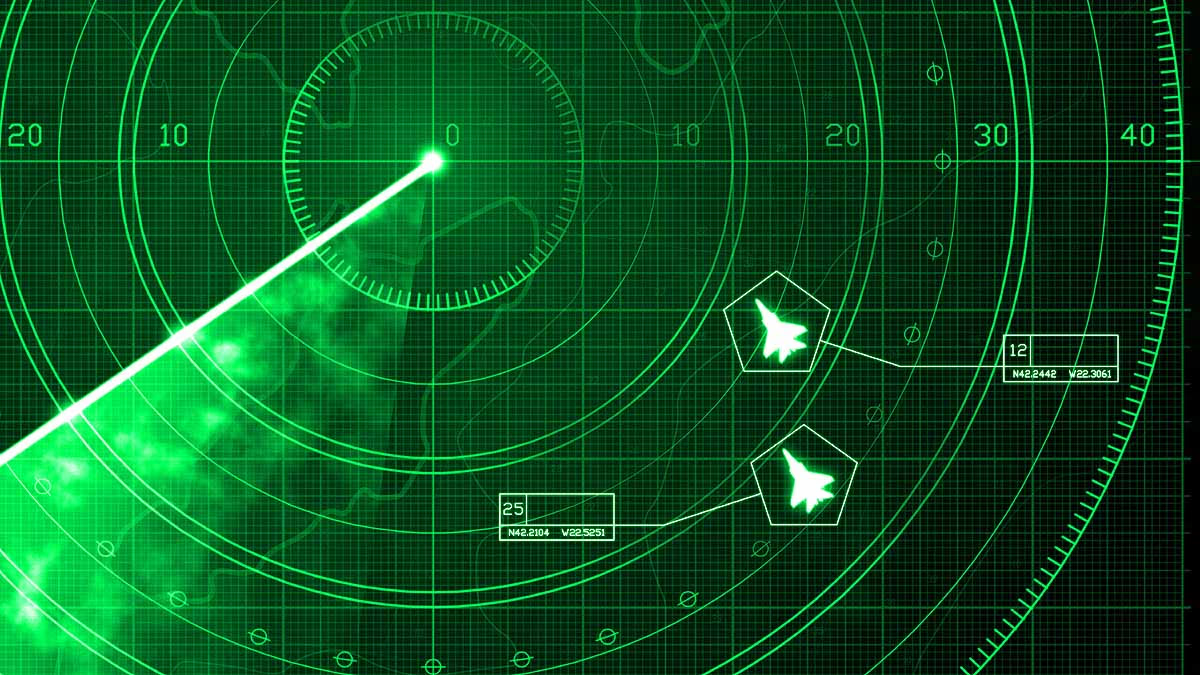
Continuously measuring distance and determining the target's exact direction, altitude, and speed. Once the pilot presses the lock button, the radar beam focuses solely on one aircraft, sending and receiving radio waves thousands of times per millisecond. This is known as lock-on.
Every modern jet has an RWR (Radar Warning Receiver). When a fire-control radar locks on...
Source: aajtak
A loud 'beee-beee-beee' starts in the cockpit, and a red diamond flashes on the screen, indicating the lock's direction. The radar type is also displayed, such as the Chinese KLJ-7A or Japanese J/APG-1. Within 2-3 seconds, the pilot becomes aware a missile is incoming.
Reaction time limit:
Neuroscience suggests the pilot's brain processes the threat within 200-300 milliseconds. After a lock, missiles like the PL-15 (200 km range, Mach 4 speed) can be launched within 5-8 seconds. Intense G-forces during rapid turns halt blood flow to the brain, complicating decision-making.
Source: aajtak
According to Japan's Defense Ministry...
In 2023 - 199 instances of Chinese jets locking Japanese jets with FC radar.
In 2024 - 247 instances.
In 2025 (January to November) - 312 instances, a new record.
On May 22, 2025, a Chinese J-20 stealth jet maintained radar lock on a Japanese F-35A, just 18 kilometers away, for 28 seconds. The Japanese pilot had to flee at supersonic speed.
One missile - one jet down.
The other country retaliates with 10 missiles.
Within 30 minutes, 50-60 jets engage in air combat.
The US helps Japan under the American-Japan security treaty.
Taiwan, South Korea, and the Philippines might join in.
A nuclear weapons conflict could even commence.
It's crucial to establish a hotline (like between India and China). Follow rules to maintain a flight distance of over 50 kilometers. Issue a radio warning before radar lock.
Fire-control radar lock is no joke. It's akin to pointing a gun in the air. Until trust builds between China and Japan, a minor spark in the East China Sea could ignite a large-scale war.