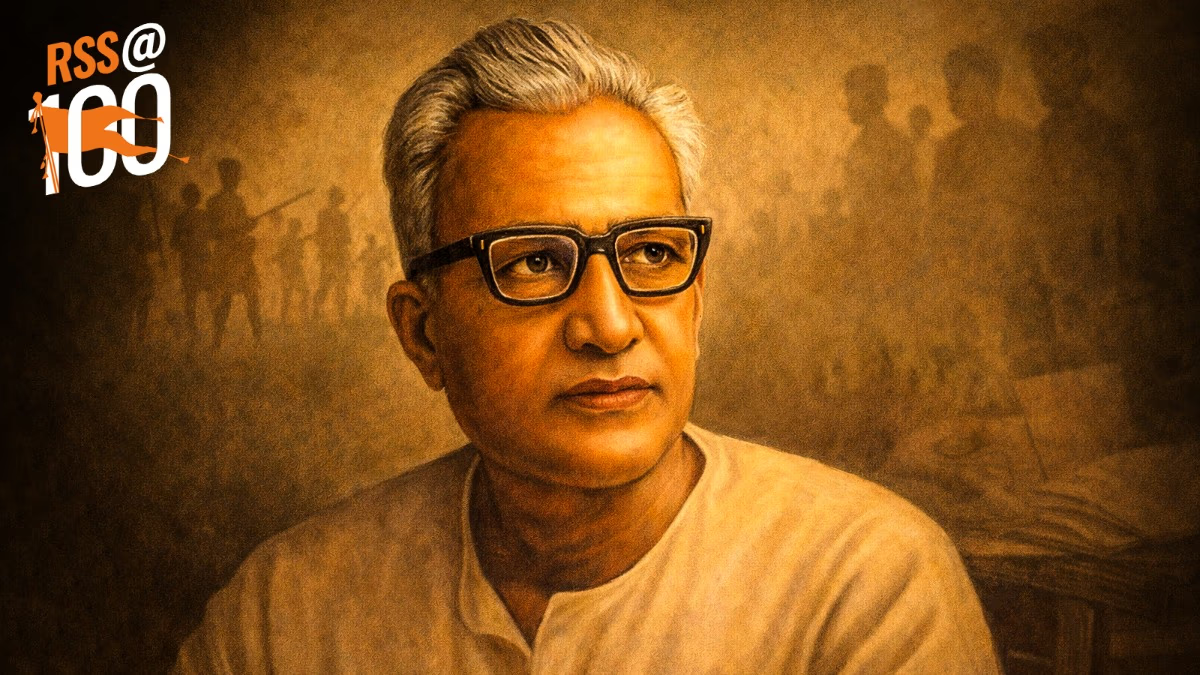
In April 1946, Deendayal Upadhyaya was the co-regional promoter in Uttar Pradesh, with Bhaurao Deoras as the regional promoter. A meeting was held in Lucknow, where Bhaurao, diverting from the main topic, expressed his concern about young volunteers at RSS branches. 'The interest of children in the Sangh is delightful. Their minds are innocent and impressionable; therefore, it is the ideal time to instill noble ideas. Children love literature, but it is worrisome that we lack such literature. Isn’t it possible to have some relevant literature available for children here?’
On hearing this, volunteers began debating the challenge of writing children’s literature, acknowledging how demanding it would be and wondering if it might be accomplished quickly.
Bhaurao responded, 'Searching for skilled writers will consume too much time.' Baba Apte looked at Deendayal Upadhyaya and said, 'Panditji can accomplish this task well; he has a flair for writing.' Encouraged by other volunteers, Bhaurao added, 'Yes, Panditji, you possess great skills, and I trust that you will excel in this task too.' Compelled by Bhaurao’s conviction, Deendayal could not refuse, and within 24 hours, he returned with a manuscript for children, impressing Bhaurao.
It was Bhaurao who introduced Deendayal Upadhyaya to the Sangh, recognizing his talent and dedication by assigning fitting responsibilities, leading him to become his co-regional promoter over time. Their first meeting is a captivating story, linked to the friendship Deendayal formed with Balwant Shahende, an RSS volunteer, while studying at Birla College in Pilani.
Deendayal Upadhyaya Needed an Answer Before Joining RSS
Though influenced by RSS, Upadhyaya sought answers to key questions before affiliating through someone else's recommendation. His questions revolved around the principles of Hinduism and RSS’s stance towards other religions. Balwant Shahende, unable to provide satisfying answers, arranged a meeting with Bhaurao Deoras, who explained that Hinduism is an ancient religion intrinsic to Indian civilization and emphasized unity among Indian faiths, likening them to tributaries of the same river. This clarification appeased Upadhyaya's concerns, leading to his valuable contributions to RSS and initiatives like the first Shishu Mandir in Gorakhpur, alongside publications supported by Bhaurao.
Every Tale in This Special Series on RSS’s Century
Bhaurao, brother of Balasaheb Deoras, hailed from a large family where three brothers excelled in civil services, medicine, and engineering, respectively. Contrary to their father’s initial disapproval, Balasaheb and Bhaurao became engrossed in RSS, particularly through their association with Dr. Hedgewar’s home. In 1937, after graduating, Dr. Hedgewar appointed Bhaurao to oversee RSS activities in Uttar Pradesh under the tradition of balancing further studies with Sangh work.
Subhash Chandra Bose Lauded Bhaurao Deoras
While pursuing dual degrees from Lucknow University, Bhaurao excelled with gold medals in both fields besides his active participation in the freedom movement and a prominent event featuring Subhash Chandra Bose. With significant financial constraints and support from M. S. C. student Bapurao Moghe, they furthered RSS presence in Uttar Pradesh.
When Bhaurao Deoras Sold Balloons
Financial needs once led Bhaurao to sell balloons from an enterprise run by former military officer Martand Rao Jog, an RSS commander tasked with military training. Despite unsuccessful sales, his efforts in recruiting and mentoring adept workers like Deendayal became pivotal in RSS's growth across Uttar Pradesh.
Bhaurao’s Role in Cementing India-Israel Relations
Both Nehru and Indira Gandhi sought Israeli assistance in multiple instances, albeit discreetly due to the Palestine issue. RSS viewed Israel as a natural ally, delegating Bhaurao to foster amicable ties and influence Indian leaders towards definitive diplomatic ties, culminating in India's 1992 embassy establishment in Israel—a strategic RSS foreign policy maneuver.
Under Indira’s Orders, Rajiv Met Bhaurao Deoras
Nirja Chowdhury in ‘How Prime Ministers Decide’ notes Indira Gandhi's post-Emergency shift towards right-wing, leading her to send Rajiv Gandhi to meet Bhaurao upon Bhaiyyaji Apte’s advice. The meetings facilitated starting in 1982, were part of enduring RSS-Congress communication as documented by journalist Ram Bahadur Rai.
The Awareness of Imminent Passing
On March 9, 1992, during a visit to Lucknow, Bhaurao intimated to colleagues about his impending demise, citing the passing of Dr. Hedgewar’s contemporaries. Shortly after, in May 1992, he departed, leaving a legacy of strategic RSS expansion across Indian regions and international diplomacy.
Previous Story:
Foundation of ‘Seva Bharti’: Linking to PM Modi
Next Story: