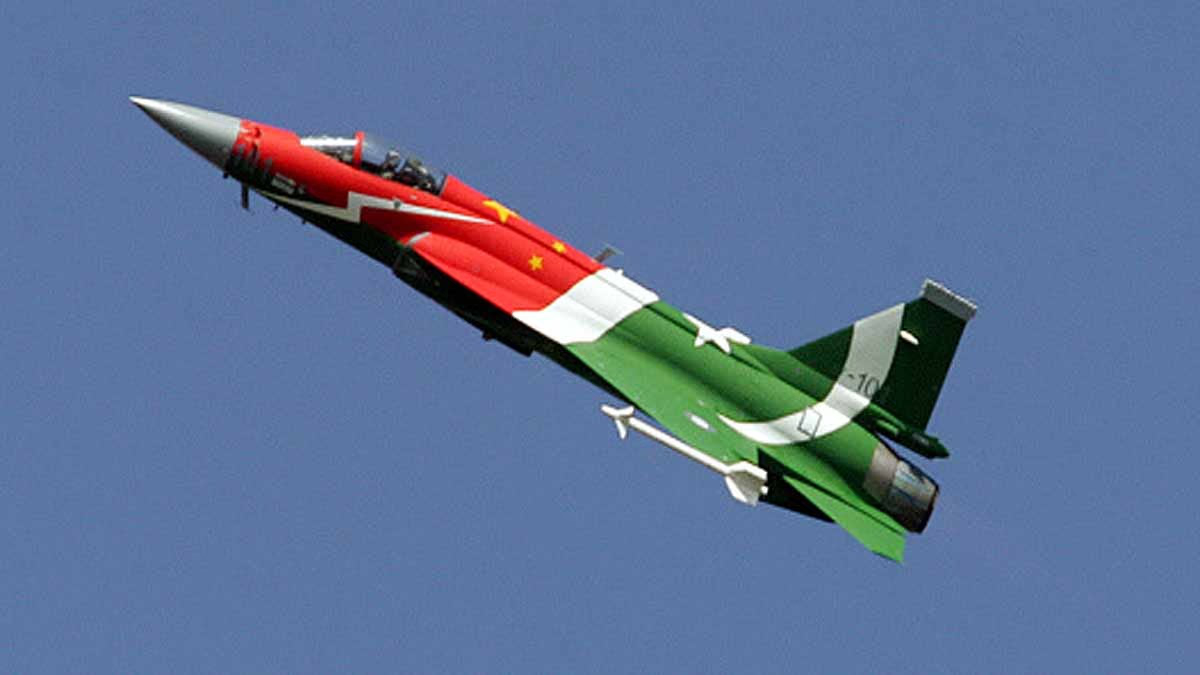
Pakistan has secured one of its largest defense export deals by agreeing to sell over $4 billion worth of weapons to Libya's Libyan National Army (LNA). The agreement was concluded following a meeting last week in Benghazi between Pakistan's Chief of Army Staff, Field Marshal Asim Munir, and LNA's Deputy Commander-in-Chief, Saddam Khalifa Haftar.
The deal primarily includes these weapons and equipment...
JF-17 Fighter Jets:
These multi-role combat aircraft, co-produced by Pakistan and China, have earned a reputation for efficiency and versatility. Reports suggest at least 16 JF-17 jets will be sold.
Super Mushak Trainer Aircraft:
Essential for pilot basic training, a fleet of 12 of these small planes will be provided.
The agreement also covers other military gear related to land, sea, and air, including armored vehicles, munitions, and naval supplies. The LNA has declared this as the start of a new defense cooperation era with Pakistan, involving weapon sales, joint training, and military production.
Pakistan's Army Chief, Field Marshal Asim Munir, personally finalized this deal in Benghazi. Addressing the LNA officers, he highlighted how recent engagements with India have showcased Pakistan’s capabilities to the world. Munir referred to Libya as the land of lions, advising its military to fortify itself. Pakistan celebrates this as a major leap in its defense export endeavors.
Although Libya has been under a UN arms embargo since 2011 due to ongoing unrest, with the country split post-Gaddafi, the deal bypasses these restrictions.
Tripoli houses the UN-recognized government in the west.
The east and south are controlled by General Khalifa Haftar's LNA, which holds large oil reserves.
The agreement supports the LNA, a faction opposing the UN-recognized government, potentially prolonging Libya's civil conflict. The UN acknowledges the embargo's ineffectiveness, as various countries have been supplying weapons to both sides. Pakistani officials assert they are not alone in selling arms to Libya, noting that Haftar himself is not individually sanctioned.
With this deal, Pakistan aims to enhance its defense industry with cost-effective yet potent weapons like the JF-17, providing an alternative to expensive Western options. This move opens new markets in Africa and the Middle East for Pakistan. Recently, defense ties with Saudi Arabia and Qatar have also strengthened.
If fully implemented, the deal could mark a historic achievement for Pakistan, though it may provoke increased international scrutiny. The UN Security Council is monitoring the situation closely, given the potential impact on Libya's stability efforts.