When a nation withdraws from a major tournament at the last hour, consequences are typically expected. However, in the case of the ICC Men’s T20 World Cup, Bangladesh received a benefit instead of punishment. Let's explore why...
A Quick Overview of the Controversy
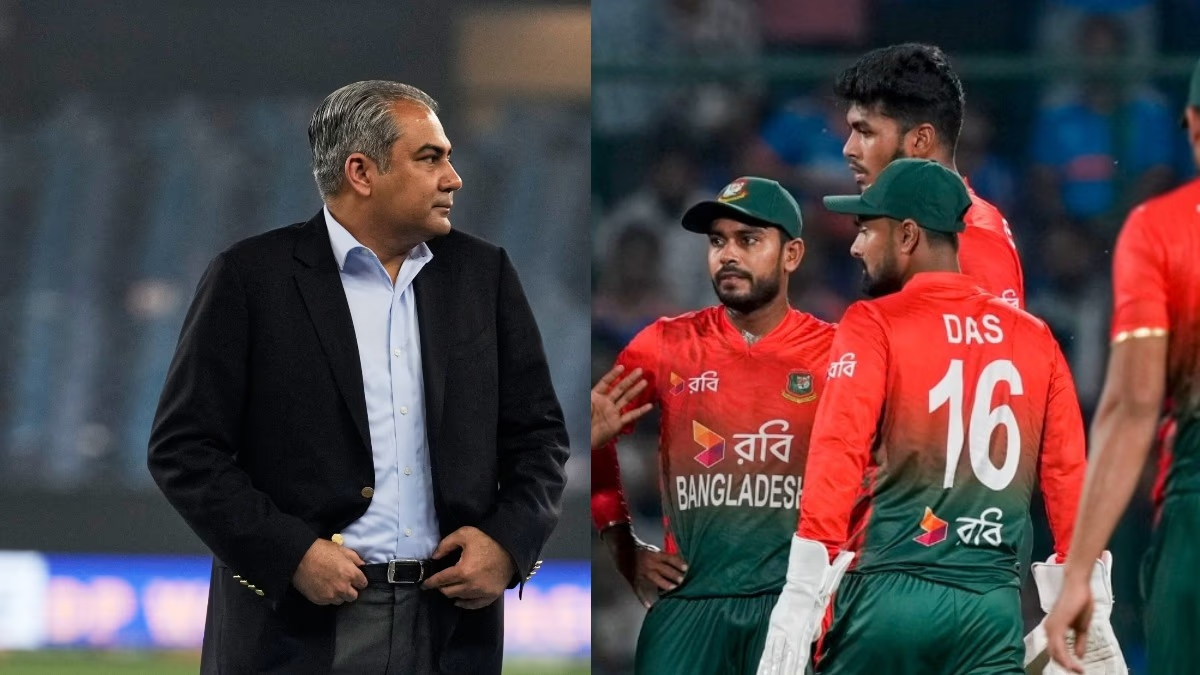
Central to the controversy was the Bangladesh Cricket Board (BCB), which, citing security reasons, declined to send its national team to the T20 World Cup matches in India. When ICC dismissed this concern, BCB announced a boycott of the World Cup. Following this, Pakistan created a stir by threatening to boycott its match against India.
After the drama unfolded, expectations were that ICC would take firm action against Bangladesh. Yet, instead of facing fines or penalties, BCB received assurances of future hosting opportunities and no action was taken against them.
Read more: How Pakistan took a U-turn in 10 days – ICC's masterstroke revealed
Why Did ICC Adopt a Lenient Approach?
The International Cricket Council’s (ICC) stance, which seemed more supportive than punitive, puzzled and concerned many. Here's why Bangladesh wasn't penalized for withdrawing from the T20 World Cup.
ICC confirmed that despite Bangladesh’s withdrawal, there would be no financial, sporting, or administrative sanctions imposed. This decision followed intense discussions with the Pakistan Cricket Board (PCB) and BCB.
Moreover, Bangladesh was assured the opportunity to host another ICC tournament before the 2031 Men's ODI World Cup. ICC stated that Bangladesh remains a significant and primary contributor to global cricket development.
BCB President Aminul Islam Bulbul welcomed the decision, emphasizing continued collaboration with ICC and other cricket boards.
Read more: Boycotts failed, conditions negated, how Pakistan’s U-turn story unfolded
Why Was Bangladesh Not Punished?
The meeting in Lahore was seen not just as mediation, but as intense bargaining, highlighting Pakistan’s influence and ICC's constraints. Pakistan’s initial boycott aimed to pressure Bangladesh. However, as anticipated, Pakistan’s stance shifted.
For ICC, the India-Pakistan match was crucial, being more lucrative than other games. Additionally, ICC had to consider small boards reliant on its central funding.
Understanding the dynamics, Bangladesh, with Pakistan’s backing, turned the situation around in its favor. The outcome was ICC saving its marquee match, Pakistan backtracking, and Bangladesh securing future assurances without penalties.
Read more: A Message, Night Flight, and a 5-hour Secret Meeting – Why Bangladesh Was Invited to Lahore Despite World Cup Withdrawal
What If Bangladesh Had Been Punished?
Had ICC penalized Bangladesh, the repercussions would have been severe. A financial penalty could worsen BCB’s situation, stir fan unrest, and impact the cricket structure.
Bangladesh is among the largest cricket markets globally, with over 200 million cricket enthusiasts. ICC cannot risk alienating this market.
According to PTI, BCB faced potential losses of approximately 3.25 billion Taka (around 27 million dollars) due to the T20 World Cup withdrawal, with a possible income drop of 60% in 2025-26.
Former captain Tamim Iqbal also warned the decision taken on an emotional basis could have effects for a decade.
The relief offered to Bangladesh wasn’t just about fairness but also limiting financial damage. Thus, despite withdrawing from the T20 World Cup, Bangladesh reaped benefits rather than facing sanctions.