The results of Bangladesh's 13th parliamentary elections not only hint at a shift in power dynamics but also spark new conversations around the participation of minority communities. The nationalist party has gained a substantial lead and is likely moving towards a clear majority. Amidst this, the victory of four candidates from the Hindu community stands out significantly.
According to the latest results, BNP secured a total of 211 seats, while the Islamic party won 68 seats. This outcome strengthens the prospects of a power shift. However, the election's narrative extends beyond majority gain. The question of minority representation remains equally pivotal.
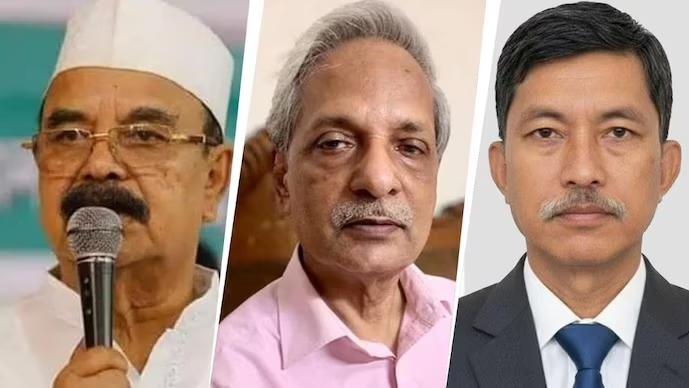
Gayeshwar Chandra Roy
Gayeshwar Chandra Roy's win from the Dhaka region is considered noteworthy. He secured more than 99,000 votes, surpassing his rival. Amidst recent reports of Hindu community persecution, his victory carries symbolic importance. This region was anticipated to have a tough contest due to its diverse constituencies.
Nitai Roy Chowdhury
Nitai Roy Chowdhury secured a comfortable victory from the Magura region, receiving over 147,000 votes. Regarded as an influential face for the minority community within the party, his association with Gayeshwar Chandra Roy is also noted. His victory has fortified the party's standing in areas with notable minority demographics.
Advocate Dipen Dewan
From the Rangamati area, Advocate Dipen Dewan secured a third win, surpassing his closest competitor to claim a seat in parliament.
Saching Prue
Saching Prue from the Bandarban area also secured a parliamentary seat, winning over 141,000 votes, bringing the total number of minority representatives from this party to four.
Jamaat-e-Islami Candidate Fails
In contrast, the lone Hindu candidate from the Jamaat-e-Islami coalition faced defeat. Despite receiving substantial votes, the candidate from the Khulna region could not secure a win. Consequently, no minority candidate from this coalition made it to parliament.
Totaling 79 minority candidates, including 10 women, competed in the elections. Out of 60 registered parties, 22 fielded such candidates. Nevertheless, their parliamentary representation remained limited, which, according to political observers, continues to be a challenge.