Once again, tensions in the Middle East have soared to critical levels. The potential for conflict between the United States and Iran continues to deepen, with emerging images from Tehran signaling a warning of a major confrontation ahead. The situation on the ground suggests that the distance between diplomacy and warfare is now razor-thin.
Recently, U.S. President Donald Trump's warnings have shaken the political landscape of the entire region. Trump has unequivocally stated that if Iran does not consent to an agreement, it could face actions even more devastating than the 'Midnight Hammer.'
Amidst these tensions, Aaj Tak has made its way to Ground Zero in Tehran. Iran's capital is enveloped in an atmosphere of heightened sensitivity. While the streets may appear to reflect normalcy, the corridors of political power and security infrastructure reveal a noticeable level of vigilance. It is evident that Iran is not only preparing militarily but is also striving to strengthen its historical and ideological foundations.
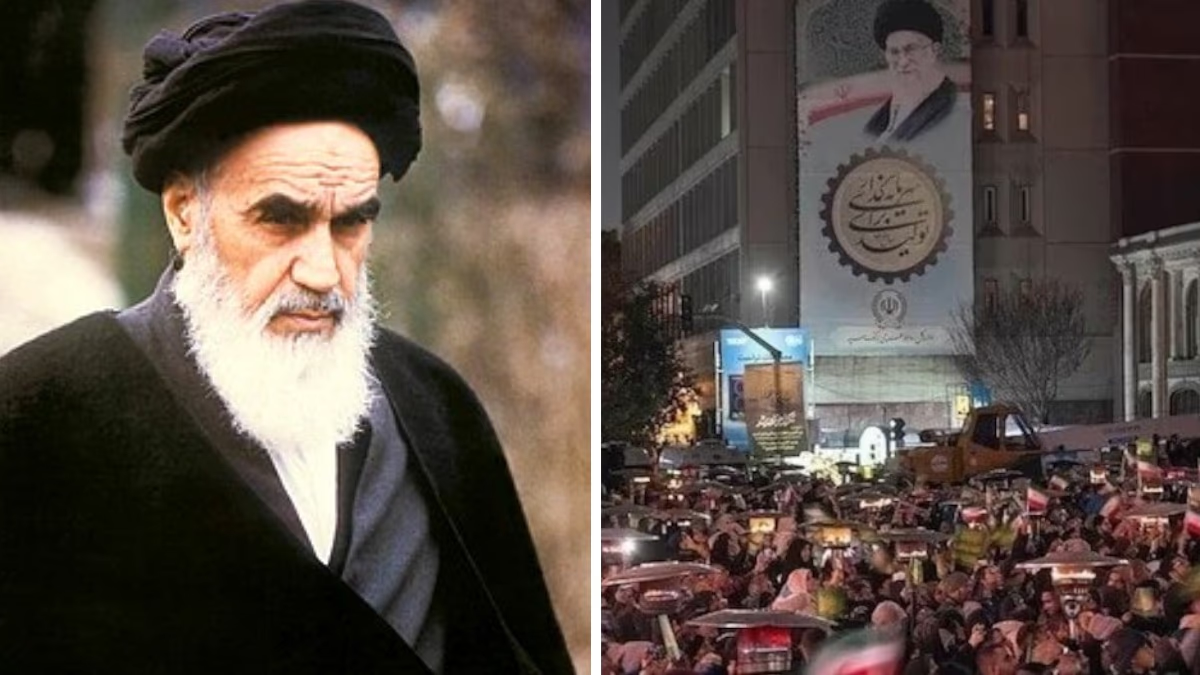
The Aaj Tak team has reached the historic site in Tehran where the ideological seed of the 1979 Islamic Revolution was planted. Ruhollah Khomeini (1902-1989) led the 1979 Revolution, toppling the Shah's regime to establish the Islamic Republic. From 1979 until his death in 1989, he reigned as Iran's first Supreme Leader under the doctrine of 'Velayat-e-Faqih' (Guardianship of the Islamic Jurist).
Source: aajtak
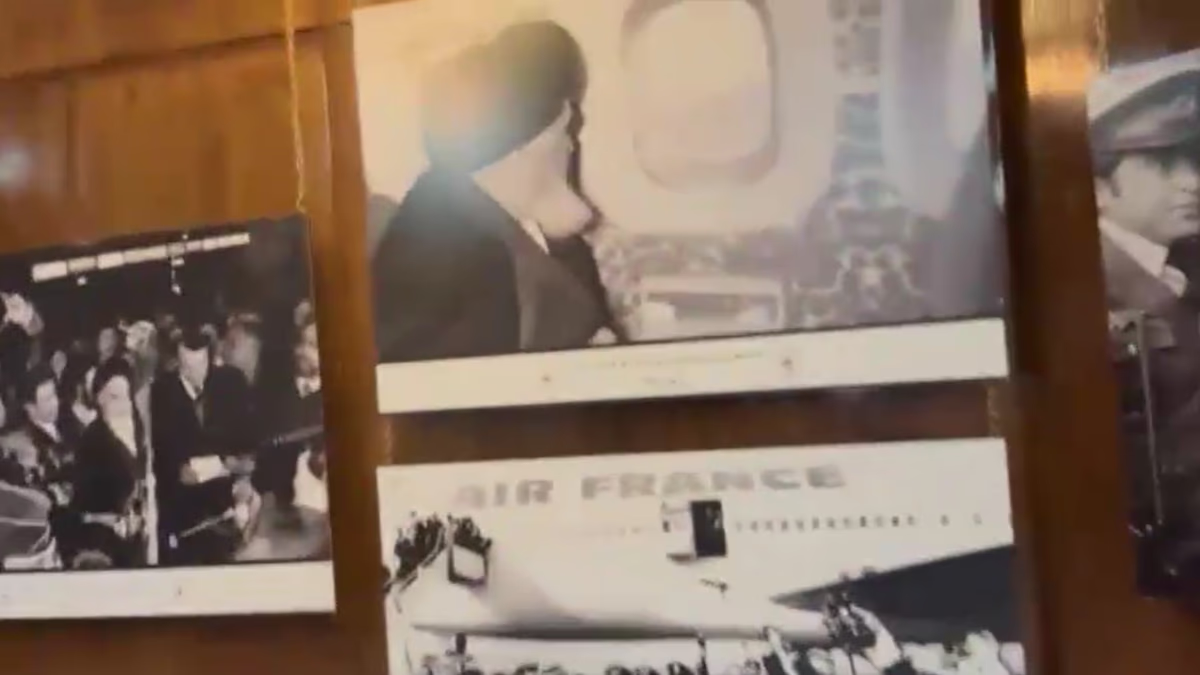
This very residence was where Imam Ruhollah Khomeini orchestrated the revolutionary strategies. The place has since transformed into a type of memorial and museum. It houses photographs from Khomeini's exile period until his return to Iran from France. On this site, documents related to the revolution, press conference images, and records of initial political meetings are safely preserved. This location holds not just historical significance but also symbolizes the essence of Iranian society. It's limited to a select few and is associated with national pride.
'Spying Nest': Museum of the Former US Embassy
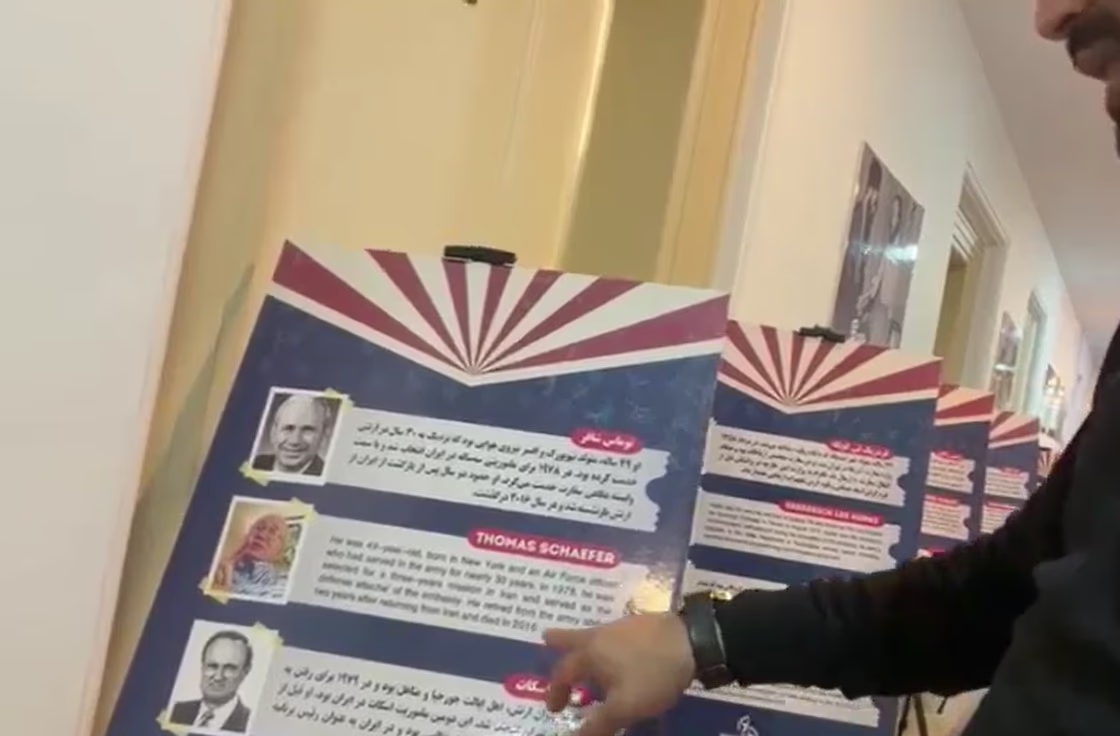
The most significant part of our report from Tehran's grounds includes a tour of the former U.S. Embassy, which Iran now refers to as the 'Spying Nest.' This is the same compound known as the U.S. Embassy in Tehran, taken over by protesters during the 1979 revolution. The event permanently altered U.S.-Iran relations. Today, this embassy serves as a museum showcasing American gadgets, communication machines, espionage technology, and documents from that era.
Source: aajtak
Burned Documents and Espionage Evidence
Among the museum displays are documents that American officials allegedly attempted to destroy while vacating the embassy. Iranian officials claim that these papers were pieced together to gather evidence of supposed American espionage activities. Displayed are teletype machines, encrypted communication devices, and satellite communication systems, which Iran uses to purportedly demonstrate U.S. interference in its internal affairs.
Crystal Room and Bunker
Inside the embassy is a unique 'Crystal Room.' Constructed with thick glass and a soundproof design, it was once used for confidential meetings. Additionally, several bunker-like secured rooms are on display, which were used for security and espionage operations at that time. The museum also features images and details of American officials who were taken hostage during the revolution.
This incident remains a significant point of contention in the history of Iran-U.S. relations. While Iran views it as a symbol of its revolutionary triumph, the United States considers it a violation of international law.