The political landscape of Bangladesh saw dramatic changes in the 13th parliamentary election. The Bangladesh Nationalist Party (BNP) surged to power with a strong majority, while many smaller and mid-sized parties were wiped out. The newly formed National Citizen Party (NCP), linked with student leaders instrumental in toppling the Sheikh Hasina government, failed to make a significant impact. Notably, several parties borrowed names and symbols reminiscent of Indian politics, capturing everyone's attention.
In the general election, the Bangladesh Jatiya Party (BJP) managed to secure one seat, while many renowned parties were left with none. Bangladesh's BJP sports a bullock cart as its election symbol, as opposed to India's BJP, which uses the lotus. Similarly, parties with symbols like the 'elephant' and 'bicycle' were present, drawing comparisons to influential political symbols in India's Uttar Pradesh, but were ultimately rejected by Bangladeshi voters.
The Bangladesh Republican Party (BRR) with the 'elephant' and the Jatiya Party with the 'bicycle' received no seats. In India, the Bahujan Samaj Party (BSP), led by Mayawati, uses the elephant, while the Samajwadi Party, led by Akhilesh Yadav, opts for the bicycle. The 'hand' symbol used by Bangladesh Muslim League (BML) and another party known for the 'lantern' also failed to win any seats. In India, the 'hand' is Congress's symbol, while the 'lantern' is used by Lalu Yadav's RJD.
A significant historical first was that the long-time ruling party, Awami League, led by former Prime Minister Sheikh Hasina, couldn’t contest due to a ban by the interim government, narrowing the competition mainly to BNP and other parties.
Source: aajtak
BNP Coalition Achieves Clear Majority
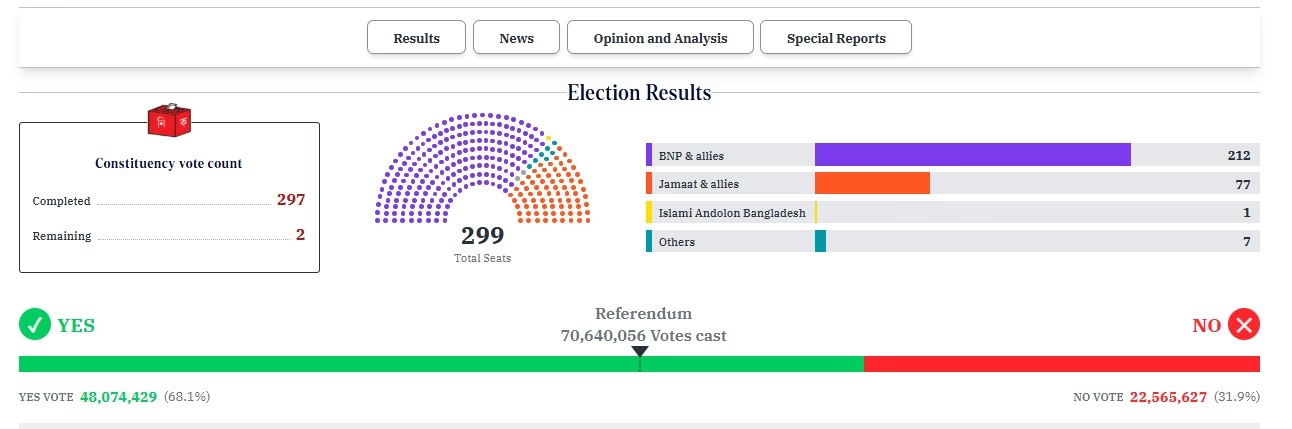
BNP emerged victorious with 209 seats, out of 299 contested, following the death of a candidate where voting was halted. Under the leadership of Tariq Rahman, BNP performed exceptionally, securing a total of 212 with allies Ganoshonghoti Andolan, Bangladesh Jatiya Party, and Gono Odhikar Parishad each contributing a seat.
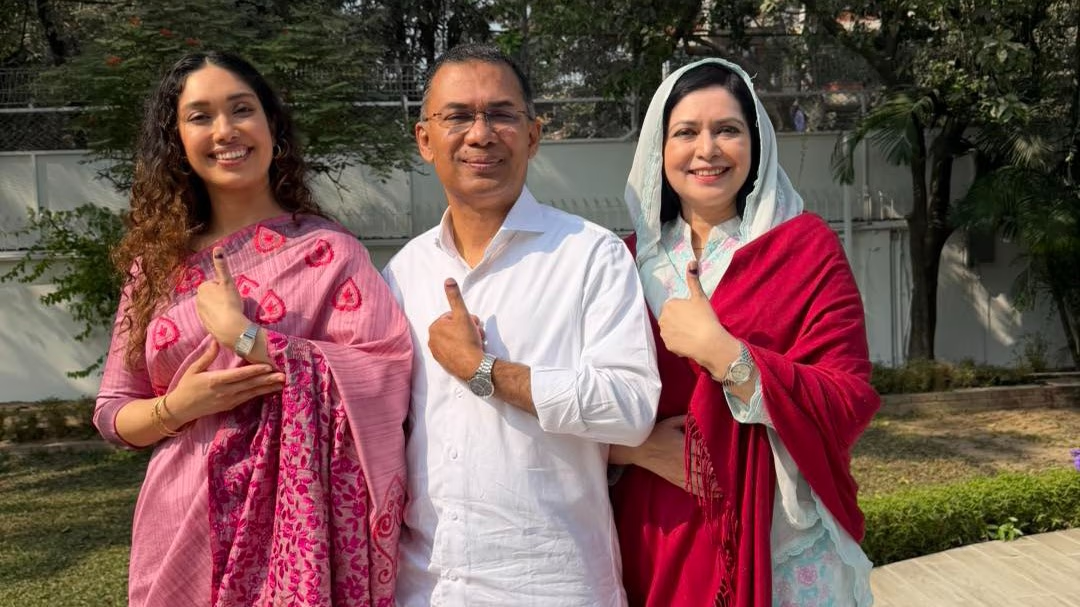
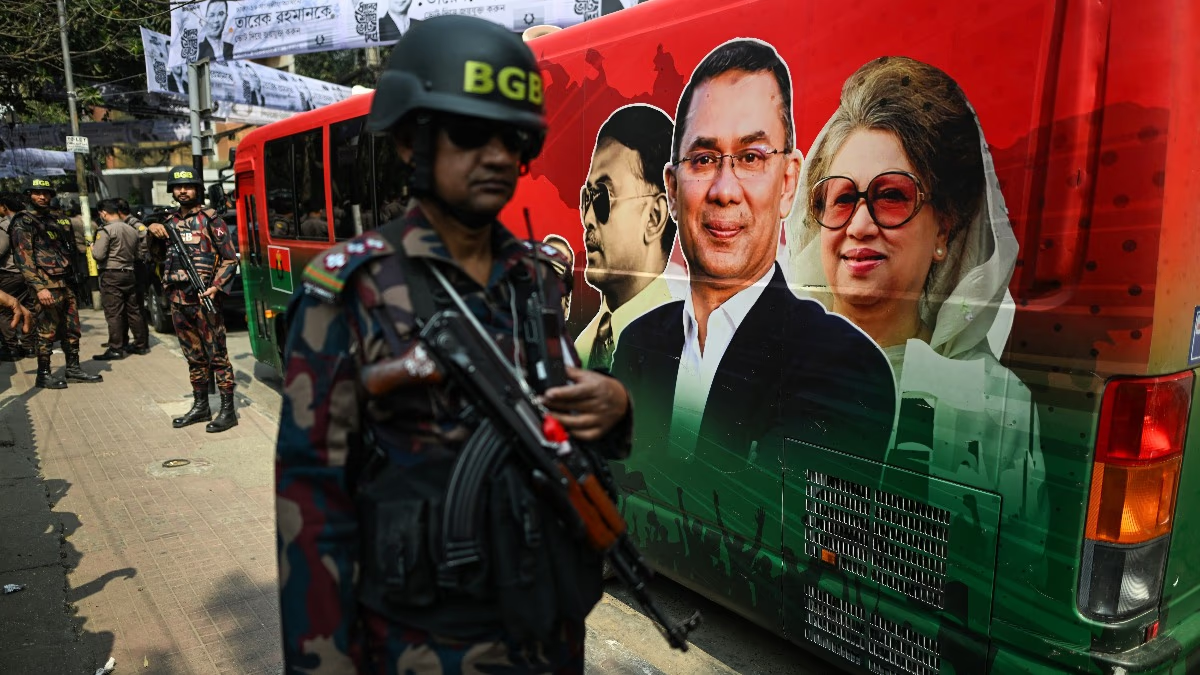
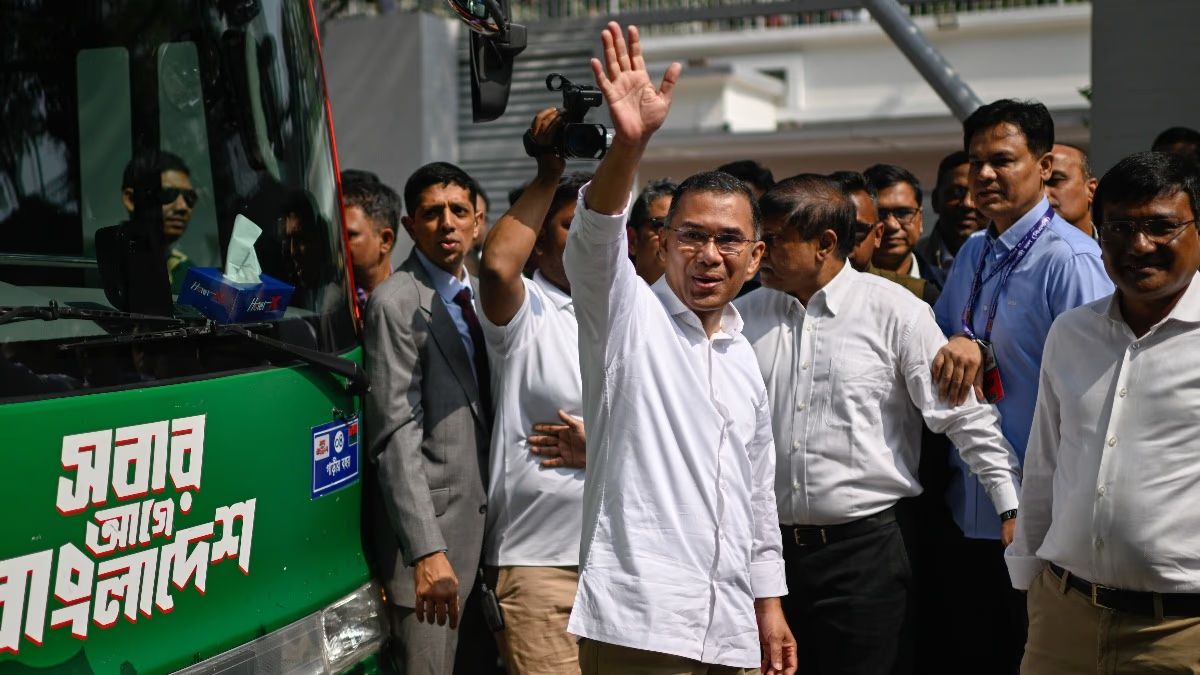
Political analysts view this election as a pivotal change in Bangladesh's political arena as the Awami League couldn’t participate. BNP’s chairman and prime ministerial candidate Tariq Rahman contested two seats, Dhaka-17 and Bogra-6, marking a pivotal win since his return to Bangladesh after 17 years.
Source: aajtak
Jamaat Alliance Secures 77 Seats
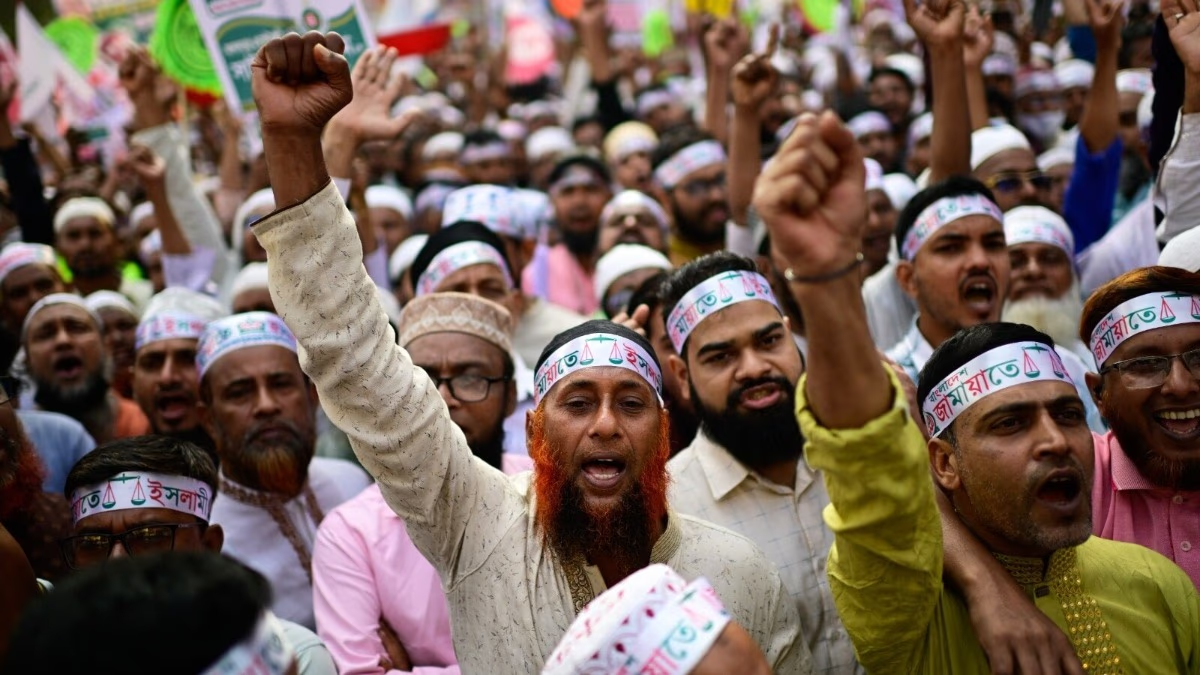
Jamaat-e-Islami emerged as the second largest, asserting strong presence with 68 seats. The Jamaat coalition secured 77 seats overall. This included the 'lotus' symbol party National Citizen Party (NCP) winning six seats, Bangladesh Khilafat Majlis getting two, and Khilafat Majlis one. Islami Andolan Bangladesh and seven independents won a seat each. The death of Jamaat-e-Islami candidate Nuruzzaman Badol led to election postponement in Sherpur-3 (Shribordi-Jhenigati).
Several parties, expected to perform better, encountered complete failure. These include Jatiya Samajtantrik Dal (JASAD), Liberal Democratic Party, Workers Party, Communists, and other minor parties who ended with zero seats, leading analysts to conclude their complete eviction from this electoral race.
Results Stalled in Two Seats Due to Legal Issues
According to the EC, legal troubles stalled Chattogram-2 and Chattogram-4 results. On February 3rd, the Supreme Court's Appellate Division permitted Mohammad Aslam Chowdhury to contest after resolving a High Court petition. However, the outcome will remain frozen until legal matters are fully settled. Similarly, Sarwar Alamgir was allowed to proceed with Chattogram-2 candidacy, pending resolution.
Source: aajtak
Over 120 Million Participate in Voting
Another significant aspect of this election was the participation of female candidates, with six BNP women emerging victorious. Historically notable is the absence of prominent women leaders in the election, following former Prime Minister Sheikh Hasina's party absence and Shakhasina's counterpart Khaleda Zia's demise last year.
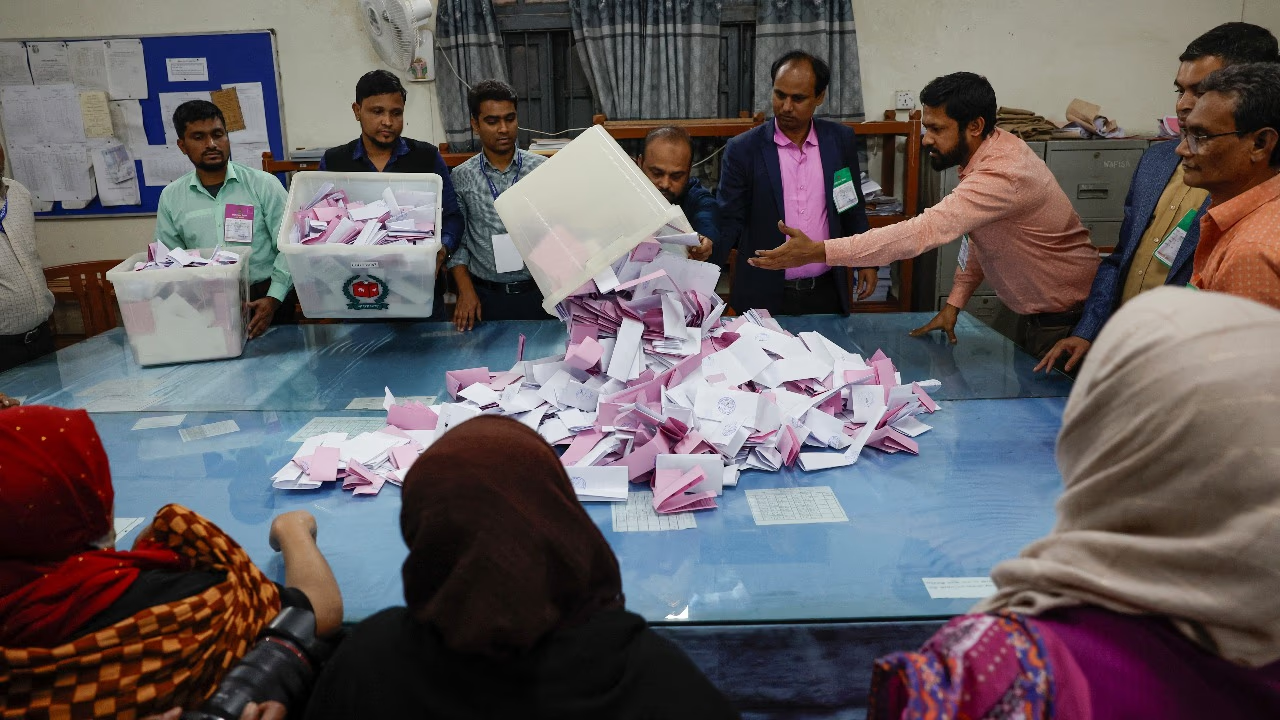
The election commission reported a 59.44% voter turnout from approximately 127 million eligible voters, marking a large segment as first-time voters. Nearly one million security personnel were deployed, marking the largest security arrangement in Bangladesh's election history. Political analysts suggest BNP’s victory could reshape Bangladesh's political landscape.
Elections Held After 18-Month Gap
The last 18 months were tumultuous for Bangladesh, marked by violence, unrest, and instability. Following a student-led revolution in August 2024, Sheikh Hasina's 15-year reign was toppled. Post-government collapse, Hasina fled to India amidst violent unrest claiming over 1,400 lives. Nobel Laureate Muhammad Yunus led the interim government, hailed as Bangladesh's 'second liberation' by the opposition.
In the February 12 election, voters cast two votes each: one for a new government and the other for the 'July Charter', a referendum for constitutional changes. The overwhelming support for a 'Yes' vote indicates a strong public desire for constitutional revisions.