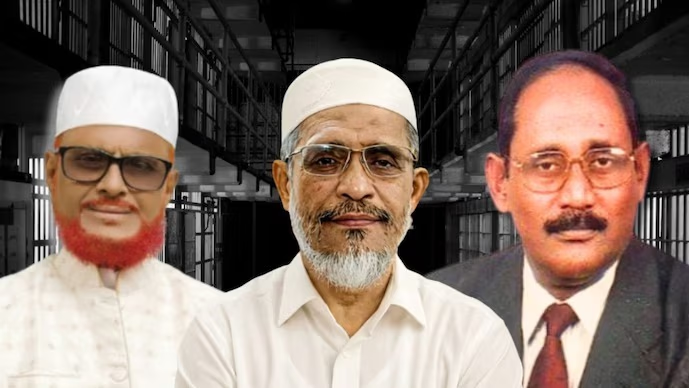
The recent elections in Bangladesh have thrown the political landscape into relief, raising numerous questions. While the election painted a picture of a resounding victory, the return of three leaders who once faced death sentences has left many astonished. These leaders are now gearing up to take their seats in Parliament, begging the question: Is this merely the result of legal processes, or a signal of shifting political directions? This is the central point of today’s discussion.
Of the three, two are members of the BNP, who faced the death penalty for supplying arms to anti-India rebels and conspiring bombings in India. The third was from Jamaat-e-Islami, accused of war crimes. All were released by courts during the interim government led by Muhammad Yunus.
Read Also: Could Bangladesh's next PM be Tarique Rahman, 'Convicted' in Sheikh Hasina's Rally Grenade Attack?
Two of these leaders are affiliated with the nationalist party, and one with an Islamic party. Lutfozzaman Babar, once the Junior Minister of Home Affairs, was sentenced to death for his role in the 2004 Dhaka grenade attack, which resulted in numerous deaths and hundreds injured. He also faced convictions for arms trafficking. However, he was acquitted by the court post power transition and won the election soon after his release from prison.
Similarly, there is the case of Abdus Salam Pinto. A former minister as well, he was convicted for the same grenade attack and was sentenced to death. He was accused of supporting organizations linked to attacks in India. Later, the court cleared all charges against him, and he has now won the election by a significant margin, heading to Parliament. This raises the question of whether past allegations hold any political significance now.
ATM Azharul Islam is the third leader. Accused of mass killings and atrocities against women during the 1971 war, he too was sentenced to death, but was later acquitted by the Supreme Court. He has now won a parliamentary seat.
Read Also: Why is improving relations with India crucial for Tarique Rahman after BNP's win in Bangladesh?
The return of these three individuals showcases the transformation of Bangladesh's political scenery post power transition. Leaders once dismissed as having no future now emerge as elected representatives chosen by the people, accelerating the debate over whether this marks a triumph of justice or a reshaping of political alliances. The answers to these questions will shape Bangladesh’s political trajectory in the days to come.