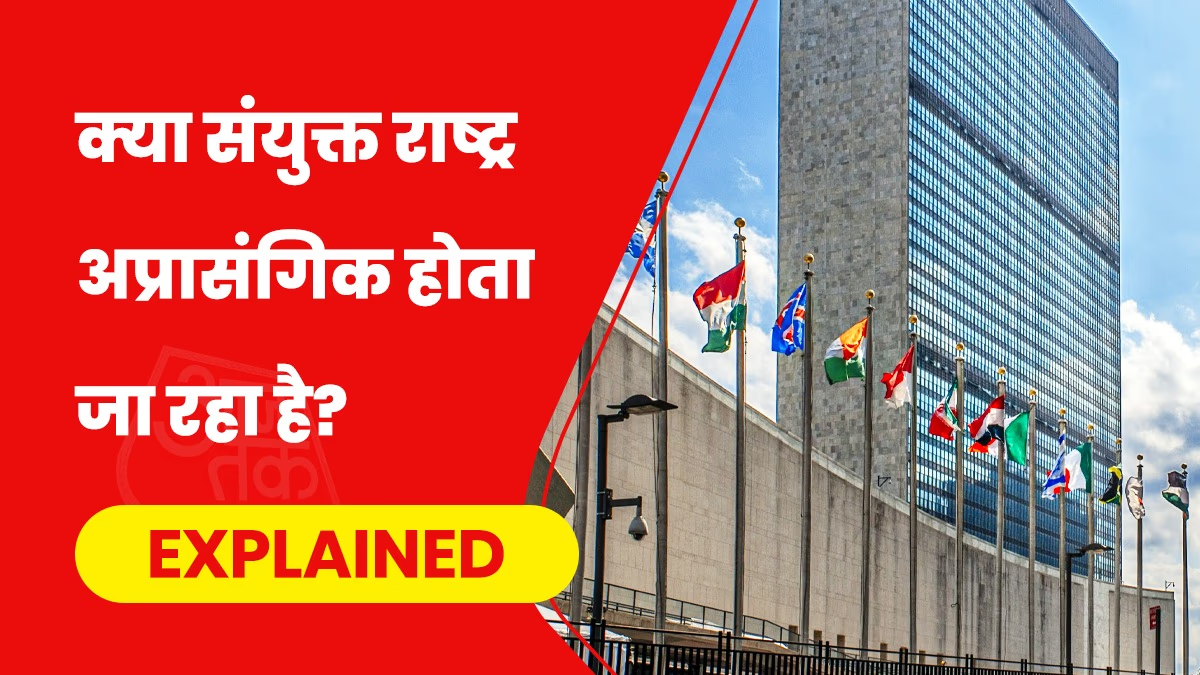
Whenever there's a conflict or significant issue, the United Nations (UN) has traditionally been at the forefront, acting as a guiding force. However, its relevance is being challenged today. From Ukraine to Gaza and Sudan, its appeals seem ineffective. Meanwhile, American leader Donald Trump has initiated ceasefires across multiple nations, famously dubbing America as the 'real UN'.
Trump made this statement while mediating between the Asian nations of Thailand and Cambodia. He emphasized America's significant role in global peacemaking, echoing the traditional role of the UN. If it's jest, it's a thoughtful one. America, once a superpower, now stands as the global peacemaker, a role traditionally meant for the UN.
Where the UN Has Been Active
- Preventing global wars before they ignite with utmost effort. - Resolving internal disputes in a diplomatic manner while maintaining a safe distance. - Upholding human rights, opposing discrimination based on race, religion, language, or gender. - Supporting economically disadvantaged countries. - Strengthening international laws and treaties. - Assisting refugees, displaced individuals, and war victims. - Providing aid on issues such as education and health.
Source: aajtak
Why Is It Appearing Weaker
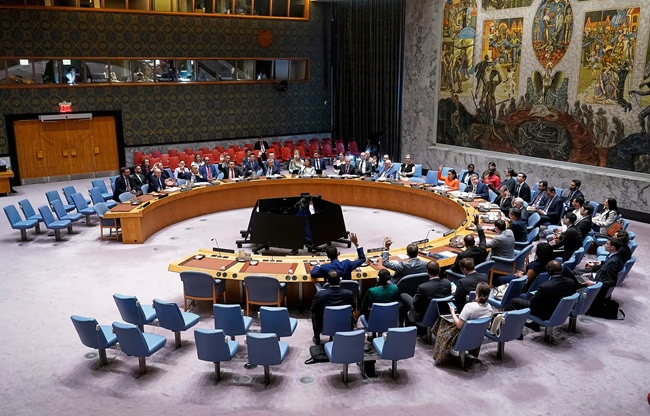
The UN Security Council, its most robust branch, includes five permanent members: the US, UK, France, Russia, and China. Each possesses veto power, enabling any single country to block collective action against conflicts. For instance, in 2014, a resolution against Russia's annexation of Crimea was blocked by Moscow's veto. Similarly, vetoes thwarted unified efforts in Syria, Sudan, and Gaza.
Tensions within the UNSC have led to conflicts persisting even after UN intervention or inability to act despite intent.
The ongoing conflict between Ukraine and Russia since 2022 exemplifies how Russia's veto has limited UN action.
In Afghanistan, decades of struggle culminated in the Taliban's return in 2021. Despite severe human rights violations, the UN remains powerless.
The Israel-Hamas conflict raged for two years, devastating Gaza. The UN's criticisms and appeals were ineffective.
America, the Major Donor
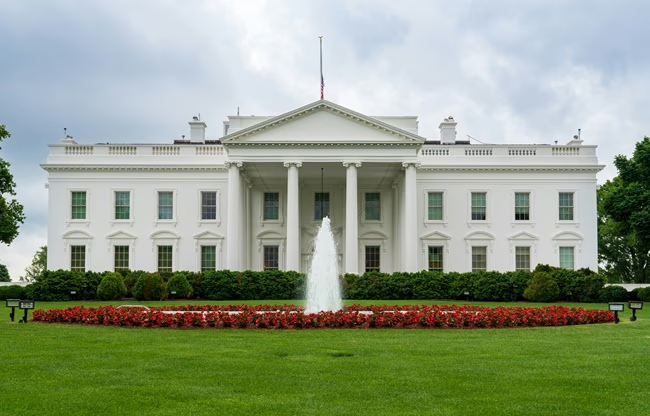
Though the UN holds a mighty voice, it relies on funding from nations. At 22%, America is its largest donor, wielding significant influence. Recently, Trump threatened major cuts to both NATO and the UN's funding, proposing an 83% reduction. Such a move could halt numerous UN humanitarian initiatives.
Source: aajtak
The World Is Becoming Multipolar
Initially, the UN was the sole global entity maintaining balance. Over time, groups like G20, BRICS, and ASEAN emerged. Countries within these groups often turn to local organizations for diplomacy and crisis management rather than relying solely on the UN.
This shift paves the way for America's role. With veto politics stalling the Security Council, America is slowly stepping in as an alternative, using military might, diplomacy, and economic leverage to intervene globally. From the Korean War to Iraq, Afghanistan, Syria, and Ukraine, America has taken leadership, either independently of or with limited UN support.
Economically, America's influence is growing. It can impose hefty tariffs or offer enticing deals, thereby exerting pressure. Meanwhile, the UN often focuses on resolutions and appeals. Trump claimed to have prevented eight wars in recent months, a responsibility traditionally held by the UN.
These observations fuel calls for reform within the UN, particularly concerning the Security Council. Today's world differs vastly from 1945, yet permanent memberships and veto powers remain unchanged. India, Japan, and Africa's inclusion as permanent members could render the UN more credible.