The year was 1947. The partition of British India resulted in the birth of two new countries: India and Pakistan. While the newly born Pakistan sought membership in the United Nations, the entire world rallied to accept it as a new nation. Even India, from whose division Pakistan emerged, supported the new country. However, there was one nation that opposed Pakistan’s entry into the UN and voted against its proposal. That nation was Afghanistan.
A report from Scroll mentions that on October 13, 1947, The New York Times reported, "Afghanistan cast the sole vote against Pakistan's entry into the United Nations, and Pakistani leaders are eager to associate this unfriendly act with the Russian attitude."
Afghanistan's opposition was not just a formal disagreement. It stemmed from deep historical, cultural, and geographical complexities that still echo in the relationships between the two countries today.
Recently, Pakistan's Defense Minister Khawaja Asif once again threatened to attack Afghanistan, accusing Afghan Taliban of harboring TTP militants. The roots of the Afghan-Pakistani rivalry lie in the pages of history.
The Declaration of Pakistani Independence and Afghanistan's Opposition
On August 14, 1947, Pakistan became a separate nation. Less than a week later, activities intensified in Kabul. At this time, Afghanistan was under a constitutional monarchy. King Zahir Shah of Afghanistan questioned Pakistan's right to govern the tribal Pashtun communities residing south of the Durand Line.
When Pakistan applied for UN membership on September 15, 1947, the Afghan delegation lodged its protest. The United Nations had been established in 1945, and it was the first instance of a country opposing another's UN membership.
Afghanistan argued that the Durand Line was a colonial-imposed boundary, and forming Pakistan was tantamount to legitimizing it, which was unacceptable to them.
Source: aajtak
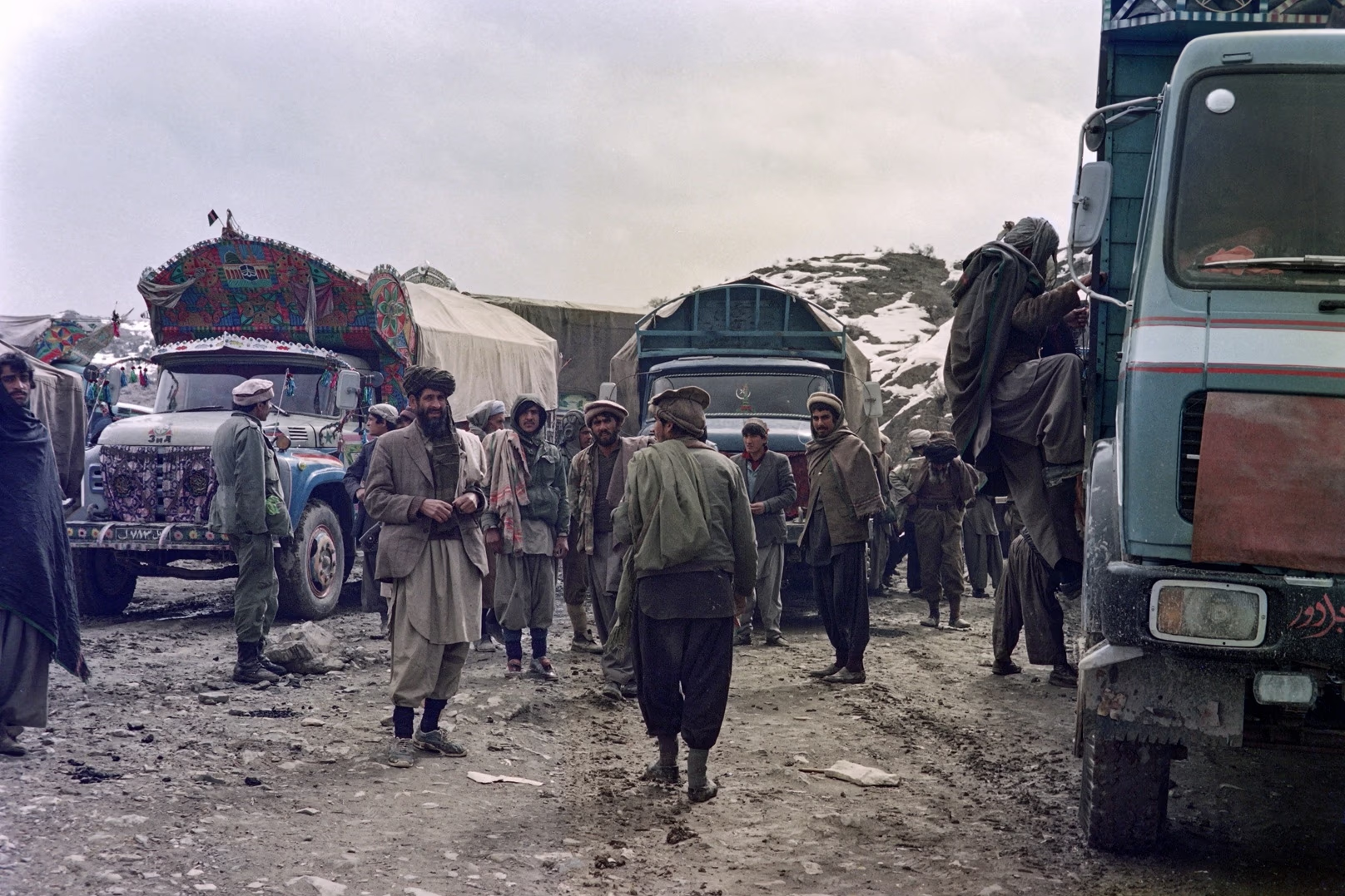
This line originates from high mountains near the Wakhan Corridor in the north, close to the borders with Tajikistan and China and runs through the mountainous and valley-filled terrains of Khyber Pakhtunkhwa in the center, passing the historical Khyber Pass. Down south, it crosses the arid deserts and semi-deserts of Balochistan, where less dense populations face a harsh geography.
Afghan Means Pashtun
In the Persian language, the word 'Afghan' is synonymous with 'Pashtun', 'Pakhtun', or even further back, 'Pathan'. Afghanistan essentially means the land of the Pashtuns. However, when the Durand Line dissected the Pashtun territory, it raised existential questions for the Afghan nation.
The Story and History of the Pashtuns
Independence, hospitality, and martial skills are the pride of the Pashtuns. The Pashtun tribal people have lived in what is now southeastern Afghanistan, the Khyber Pakhtunkhwa area of Pakistan, northern Balochistan, and the FATA region for at least 3,000 to 3,500 years. This area is known as Pashtunistan.
This region has been the center of Pashtun culture, language, and tribal systems since ancient times. References in ancient texts like the Rigveda mention a tribe named "Pakthyas" living west of the Sarasvati River, the region known today as Pashtunistan. Western archaeologists and historians like Michael Witzel and Asko Parpola believe this could be the earliest literary mention of ancient Pashtuns.
Islam entered Asia through these routes from the Arab world. Over centuries, this entire area has transformed under Islamic influence, diverging from its original identity.
In the medieval period, tribes such as Abdali, Ghilzai, and Yousufzai emerged in this region. In 1747, Ahmad Shah Durrani established the Afghan Empire.
The Durand Line – A Dividing Line
Wherever the British ruled, they negotiated for their benefits and trampled local interests. The story of the 2,640-kilometer border between Pakistan and Afghanistan mirrors the Radcliffe Line dividing India and Pakistan.
This line was drawn after an agreement between Sir Mortimer Durand, representative of British India, and Amir Abdur Rahman Khan of Afghanistan in 1893. The demarcation took place between 1894 and 1896. However, the Durand Line divided the collective homeland of the Pashtuns into sections.
Dr. Shubhada Chaudhary, founder of the Middle East Insights Platform, in a conversation with BBC, explained that tribal zones stretching from Khost (Afghanistan) to Pakistan's Sulaiman mountain range and a large part of Orakzai are areas of contention due to undefined boundaries, causing persistent disputes and tensions between both sides.
In recent days, Pakistan has been carrying out continuous attacks in Spin Boldak. The third round of peace talks between Pakistan and Afghanistan also failed.
Our People Will Never Forget...
A famous statement from the biography of Afghanistan's Amir Abdur Rahman Khan, "The Life of Abdur Rahman, Amir of Afghanistan," published in 1900 and edited by Sultan Mohammed Khan, stands out. He said, "I'm accepting this line under duress, but my people will never forget that this line divides our tribe and our land."
This statement encapsulates the grievances that have kept the enmity between Afghanistan and Pakistan simmering for so long.
Why Afghans Reject the Durand Line
The rulers of Afghanistan argue that there is no basis for accepting the Durand Line as it was an agreement made under British pressure. It was because Abdur Rahman's power weakened after the Anglo-Afghan wars, and he was compelled to accept the agreement.
This sentiment has been echoed by subsequent Afghan leaders. For example, Hamid Karzai stated in 2017 that they would never accept the Durand Line as the border between Afghanistan and Pakistan.
In reality, when Pakistan was formed in 1947, the Durand Line became the official border between Afghanistan and Pakistan. This line had previously separated undivided British India from Afghanistan and has been recognized by the United States as well.
The Question of Pashtun Identity
One significant reason for Afghanistan not accepting the Durand Line is the question of the Pashtun tribal community. The Pashtuns, who lived on either side of the Afghanistan-Pakistan border, wanted to preserve their cultural and linguistic unity. The Afghan government claimed that Pashtuns should be given the right of self-determination, and they should have the option to join Afghanistan or form Pashtunistan. Leaders like Khan Abdul Ghaffar Khan, known as Bacha Khan, advocated for Pashtun unity and autonomy. However, their demands were crushed by Jinnah before and after 1947. When Khan Abdul Ghaffar Khan demanded autonomy and was placed under house arrest by Pakistan, protests erupted even in Afghanistan.
Source: aajtak
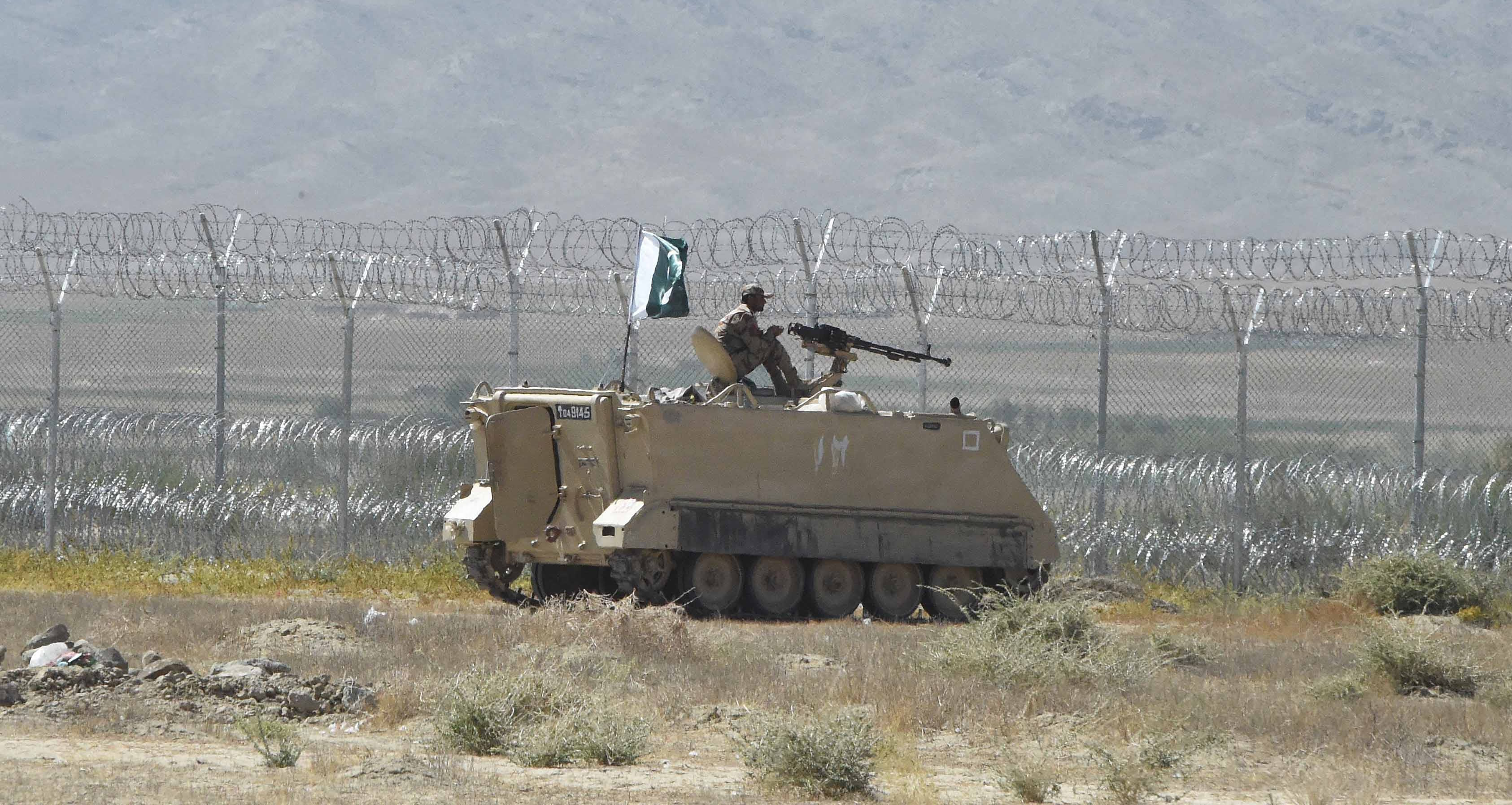
Some Pashtun nationalists desire an independent Pashtunistan, while others seek integration with Afghanistan. Pakistan perceives this as a threat to its sovereignty.
In 1947, a referendum took place to resolve this matter, in which residents of the North-West Frontier Province (NWFP) chose to join Pakistan. However, the boycott by Pashtuns was noticeable, as they considered the referendum under British influence, lacking the option for an independent Pashtunistan. Since then, the demand for an independent Pashtun state continues to ignite in these regions.
UN Recognition for Pakistan and the Aerial Assault by PAK Air Force
Despite Afghanistan's opposition, the UN General Assembly admitted Pakistan with a 51-5 vote on September 30, 1947. Apart from Afghanistan, countries like India, the Soviet Union, Poland, and Ukraine initially expressed disagreement but eventually extended support.
Though Pakistan was established, its clash with Afghanistan persisted.
Afghanistan began backing armed groups in Pashtun territories. These tribal groups continued their assaults against the Pakistani army, keeping tensions alive. These same conflicts are visible even today.
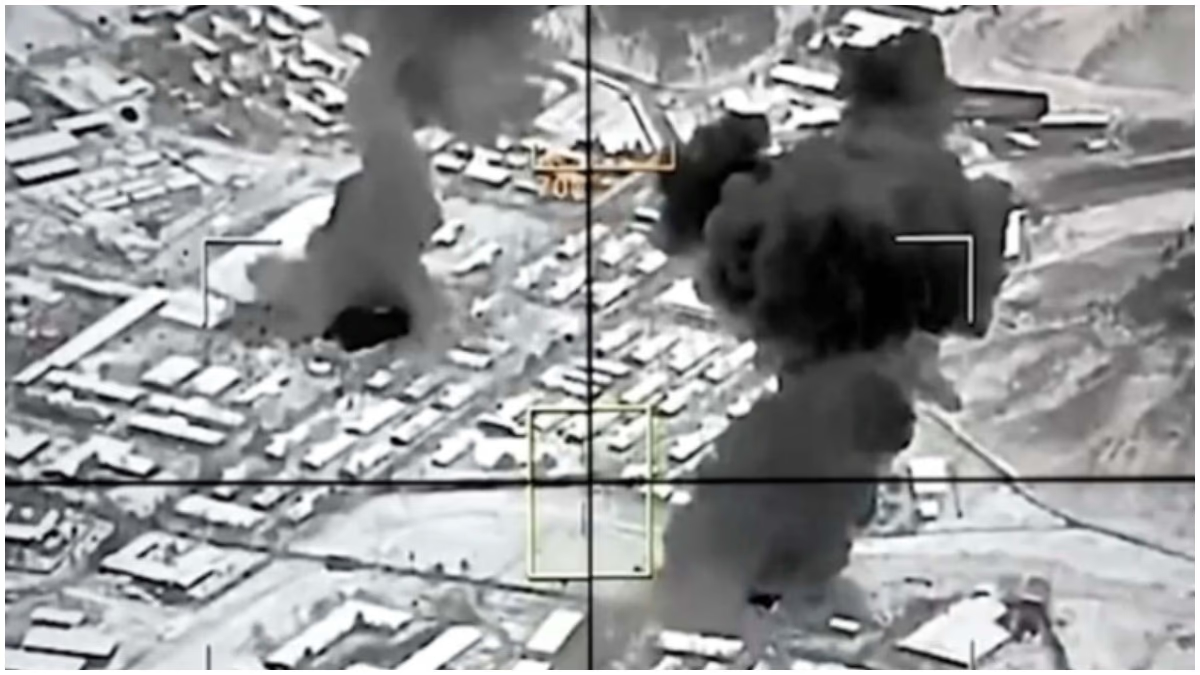
Eventually, Pakistan retaliated. In June 1949, two Hawker Typhoon fighter bombers from the 14th Squadron of the Pakistan Air Force attacked the villages of Pangjir and Mughulgai in Nangarhar Province, allegedly resulting in several civilian casualties.
Occurrences of similar tensions between the two nations arose again in 1949, 1955, 1960, and 1976, each time bringing them to the brink of war.
The enduring conflict between Pakistan and Afghanistan continues, endlessly opening old wounds while creating new avenues for discord.