Unveiling Affordable Luxury Cars in the Pre-Owned Market:
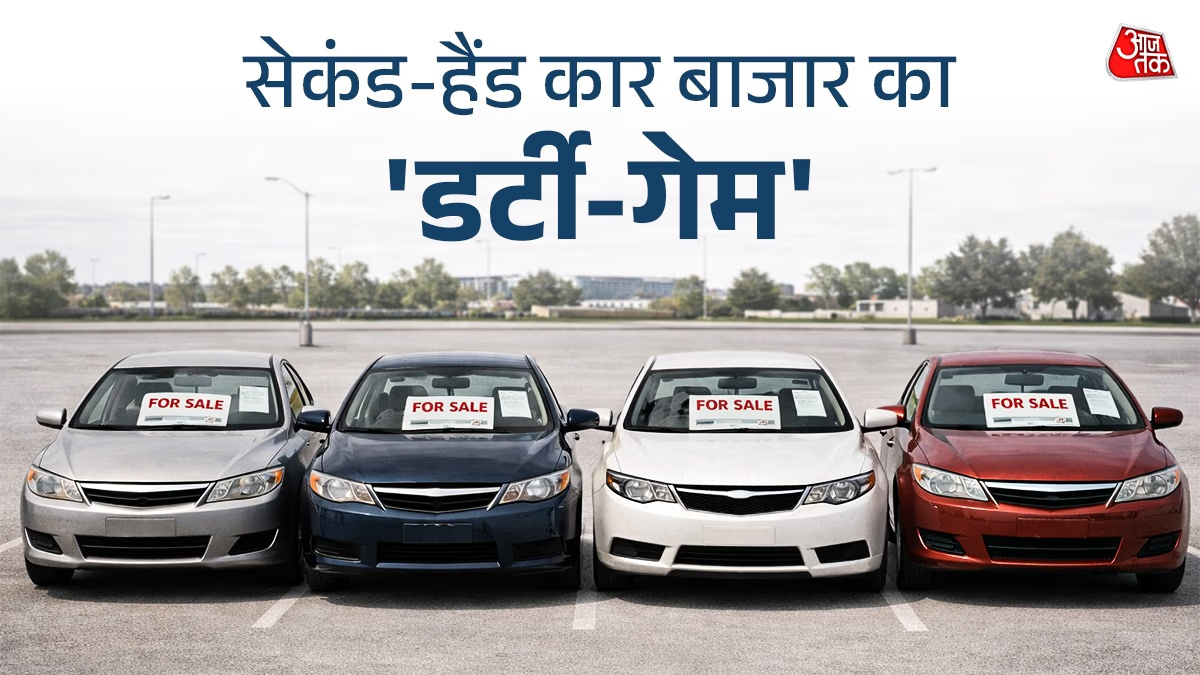
When you spot BMW, Audi, or Mercedes at the price of 500,000 to 1,000,000 on a roadside or online listing, your initial reaction is disbelief. How can cars valued at millions be so cheap? Sometimes, models just 4-5 years old are sold at prices that seem too good to be true. Social media is filled with reels claiming sales of luxurious second-hand cars at astonishingly low prices. It's no magic, but a system that remains largely unseen by many.
Frequently, the stories hidden within these second-hand vehicles go unnoticed. They're concealed within rusty chassis, repainted bodies, or encased in parts that once witnessed a severe accident. The second-hand car market isn't as transparent as it appears. Beneath its surface lies a dangerous truth, one that potential buyers must be acutely aware of.
Insurance is mandatory when purchasing a car. With it, every vehicle is given an Insured Declared Value (IDV), which is calculated based on annual depreciation. In the event of significant damage or accident, this value determines the compensation provided by the insurance company to the vehicle owner. Meaning, in a situation of total loss, the owner receives the vehicle's IDV from the insurance firm.
Source: aajtak
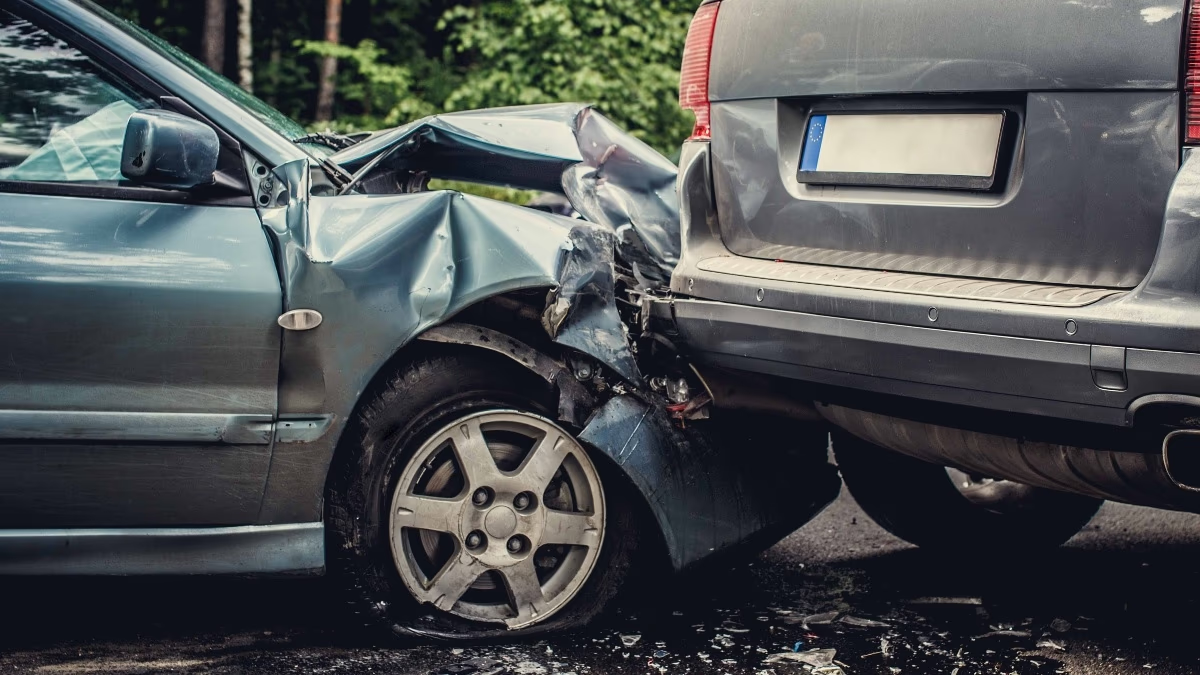
Major accidents involving luxury cars like BMW, Audi, and Mercedes-Benz result in hefty repair costs, due to their expensive parts and services. Imagine a BMW 3 Series encountering a severe accident, with repair estimates reaching 2.5 to 3 million INR—not uncommon for such brands. If the car's CVD value lies between 3.5 to 4 million INR, the insurance company might opt to declare it as a "total loss" rather than cover repair costs. This marks the beginning of an intriguing cycle...
Contrary to popular belief, total loss cars don't head straight to the scrapyard. Insurers sell them to specialized vendors, who often evaluate the vehicle on-site, estimating the cost to restore it to drivable condition. These vendors typically acquire cars at 50-60% of the IDV, buying a vehicle valued at around 3 million INR for 1.8 to 2 million INR.
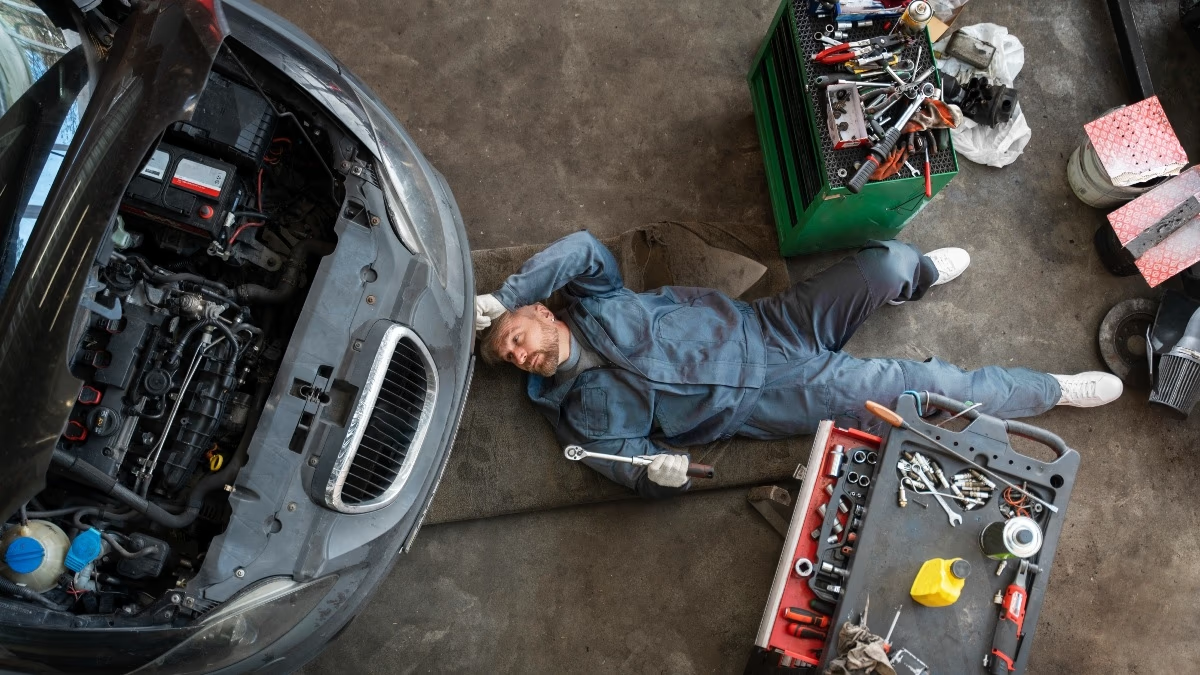
These vendors meticulously rebuild the car using pre-owned, imported, fabricated, or refurbished components, rendering the vehicle roadworthy once more. While authorized workshops may deem a vehicle non-repairable, these vendors often restore them to a functional state.
Source: aajtak
Post-reconstruction, the car sells for 2.5 to 2.7 million INR to a used car dealer, who then offers it to customers for approximately 3 million INR. Thus, a car once valued at 8 million INR can circulate through various hands and become available for 3 million INR in the second-hand market. Older models have even lower IDVs, hence prices can fall between 500,000 to 1,000,000 INR.
The most crucial aspect of this entire process is that buyers often remain unaware that the car was once a total loss. Changes in jurisdiction, document transfer, and unauthorized channels are employed to conceal a vehicle's history. Mechanics and vendors add the finishing touches, ensuring the car sparkles enough to mask its accident history.
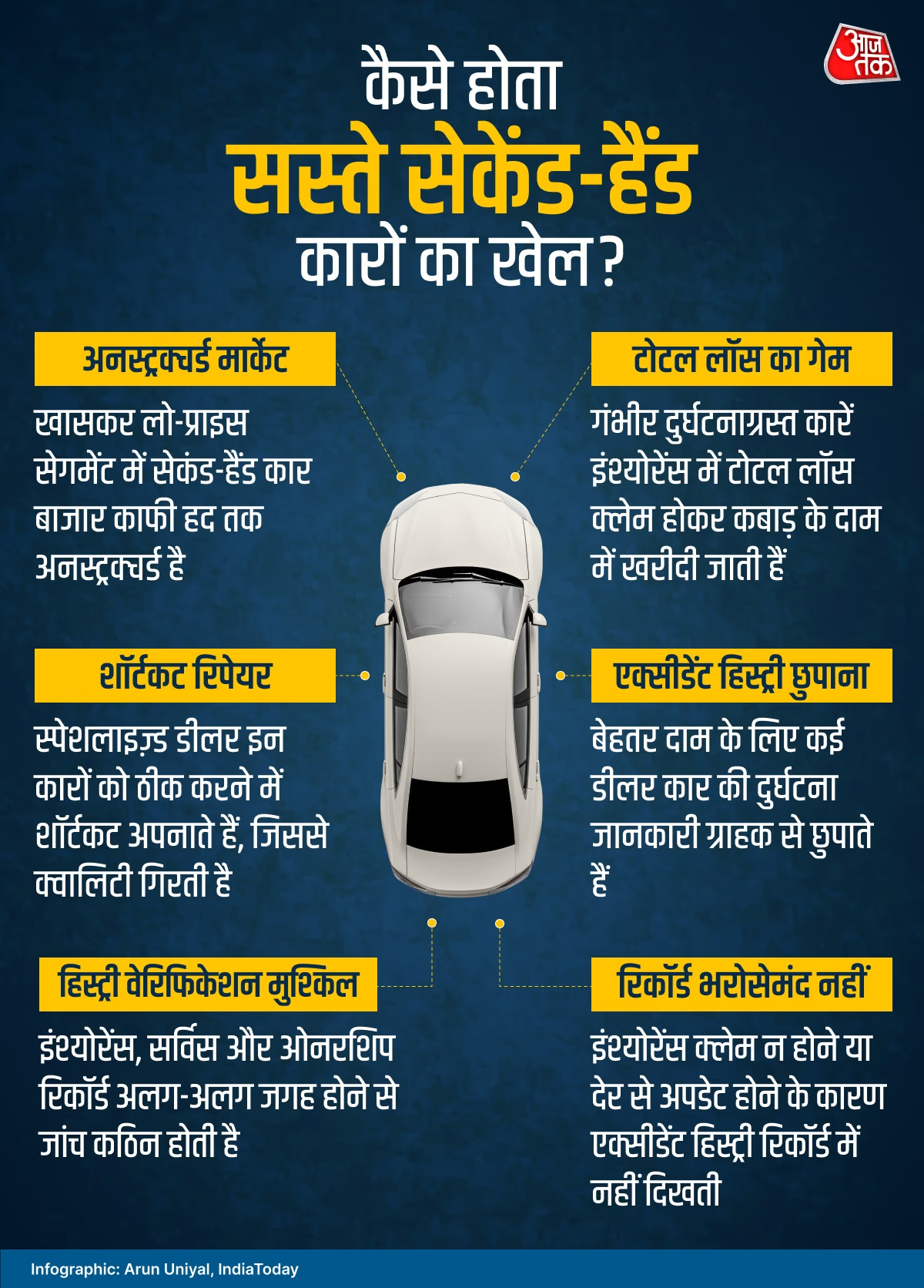
Primus Partners' Managing Director, Anurag Singh, shares, “The used car market, particularly in the budget segment, remains disorganized. Severely damaged cars undergo costly and complex repairs, which is why insurance companies frequently declare them total losses.”
Source: aajtak
Anurag Singh explains, “Specialized used car dealers often purchase these total loss vehicles at scrap prices, utilizing shortcuts for inexpensive repairs. Outwardly, the car shines, but inside, it's unreliable, leaving the buyer with a potentially deceitful vehicle.”
Some used car dealers conceal a car's accident history to secure higher prices, knowing customers prefer undamaged vehicles. Consequently, they suppress a car's true history, presenting it as problem-free.
There are methods to uncover a car's true history: insurance claim records, service history, and ownership history. Yet, this information is fragmented and not easily accessible or reliable. For an average person with limited time, it is akin to finding a needle in the haystack.

Source: aajtak
When accidents go unclaimed, or data updates are delayed, incident information can remain absent from records, leaving buyers unaware of a vehicle's accident history. Therefore, sometimes even insurance claims fail to tell the entire narrative.
Anurag Singh also points out, “IDV, or Insured Declared Value, is based largely on a car's resale value, affecting used car pricing. Its circular logic can be confusing for buyers, who have the option to adjust IDV, complicating matters. This leads to situations where even new i car buyers choose lower IDVs to reduce premium costs.”
In a recent case, Mohit's Honda Amaze from Ghaziabad was involved in a severe accident. The collision with a road divider damaged the engine, pushing it into the front row of the car. Fortunately, the driver escaped unharmed.
Honda's dealership estimated repair costs in the millions, near the car's actual IDV (approximately 380,000 INR), suggesting it be sent for total loss. The insurance company compensated the full IDV amount.
When a local vendor’s mechanic evaluated the damaged car, he remarked that despite severe damage, it could be repaired, estimating costs between 150,000 to 200,000 INR. Asked about his plans, the vendor replied, he would refurbish the car to working condition and sell it, stating,
“There are many buyers who only seek roadworthy cars at low costs.”
Source: aajtak
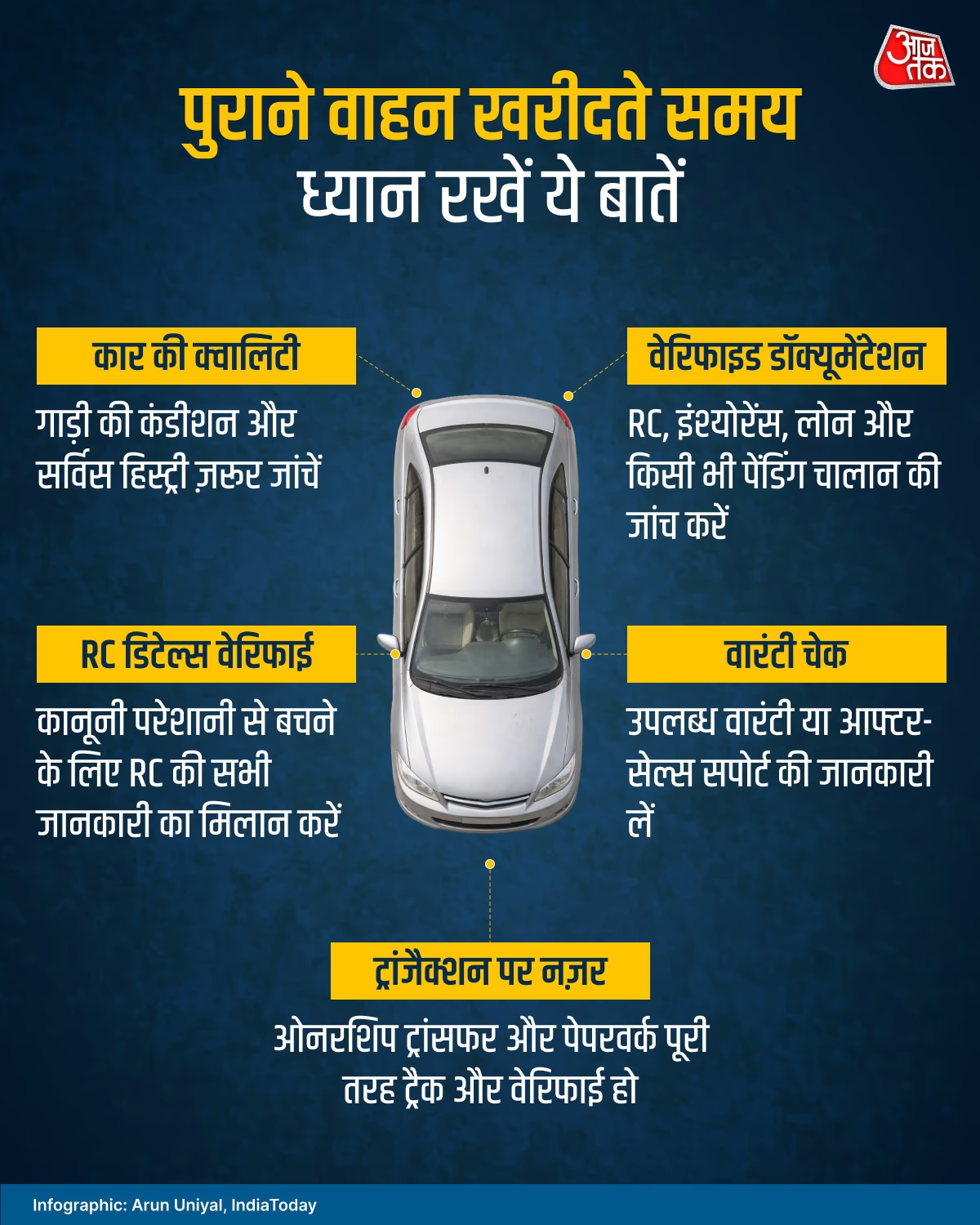
Spinny's Senior Vice President, Gaurav Bedi, suggests, “Certified platforms are the safest means to buy and sell used cars. Full-stack operations ensure quality and trust during transactions.” According to Gaurav, when purchasing old vehicles, consider key aspects like:
Car Quality: Ensure the vehicle is in good condition with a verified service history.
Document Verification: Check that the vehicle doesn't have pending loans, valid RC and insurance, and no outstanding fines or FIR.
RC Details Verification: Confirm all RC details to avoid legal troubles.
Warranty Check: Verify any available warranty or post-sale support for coverage benefits.
Transparency in Transactions: Ensure documents and processes are clearly tracked and verified for smooth ownership transfer.

Source: aajtak
Gaurav Bedi advises, “First, verify open loans via the VAHAN portal and validate with banks for loan closure, outstanding amounts, and linked or top-up loans, as most used car fraud involves open loans.” He recommends that buyers authenticate insurance documents directly with the insurance provider, highlighting an increase in AI-generated forged documents. Also, check official police websites for any FIRs, theft reports, or pending legal issues involving the vehicle. Finally, match engine numbers, chassis numbers, and ownership-related information on the RC, as minor errors could lead to major legal and ownership transfer issues in the future.”
While the second-hand car market is growing, transparency issues remain a significant concern. Experts advise customers to remain vigilant and thoroughly investigate a car's history before purchasing, as a small mistake may lead to significant risks down the line.