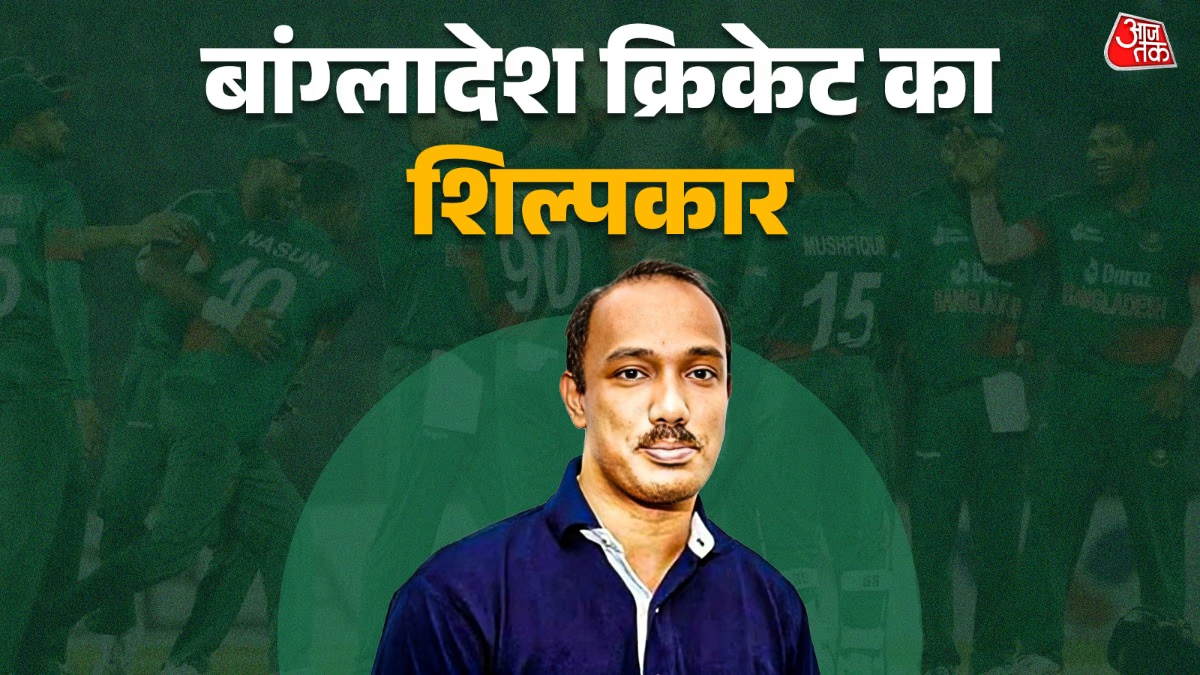
Amidst the political fervor in Bangladesh, former Prime Minister Khaleda Zia's elder son Tarique Rahman has returned to his homeland. Tarique is set to carry forward the political legacy of his mother Khaleda and his late father Ziaur Rahman. As the acting chairman of the Bangladesh Nationalist Party (BNP), Tarique is actively preparing for the upcoming general elections in February. He's described as Bangladesh's 'future Prime Minister.' When Tarique returned, party workers gathered en masse to welcome him.
While Tarique Rahman embarks on a new political journey, memories of his younger brother Arafat Rahman 'Koko' resonate deeply in Bangladesh's cricket and national life. One brother chose the path of power, while the other devoted himself to the service of Bangladesh cricket, almost staying away from politics. Koko's visionary ideas, development plans, and initiatives for nurturing young talents paved the future path for Bangladesh cricket.
Source: aajtak
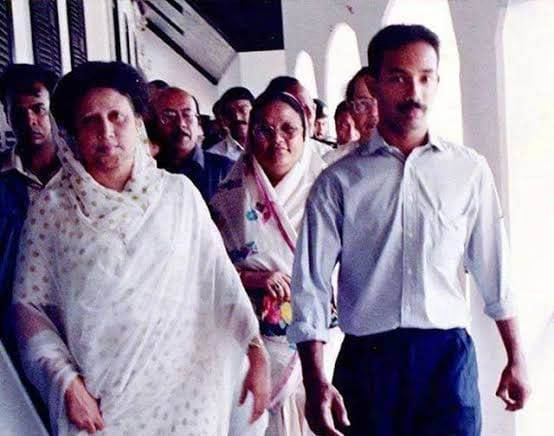
Arafat Rahman 'Koko’ was born on August 12, 1969, at Cumilla Cantonment. Though from a politically influential family, Koko showed little interest in active politics. As the son of a Prime Minister and former President, he possessed authority, yet he wielded it to strengthen Bangladesh cricket.
'Koko' was deeply associated with cricket, notably with the Old DOHS Sports Club, where his leadership was legendary. Under Koko's guidance, Old DOHS Sports Club made its mark in the Premier Division during the 2002-03 season. Koko granted full autonomy to Abahani Limited's renowned player and former captain of Bangladesh, Akram Khan, to build the team.
'Koko' appointed local Sri Lankan cricketer Premalal Fernando as the team’s coach and brought in a professional physio. On Koko's initiative, a natural center wicket was created at Old DOHS's home ground, and a bowling machine was imported from Australia. These modern facilities ensured that the club won the Premier Division title in its debut season and retained the trophy the following year.
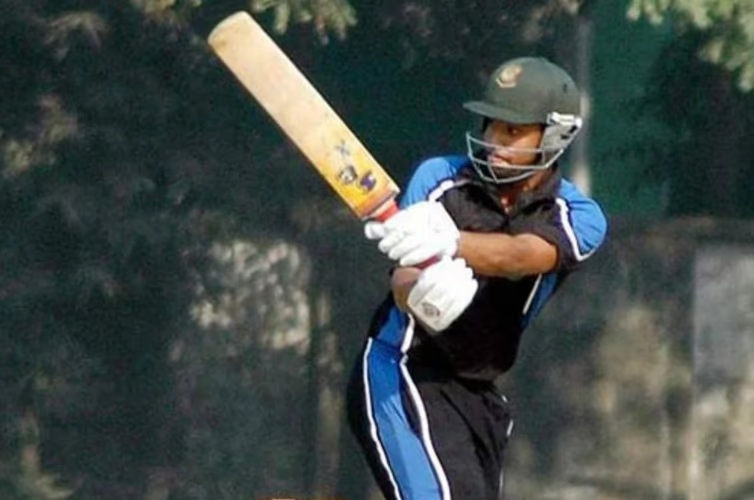
Under Koko's chairmanship, Old DOHS Sports Club became champion twice, with Kenya's cricket icon Steve Tikolo playing a crucial role. He also established and nurtured a new team, City Club, aiding budding talents. During his early career at Old DOHS, Tamim Iqbal played a blazing innings of 188 runs, capturing national selectors' attention. This innings laid the foundation for Tamim’s international career.
After the 2001 general elections, Koko was appointed as the chairman of the Bangladesh Cricket Board's (BCB) development committee. His forward-thinking approach revamped age-group cricket, paving the way for a golden generation of players like Mushfiqur Rahim, Shakib Al Hasan, and Tamim Iqbal. When a court stay challenged the BCB's executive operations in 2002, a 10-member advisory committee was formed. Koko played a pivotal role in bringing young and capable administrators to the forefront.
Source: aajtak
The successful hosting of the ICC Under-19 World Cup in 2004 stands among Koko's greatest achievements. Despite a tight budget, he transformed Shaheed Chandu Stadium in Bogura to meet international standards. Bangladesh stunned the world by defeating cricket powerhouse Sri Lanka at this stadium in 2006, cementing its place on the international cricket map. After the stadium gained international status, it hosted five ODIs and a Test match, where Bangladesh won four of the contests.
West Indies’ World Cup-winning captain Clive Lloyd praised Shaheed Chandu Stadium and heavily complimented its facilities. The 2004 under-19 World Cup drew nearly 400,000 spectators, elevating cricket passion to new heights in Bangladesh. Following the World Cup's success, the ICC awarded Bangladesh co-hosting rights for the 2011 One Day World Cup. Koko also resolved the controversy surrounding Dhaka National Stadium's use.
Koko proposed transforming Mirpur Sher-e-Bangla Stadium into a dedicated cricket venue. Leveraging his strong ties with Cricket Australia, he secured free architectural design and ensured funding from the National Sports Council (NSC). Remarkably, Koko envisioned franchise cricket back in 2003, laying the groundwork for the future Bangladesh Premier League (BPL). Despite his monumental contributions, he silently stepped away from BCB in 2005, not clinging to power.
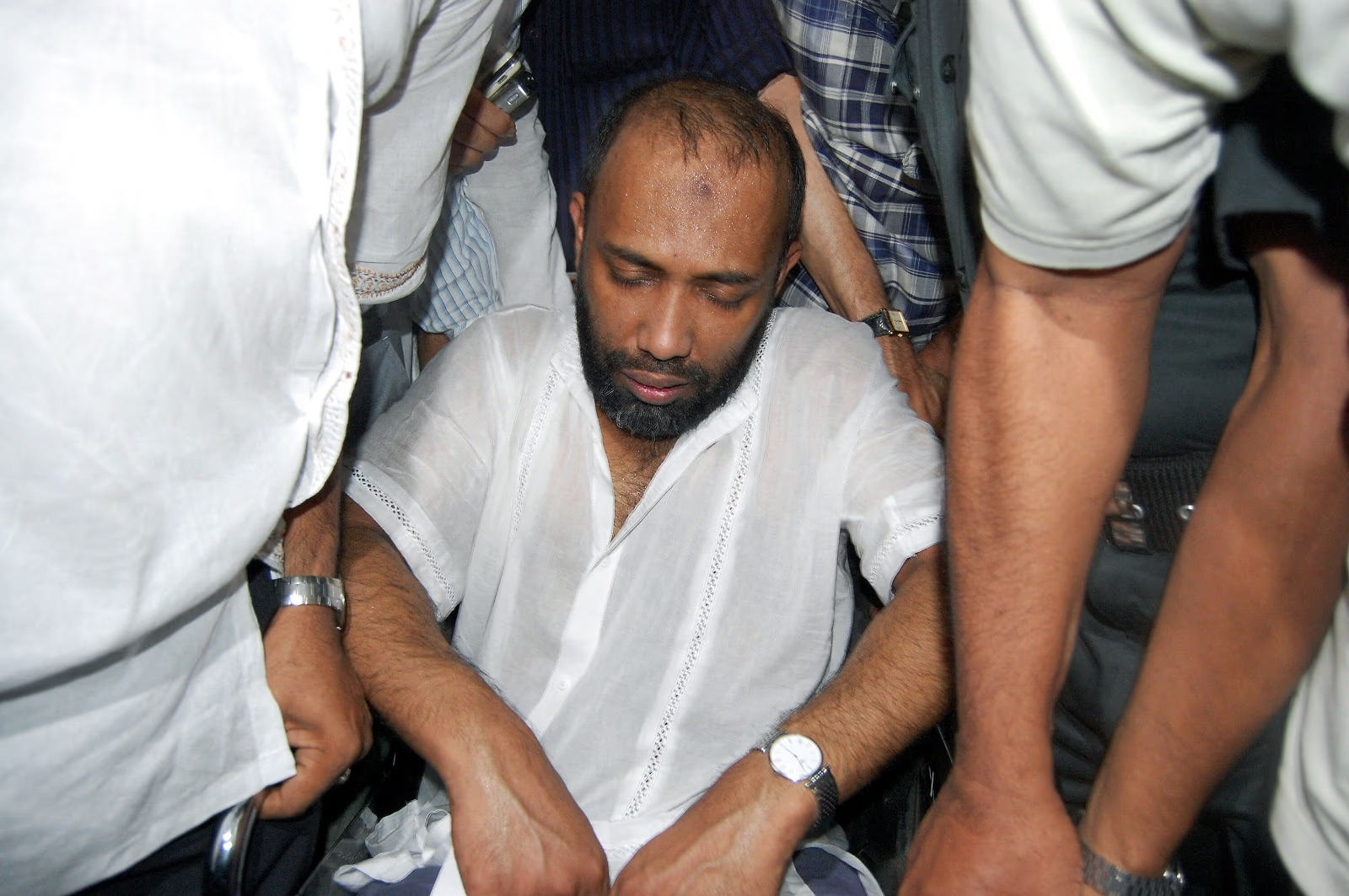
Koko faced personal challenges as well. On September 3, 2007, amid a military-backed caretaker government, he was arrested alongside his mother, Khaleda Zia. Convicted in a money laundering case, Koko was sentenced to six years in prison and fined 38.83 crore Taka. However, he was released on parole on July 17, 2008, for medical treatment and traveled to Bangkok; later, he moved to Malaysia.
Source: aajtak
On January 24, 2015, Arafat Rahman 'Koko' passed away from a heart attack at the University of Malaya Medical Center in Kuala Lumpur, Malaysia. Khaleda Zia was heartbroken at the news of Koko's departure, shedding tears openly. He was laid to rest at Banani cemetery in Dhaka on January 27, 2015.
Arafat Rahman 'Koko' will be remembered as a golden chapter in Bangladesh cricket's history. He neither sought power nor chose the path of politics but laid a strong foundation for his country’s cricket. His untimely demise at the age of 45 remains an irreplaceable loss for Bangladesh cricket...