Ever since the upheaval following the ousting of Sheikh Hasina's Awami League government, Bangladesh's political scene has been in perpetual turmoil. Political assassinations and attacks on Hindus are unfortunately commonplace. Hopes are pinned on the general elections slated for February 12, 2026. Tarique Rahman, acting president of the Bangladesh Nationalist Party (BNP), has added a fresh twist to the political landscape with his return home after 17 years of exile. In another development, the Nationalist Citizen Party (NCP) and the fervent Jamaat-e-Islami remain active in the electoral fray, adding to the excitement. Yet, amidst this vibrant electoral environment, an American entity, the International Republican Institute (IRI), seeks to sway Bangladesh's political climate to its own tempo.
The agenda of IRI ostensibly focuses on 'strengthening democracy'. However, the nature of its surveys and its members' interactions with Bangladeshi political players paint a different picture. Often perceived as being associated with the US 'deep state' or CIA, the IRI operates primarily on funding from the US government (via USAID). Globally, the organization engages in political maneuvering under the guise of fortifying democracy. IRI's endeavors in Bangladesh have been ongoing since 2003, but it has visibly intensified its activities to shape the electoral narrative in 2025.
According to IRI, its role in Bangladesh involves election monitoring, political party training, conducting surveys, and fortifying civil society. Earlier this year, IRI dispatched a high-profile pre-election assessment mission in October, featuring eminent personalities like
(a former CIA analyst). Curtis, who worked on Pakistan, India, and Bangladesh during the 1990s and 2000s, was also part of the US National Security Council. She now serves at the Center for a New American Security (CNAS), where she works on counter-extremism and terrorism issues, particularly in South Asia and Bangladesh. Curtis has been active with the QUAD dialogue, although it cooled under President Donald Trump’s policies. IRI's Board also includes
, known worldwide for his philanthropic and strategic roles with organizations like IRI.
Recently, IRI engaged with key Bangladeshi leaders such as Muhammad Yunus, the head of the interim government, the election commission, various political factions like the BNP, Jamaat-e-Islami, and others. Additionally, IRI has declared its intention to deploy election observers. On the surface, these endeavors seemingly advocate democracy, yet they further US interests.
Yunus as the Hero According to IRI Surveys
IRI's controversial stance most clearly emerges through its surveys. Released in December 2025, the
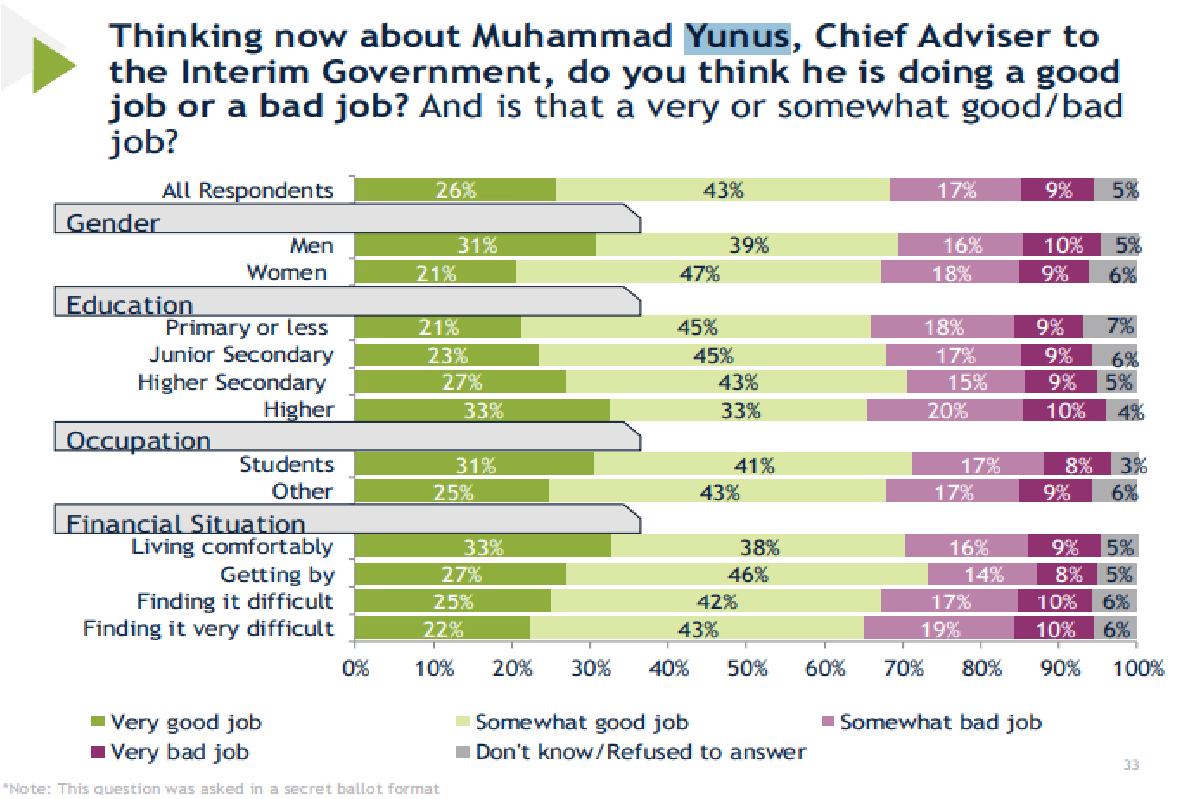
conducted in September-October 2025 claims substantial support for Yunus and the interim government, despite some protests against the Yunus administration in Bangladesh. Allegations of election delays have sparked discontent, yet the survey reports that 69% of respondents were satisfied with Yunus’s administration, while 70% praised the interim government. Johana Kao, Asia-Pacific Senior Director of IRI, commented, 'Bangladeshis see progress under Yunus’s leadership.'
Source: aajtak
Avami League Banned, Yet Elections Deemed 'Fair'
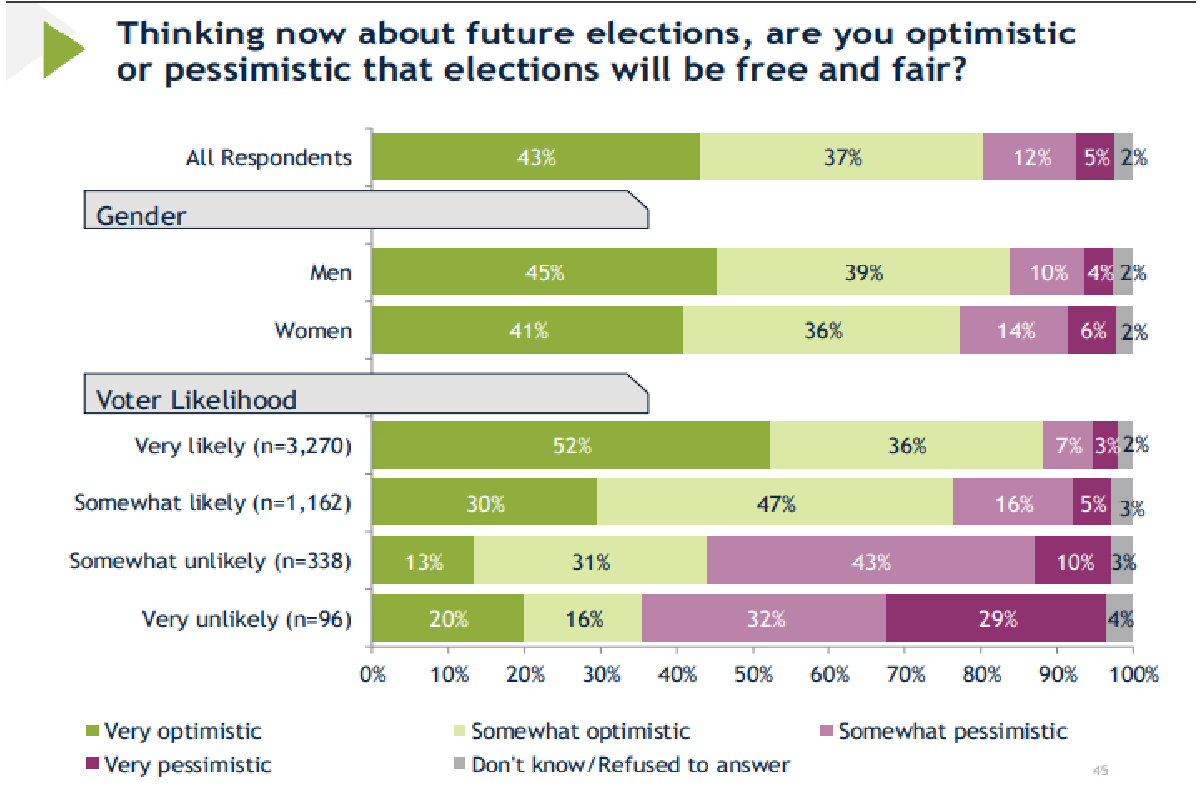
Interestingly, over 80% of participants labeled the upcoming elections as free and fair, even though the Awami League has been disqualified from contesting. This fact may not sit well with democratic ideals, but IRI's survey suggests that Bangladeshi citizens remain optimistic about elections and are pleased with the exclusion of the Awami League.
By presenting Yunus as a Nobel laureate and reformer, IRI fortifies the legitimacy of the interim government. Such surveys sway public opinion pre-election, particularly when the Awami League faces an electoral ban, and Sheikh Hasina remains in exile. Formerly, IRI’s surveys rated the Hasina government highly but now boost the new government.
Source: aajtak
Survey Depicts Pakistan as Friend, India as Villain
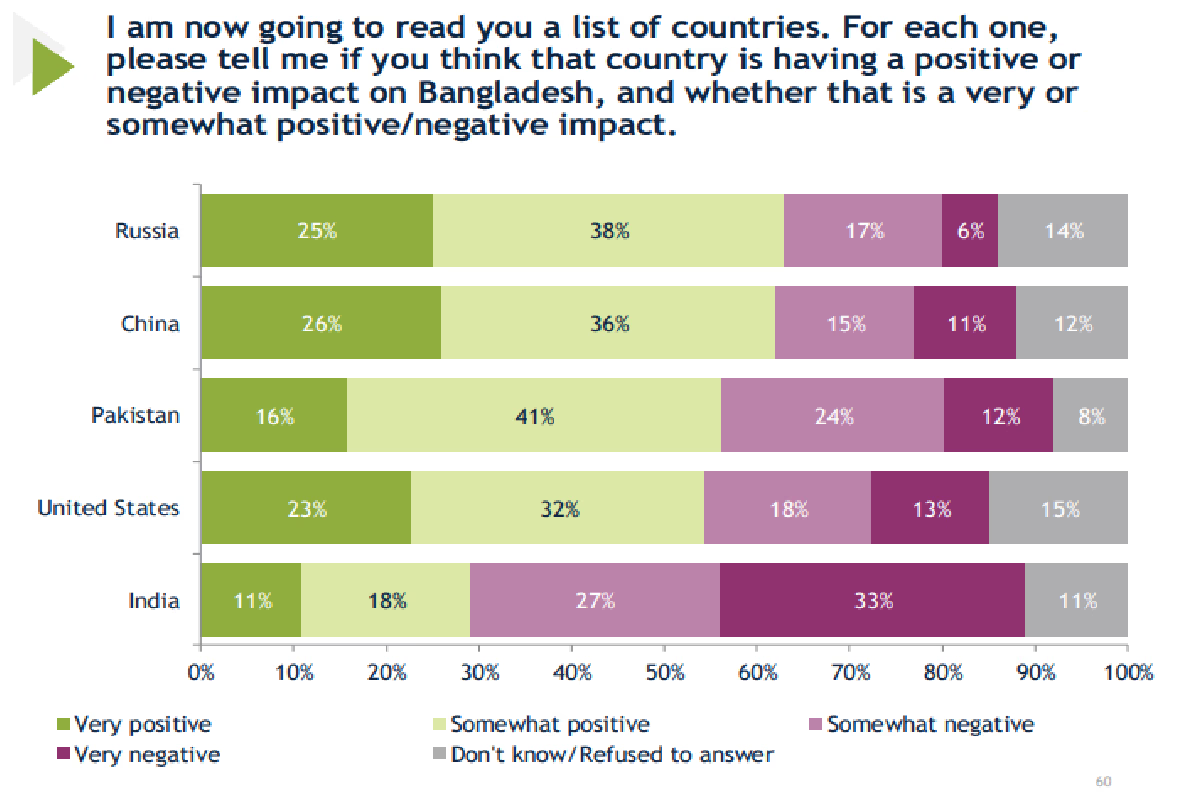
The IRI survey spotlighted a negative perception of India, placing India at the bottom of the list of Bangladesh’s allies, whereas Russia, China, and even Pakistan topped the list. This scenario reflects strains in India-Bangladesh relations, which have intensified during Yunus's tenure. The survey portrays Yunus as virtuous despite failing to curb anti-Hindu attacks or venomous rhetoric against India.
Source: aajtak
Religion-Based Discrimination Survey Results: Most Fascinating
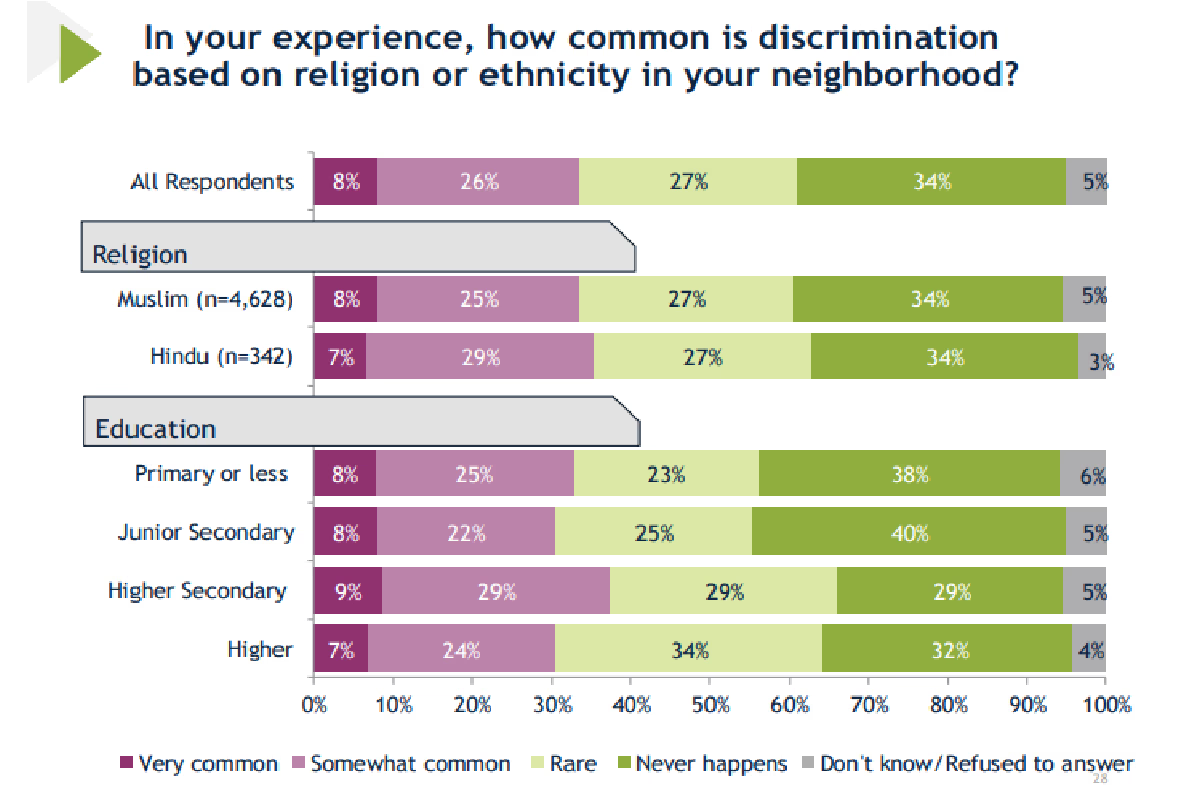
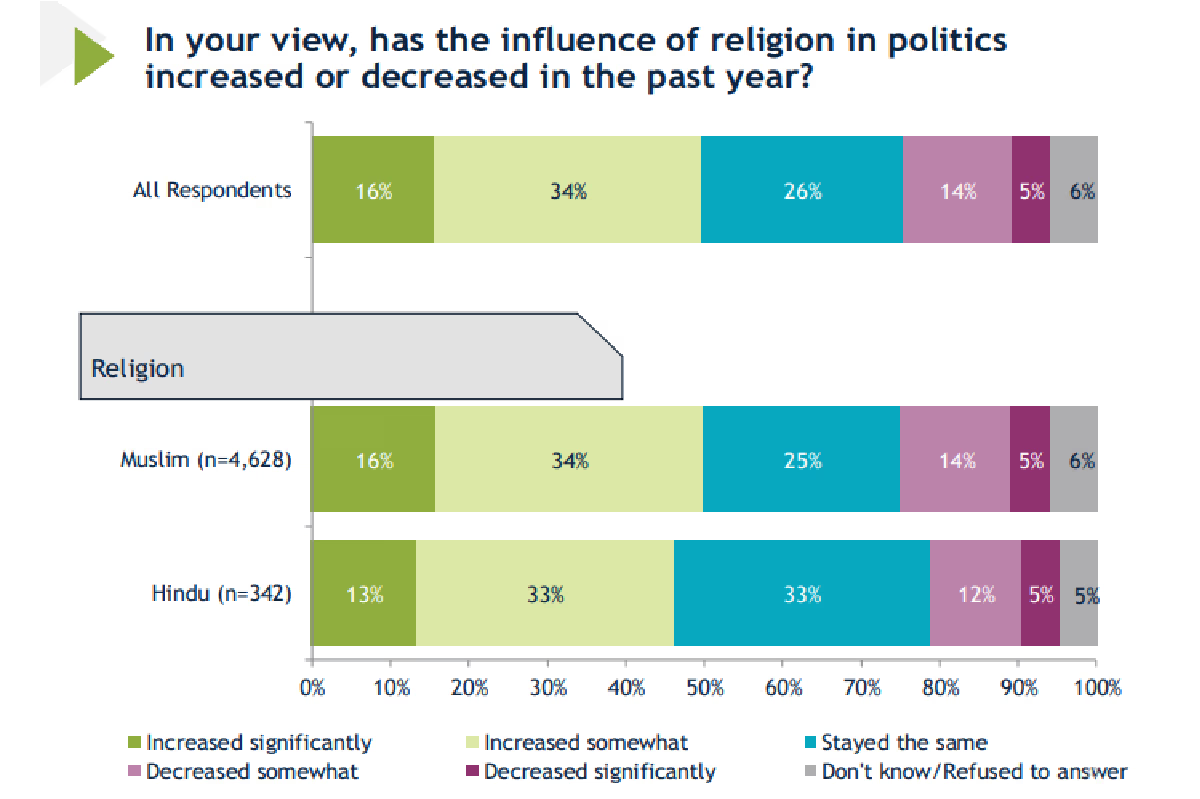
Since Yunus assumed power, an increasingly hostile atmosphere has developed against both India and Bangladeshi Hindus, with incidents of attacks and murders escalating. However, IRI’s survey results astonishingly suggest equally mixed satisfaction levels among Hindus and Muslims in Bangladesh regarding their circumstances. Both groups reportedly share perceptions of discrimination, or lack thereof, as well as varied views on religious extremism in politics over recent years. Let’s delve again into these survey outcomes, which appear to sidestep reality.
Source: aajtak
Source: aajtak
How IRI Activities Shape the Election Narrative?
IRI’s survey indicates 33% support for BNP and 29% for Jamaat-e-Islami, highlighting the rising influence of Islamist forces in the absence of the Awami League. IRI’s reports commend electoral reforms but also warn of political violence and bias. Such organizations wield 'soft power' to further American interests, like distancing Bangladesh from China’s BRI or strengthening its position in the Indo-Pacific. Overall, IRI’s recent activities, meetings, surveys, and monitoring significantly influence Bangladesh’s electoral narrative, portraying Yunus as a reformer and hero while casting India in a negative light, thus advancing US foreign policy.