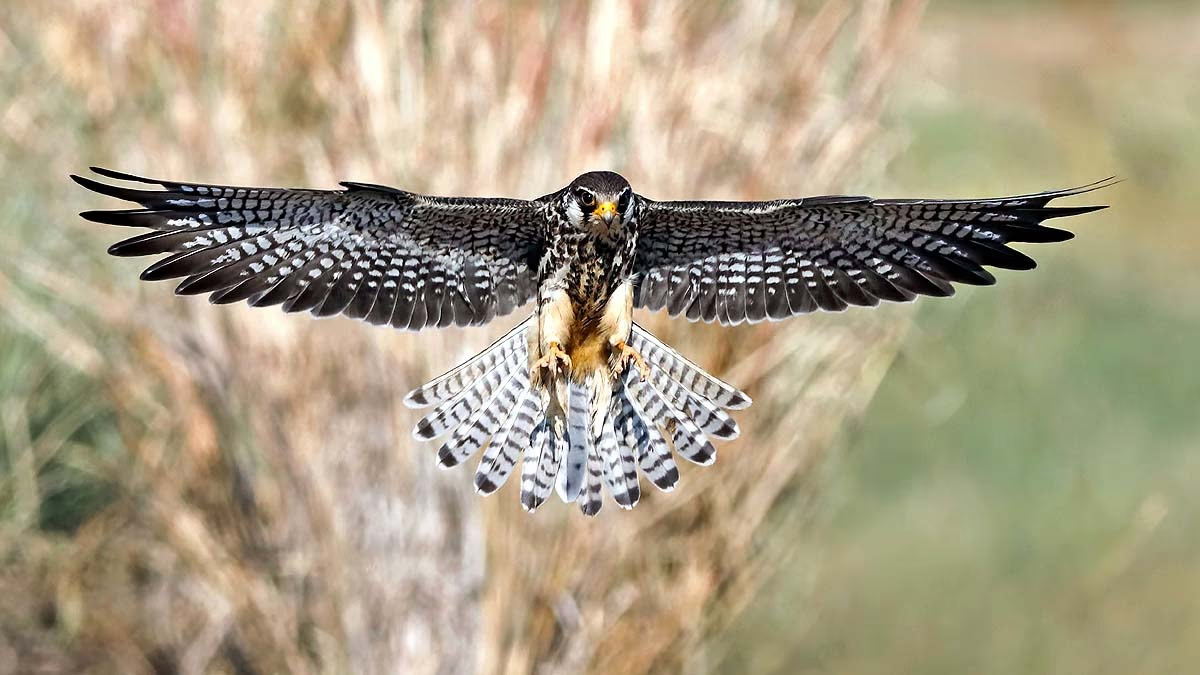
One of the smallest and bravest migratory birds, the Amur Falcon, has once again amazed the world with its incredible journey. From Manipur, three satellite-tagged Amur Falcons—Apapang, Alang, and Ahu—have astonishingly completed a record-breaking migration from India to Southern Africa, covering thousands of kilometers. These tiny avians soared for five to six days, traveling between 5000 to 6100 km to reach Zimbabwe, Kenya, and Somalia.
Apapang, marked with an orange tag, exhibited the most extraordinary performance. In just six days during November, it covered a straight-line distance of 6100 km. Starting from India, Apapang crossed the Arabian Sea and the Horn of Africa to reach Kenya. As Christmas approaches, it now graces the skies above Harare, Zimbabwe, marking one of the longest non-stop flights by these small raptors.
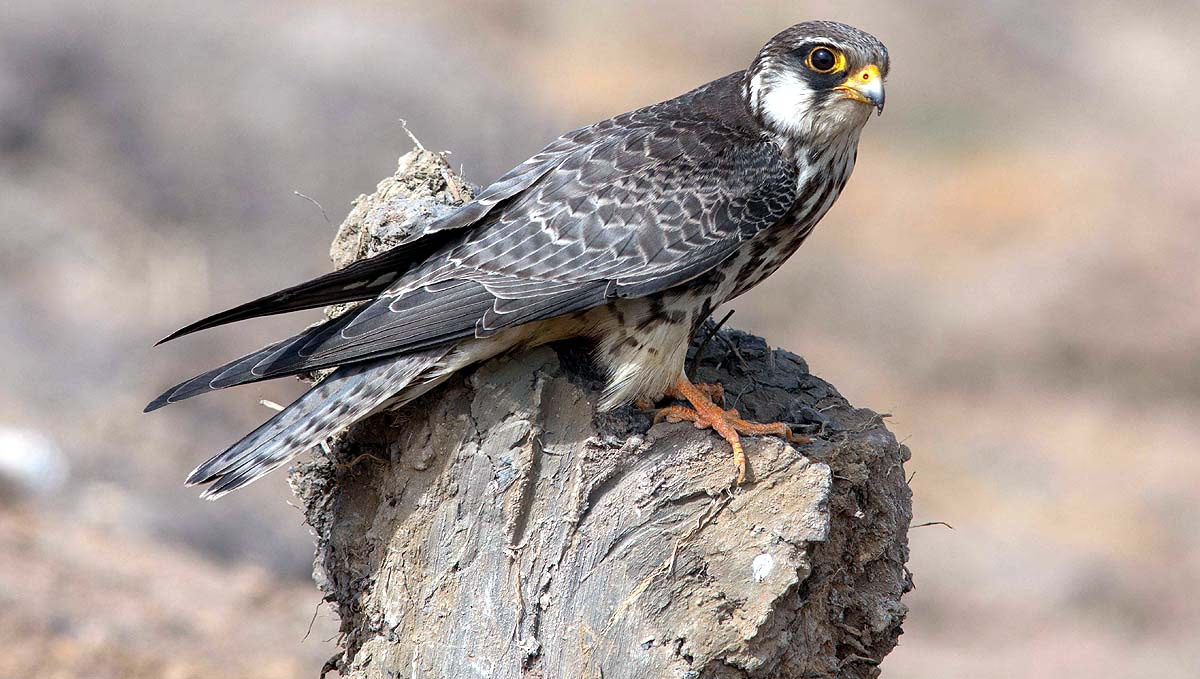
Source: aajtak
The yellow-tagged Alang also demonstrated immense endurance, covering a distance of 5600 km. It briefly stopped in Telangana and Maharashtra before proceeding to Kenya.
The red-tagged Ahu experienced a halt in Bangladesh before crossing the Arabian Sea, ultimately flying 5100 km to arrive in Somalia.
These remarkable birds now wander the landscapes of Botswana's Okavango Delta and Somalia's Jafun region.
The tagging of these birds was conducted by Dr. Suresh Kumar of the Wildlife Institute of India (WII). Tamil Nadu's IAS officer Supriya Sahoo shared their adventurous journey on X, grabbing worldwide attention. The satellite tags provide crucial data about the locations and flight paths of these birds.
Known as 'long-distance small travelers,' Amur Falcons' voyages underscore the interconnectedness of global ecosystems. Their migratory route encompasses multiple countries, emphasizing the need for international cooperation to ensure their protection.
Once hunted in Nagaland, increased awareness and conservation efforts have improved the situation. Manipur and Nagaland are vital rest stops on their migration route.
Bird lovers and scientists continue to monitor their journeys, with these birds annually covering millions of kilometers. Their flights are a testament to the importance of preserving nature. Global cooperation is crucial for safeguarding their migratory paths and resting sites, ensuring future generations can marvel at these brave little travelers.