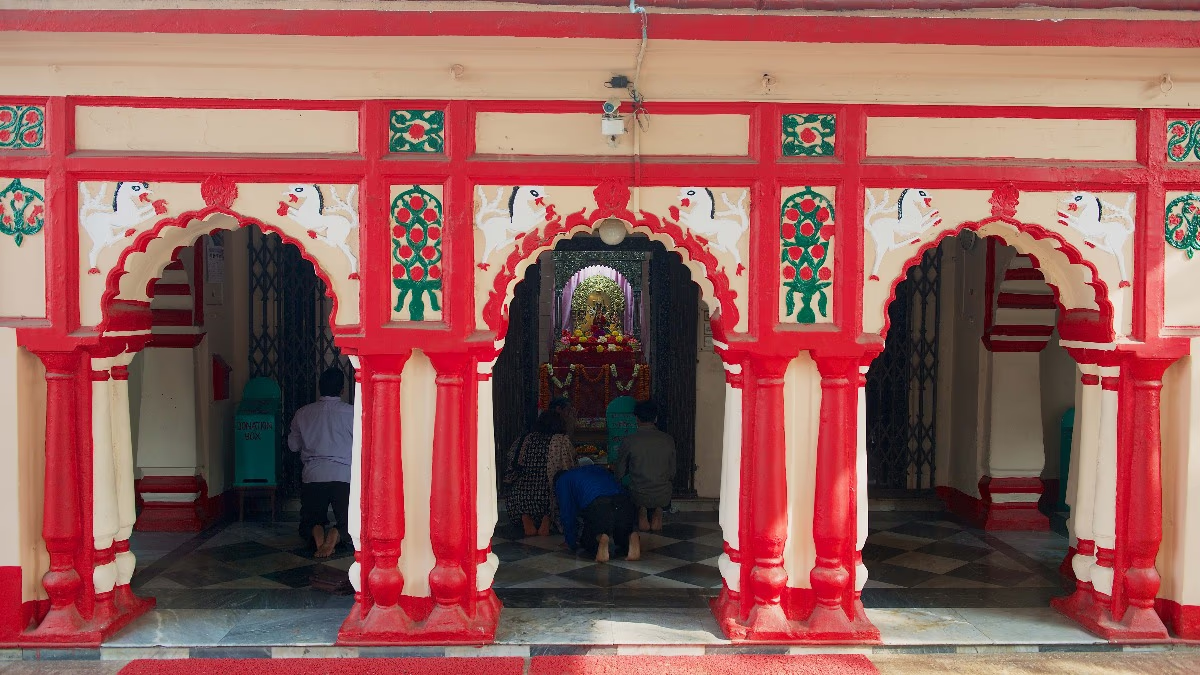
In the heart of old Dhaka lies the Dhakeshwari Temple, a sacred site that testifies to the city's rich history, faith, and cultural legacy. This temple doesn't only lend its name to Bangladesh's bustling capital but also epitomizes its enduring spirit amidst modern challenges. Unfortunately, the minority communities in Bangladesh face ongoing violence, as historical roots are often targeted to redefine identities. Yet, Dhaka's very name serves as a poignant reminder of its profound cultural ties.
Dhakeshwari: An Avatar of Goddess Durga
The Dhakeshwari Temple receives its name from a form of Goddess Durga. 'Dhakeshwari' means 'Goddess of Dhaka'. It has been a vital center for Shakti worship across Bengal for centuries and is recognized as a Shakti Peeth. As per mythology, after Goddess Sati’s self-immolation at her father Daksha's Yagna, Lord Shiva wandered with her body. Lord Vishnu then used his Sudarshan Chakra to dismember her body, scattering parts across different places known as 'Shakti Peeths'.
The Legendary Belief
It is believed that 'the jewel from Goddess Sati's crown' fell at the Dhakeshwari site, elevating its status as a divine Shakti Peeth. Therefore, the temple holds immense reverence not just within Bangladesh but throughout the subcontinent. Historians often credit King Ballal Sen of the Sen dynasty for commissioning the temple around the 12th century, circa '1100 AD'. Known for his piety and patronage of the arts, he laid the groundwork for many such temples in Bengal.
Word of mouth spread far and wide about the devotion at the Dhakeshwari Temple, with the region slowly adopting the deity’s name, eventually being known as 'Dhaka'. Although the current temple structure is not ancient, as it has undergone various reconstructions and repairs over time.
Source: aajtak
Resilience Amidst Adversities
Linking the current architectural style of the Dhakeshwari Temple to a single era is challenging due to its turbulent past marked by devastation, natural calamities, and political volatility. The temple has seen numerous alterations, with new constructions added while ancient sections have been meticulously restored. Despite these changes, it remains a cornerstone of Dhaka's cultural heritage, showcasing a delicate blend of Bengali architecture, religious symbolism, and local traditions.
Impact of Partition on the Temple
One of the temple's most somber chapters dates back to the '1947 Partition of India.' With the division of Bengal, East Bengal became part of Pakistan, prompting a mass exodus of Hindus. During this time of increased assaults and insecurity, the then chief priest decided to relocate the centuries-old original idol from Dhaka to India. It eventually found its sanctuary in Kolkata’s Kumartuli area, an abode still famed for creating intricate Durga idols. The idol worshipped there serves as an enduring memory of the Partition’s impact.
Re-establishing in Kumartuli
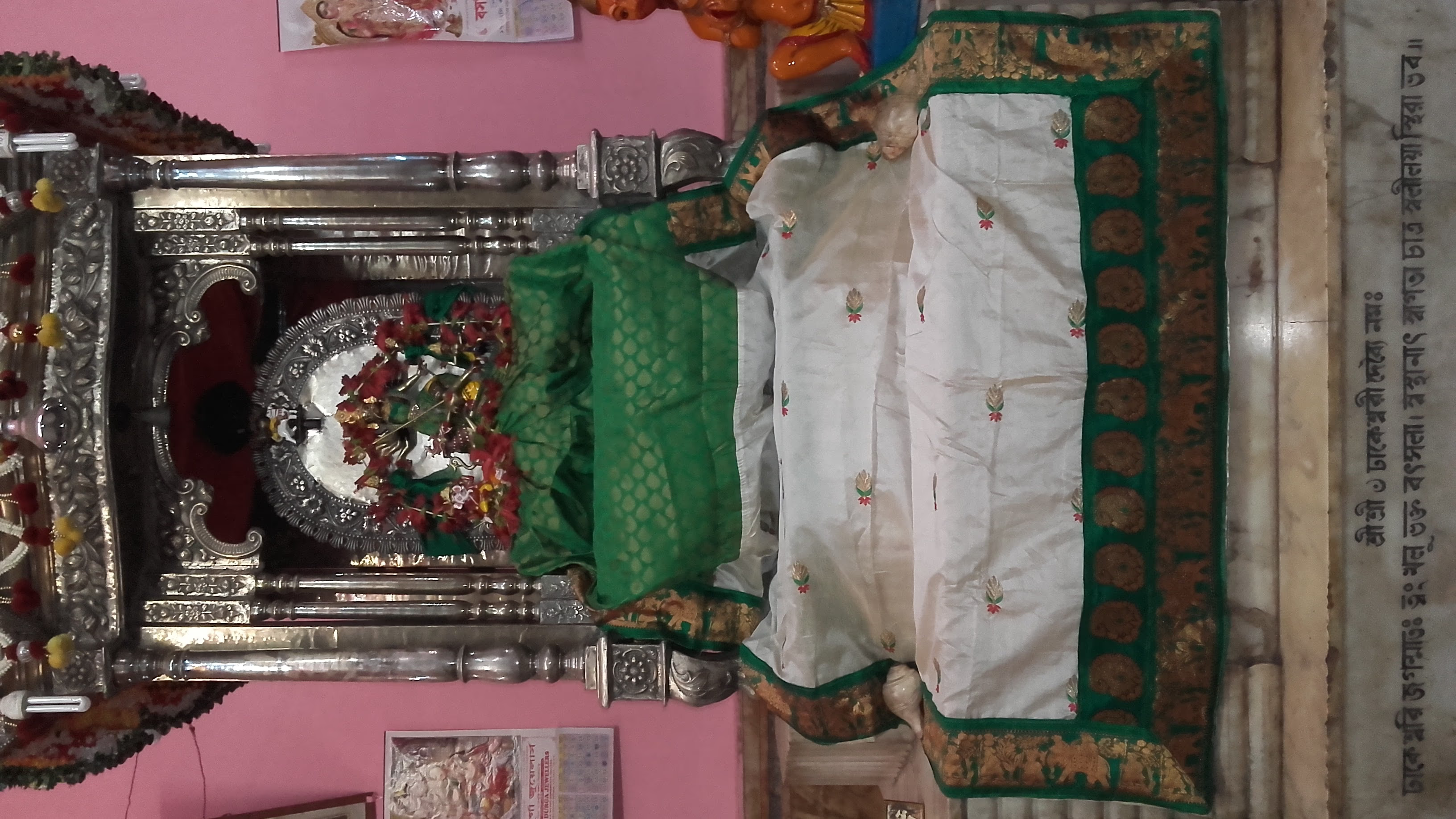
In 1950, businessman Devendranath Chaudhuri constructed a temple for Dhakeshwari Mata in Kumartuli, Kolkata. Alongside dedicating property for the deity’s ritualistic services, the temple houses a nearly 'one and a half-foot-tall' idol, where the ten-armed goddess rides a lion as 'Katyayani Mahishasuramardini Durga'. Flanked by deities Lakshmi, Saraswati, Kartikeya, and Ganesha, the goddess continues to be revered.
Insight from the 1971 Liberation War
The 1971 Bangladesh Liberation War brought another pivotal chapter for the Dhakeshwari Temple. During the conflict, the Pakistani army demolished Dhaka’s 'Ramna Kali Temple'.
Following the devastation of Ramna Kali, the Dhakeshwari Temple became Bangladesh's 'most prominent religious site' for Hindus, marking it as the nation’s largest Hindu temple thereafter. As turmoil and violence molded the era, the temple provided solace and identity to the Hindu community within Bangladesh.
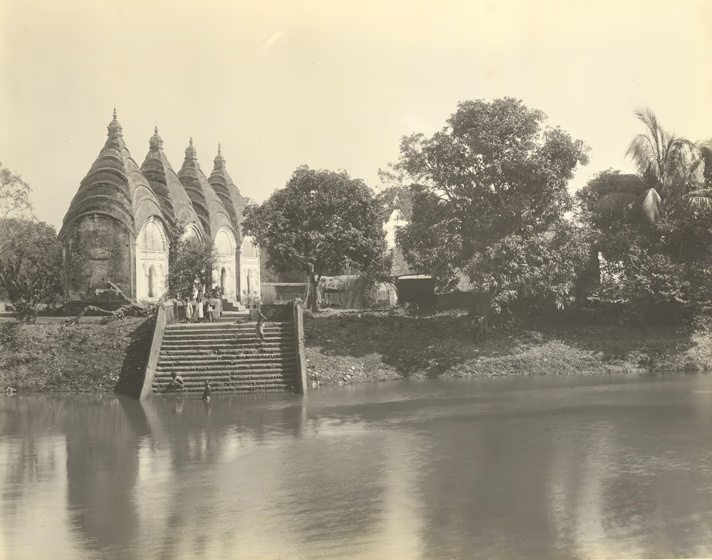
Source: aajtak
The Tale of the Temple's Construction
According to lore, Queen of King Vijay Sen bathed in Langalband while pregnant, later giving birth to Ballal Sen. Upon ascending the throne, Ballal Sen sought to glorify his birthplace by commissioning the temple. Folklore recounts how Ballal Sen dreamt of a goddess concealed within dense jungles, prompting him to locate the deity and extract her idol for consecration on that spot. The temple created in her honor was named Dhakeshwari.
These narratives uphold Dhakeshwari Mata as the 'Presiding Deity of Dhaka' in Hindu belief, symbolizing a form or incarnation of Adi Shakti Durga. The abundance of 'Dhak trees' contributed to the deity's name, as these trees dominated Bengal's forests, the very woods where the idol was found, paving the way from Dhak’s deity to Dhaka.
The National Status of Dhakeshwari Temple
In 1996, the temple was officially renamed 'Dhakeshwari National Temple'. Each morning, the national flag of Bangladesh is hoisted at the temple entrance as per the Flag Code, respectfully lowered during national mourning days.
The Dhakeshwari Temple is much more than a prayer venue. It narrates tales of division, migration, struggle, and the quest for survival. It highlights how time transforms a sacred place into a community's identity. In today's Bangladesh, amid unrest and chaos, Dhakeshwari's story ignites hope that rooted faith can once again nurture branches of change.