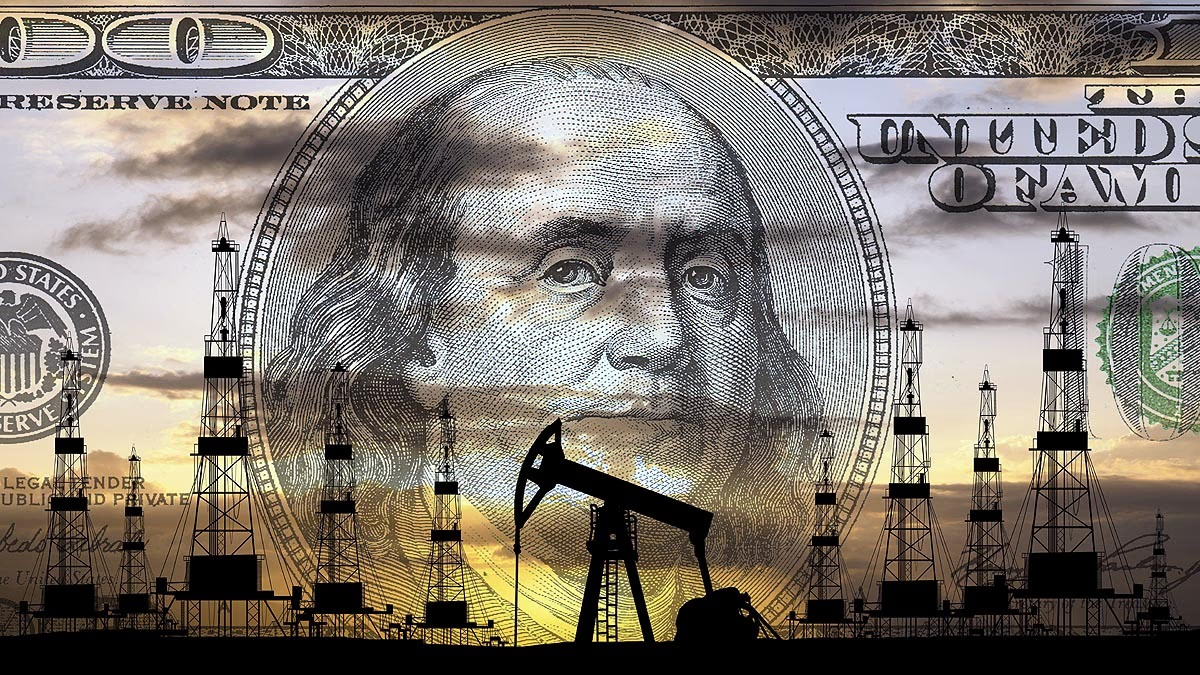
This is not about drugs, terrorism, or democracy; it's a battle to save the petrodollar system.
The US has intervened in Venezuela, capturing President Nicolas Maduro. Yet, the real story runs much deeper. This is not a reaction to drug trafficking or terrorism, but an attempt to preserve the supremacy of the US dollar, which has ruled the global economy for the past 50 years. Venezuela attempted to challenge this system, prompting a forceful American response.
What is the Petrodollar, and why is it crucial for the US?
In 1974, U.S. Secretary of State Henry Kissinger struck a covert deal with Saudi Arabia. The agreement mandated that all oil sold globally would be priced in U.S. dollars. In return, America promised military protection to Saudi Arabia.
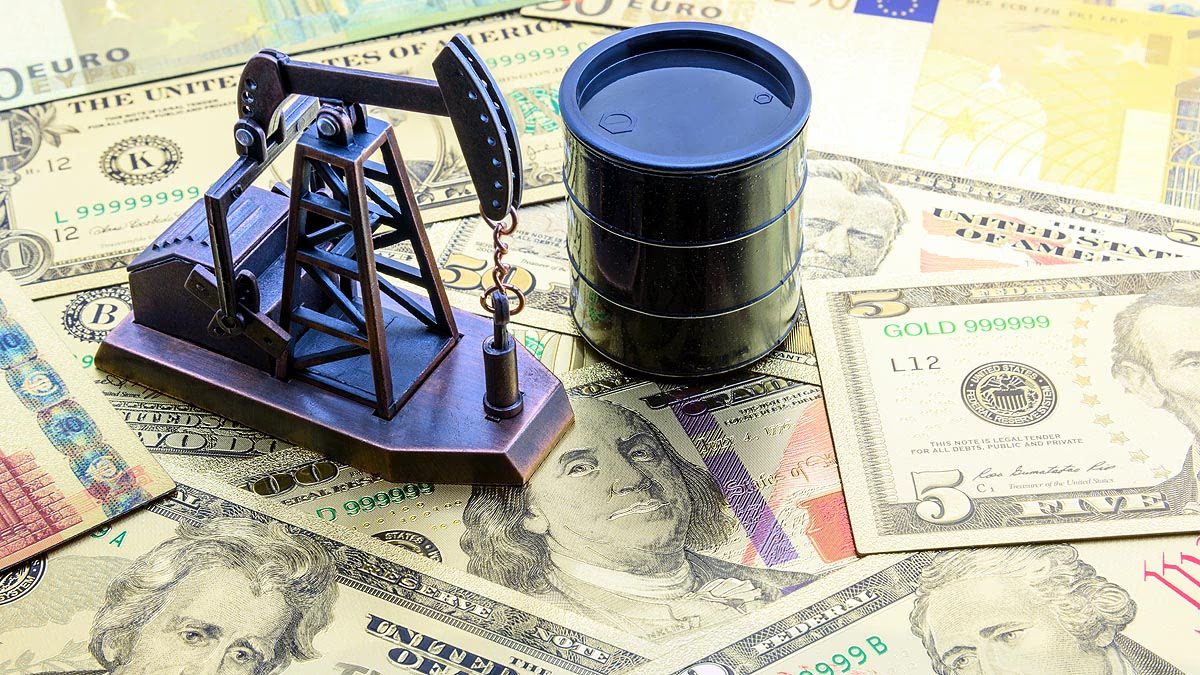
Every country needs dollars to purchase oil, creating a perpetual demand for the currency. This enables the U.S. to print as many dollars as needed since the world uses them to buy oil. This underpins America's military funding, welfare programs, and budget expenses. The petrodollar is the foundation of U.S. economic power—more significant than any weapon or fleet.

Source: aajtak
What did Venezuela do to provoke such anger from the U.S.?
Venezuela boasts the largest oil reserves in the world—303 billion barrels, surpassing even Saudi Arabia, accounting for 20% of global oil. However, in 2018, Venezuela declared its independence from the dollar. It began selling its oil in Chinese yuan, euros, rubles—anything but American dollars.
The country sought to join BRICS (Brazil, Russia, India, China, South Africa) and was creating direct payment channels with China that bypassed SWIFT, the dollar-based banking system. With such vast oil reserves, Venezuela could have spearheaded an anti-dollar campaign for decades.
This was a threat to the U.S., as Venezuela's success might inspire other countries to abandon the dollar.
Source: aajtak
How has history treated those who challenged the petrodollar?
2000: Iraq's Saddam Hussein had proclaimed that Iraq would sell oil in euros, not dollars.
2003: The U.S. invaded Iraq, and Saddam was executed. Oil resumed trading in dollars. Weapons of mass destruction were never found—because they did not exist.
2009: Libya's Gaddafi proposed a gold-based African currency for oil trade.
Leaked emails from Hillary Clinton revealed that this was a key reason for the intervention. They discussed creating a pan-African currency backed by Libyan gold.
2011: NATO bombed Libya, and Gaddafi was killed, with Clinton famously quipping, "We came, we saw, he died." Libya now faces a slavery market.
Now, it's Maduro's turn. He possesses five times more oil than Saddam and Gaddafi combined and was selling oil in yuan and engaging with BRICS, integrating with China, Russia, and Iran—three nations challenging the dominance of the dollar.
What was the official U.S. stance?
U.S. advisor Stephen Miller openly stated that the Venezuelan oil industry owes its existence to American effort. They argue that U.S. companies developed the oil infrastructure there a century ago, claiming ownership over the oil.
The Petrodollar's Decline is Already Underway
Russia is selling oil in rubles and yuan following the Ukraine war.
Saudi Arabia is considering settlements in yuan.
Iran has been trading in non-dollar currencies for years.
China has established the CIPS system, connecting 4,800 banks in 185 countries.
BRICS is crafting systems for trade in local currencies.
The mBridge project enables central banks to settle instantly in local currency.
If Venezuela joined BRICS, this shift might accelerate—BRICS accounts for 40% of the world's GDP.
Why is this not about drugs or terrorism?
Only 1% of U.S. cocaine originates from Venezuela. There is no evidence linking Maduro to terrorist organizations. Democracy? The U.S. allies with Saudi Arabia—a country without elections.
What Might Happen Next?
Russia, China, and Iran have called the intervention an armed assault. China, Venezuela's largest oil client, is suffering financial losses. BRICS nations are closely observing the repercussions of dollar rejection. American oil corporations are poised to return to Venezuela. An opposition government could form, with oil once again traded in dollars.
The Big Question:
If saving the dollar demands military intervention, doesn't it signify the dollar's inherent decline? Nations of the Global South might rapidly abandon the dollar. This could mark the end of American hegemony. This incident mirrors the 1990 Panama invasion—both occurred on January 3, both justified by drug-related pretenses. History doesn't repeat, but it rhymes. Venezuela's battle is a struggle for the dollar's survival.