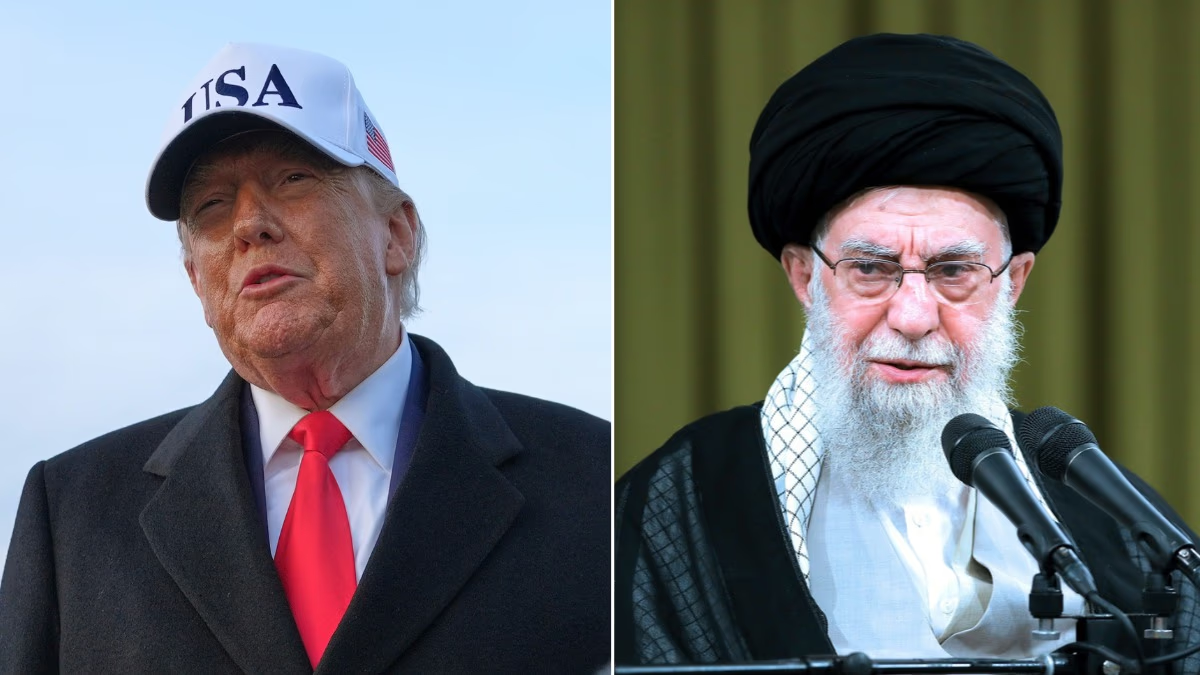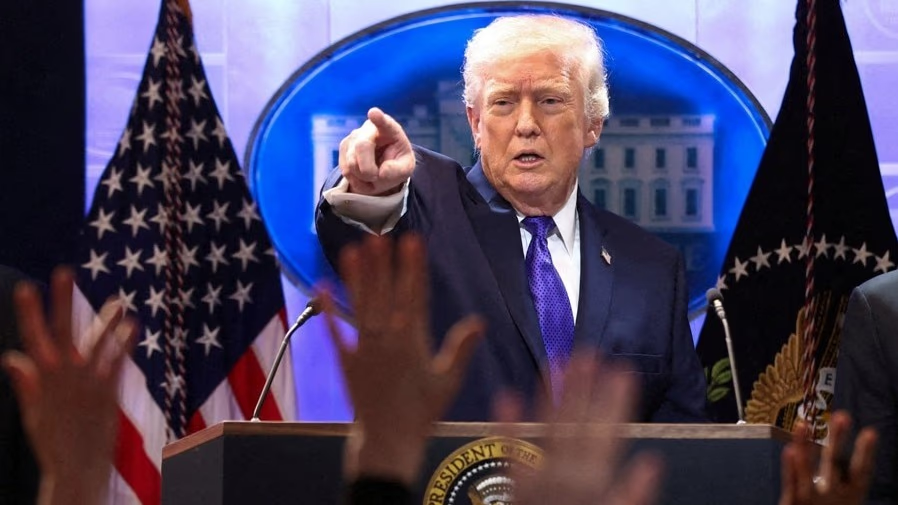
In a bold move against the judiciary, US President Donald Trump has escalated his trade strategies. Mere hours after the Supreme Court rendered his previous tariffs illegal, Trump inked a fresh executive order in the Oval Office. This new measure institutes a sweeping 10% global tariff on imports from every nation.
Taking to his social media platform, Truth Social, Trump declared, 'I am proud to announce that I've signed a 10% global tariff affecting all countries, effective almost immediately.'
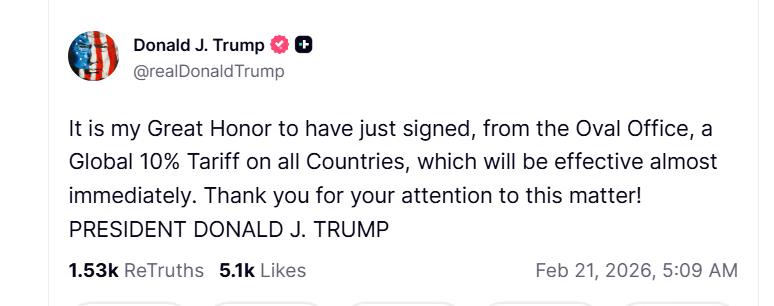
Source: aajtak
Addressing a press conference earlier, President Trump stated his intention to impose the 10% global tariff under Section 122 of the 1974 Trade Act, which will be on top of current duties. He warned, 'I can impose far higher tariffs if needed.'
The 150-Day Tariff Timeline
This tariff, according to Section 122 of the Trade Act, will be effective for about five months (150 days). During this period, the administration plans to investigate suitable tariffs for other nations. Trump hinted at potentially increasing the tariffs if necessary, stating in media interactions, 'We can do as we please. Rates could potentially go higher.'
Notably, a 6-3 decision by the US Supreme Court negated the President's authority to impose tariffs without Congressional approval under the 1977 International Emergency Economic Powers Act (IEEPA). Trump expressed profound disappointment in the ruling and criticized some court members.
Yet, Trump clarified that the IEEPA restriction doesn't bar him from exploring other legal avenues. He elaborated, 'I can devastate trade, embargo a country. I can do so much, yet I can't impose even a 1-dollar tariff? How absurd is that?'
Referencing Justice Brett Kavanaugh's dissenting note, Trump assured that future presidential tariff powers remain unrestrained.
Actions Under Sections 232 and 301
The Trump administration suggested that new tariffs might also be imposed under Section 232 (national security basis) and Section 301 (unfair trade practices). Trump warned that some countries with a history of mistreating the US might face increased rates, whereas others would see fair treatment.
Moreover, US Trade Representative Jamieson Greer stated that new investigations under Section 301 would be disclosed in the coming days and assured they would be legally sound.
Trump's Take on Potential Tariff Refunds
The Supreme Court's decision casts uncertainty over last year's collected tariff revenue of around $175 billion, possibly putting it in the refund domain. Asked about returns on tariffs collected under emergency laws, Trump replied, 'I think this issue will be tangled in litigation for the next two years.'
Meanwhile, Treasury Secretary Scott Basant noted that the court hadn't provided clear refund directives, keeping the matter contentious. Regardless, he was confident that new measures under Sections 122, 232, and 301 would keep tariff revenues nearly unchanged by 2026.