UGC Regulations Row LIVE Updates:
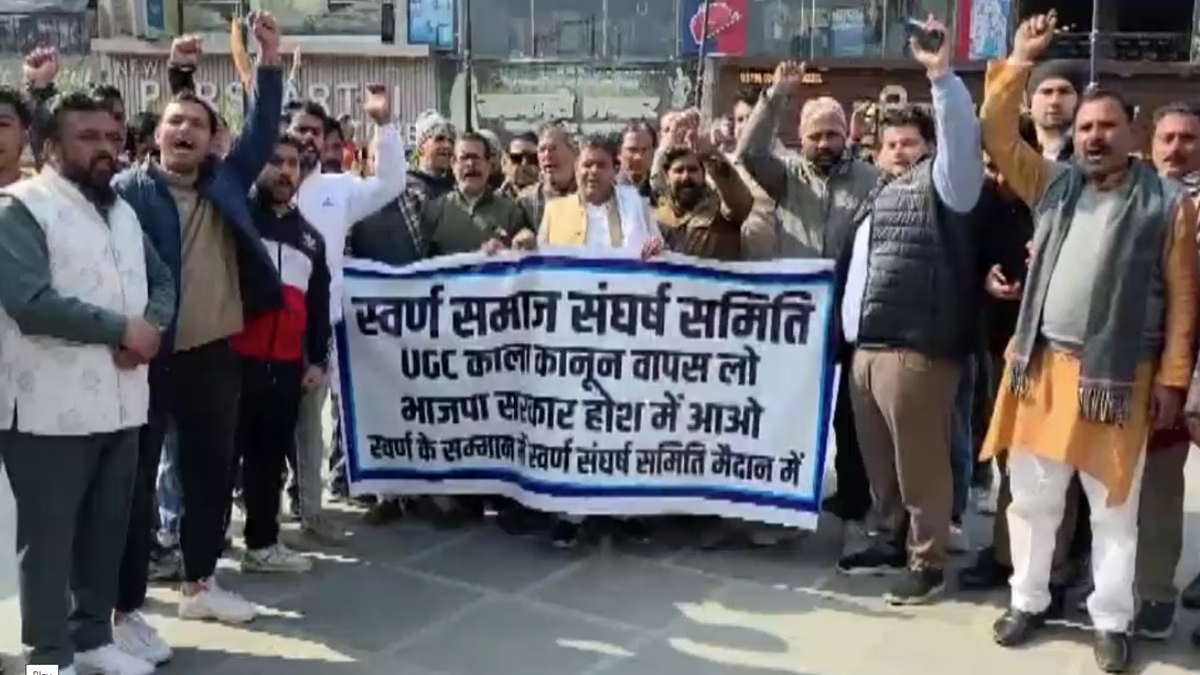
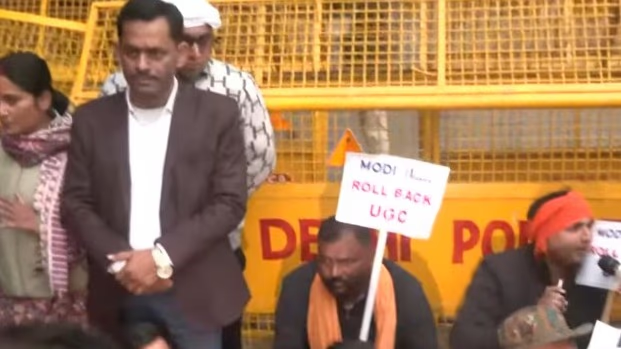
A new controversy over higher education has emerged. The UGC's new 'Equality Regulations in Higher Education Institutions, 2026' has stirred a political storm. Protests are taking place against the new rules in the nation's capital, Delhi. Students from upper castes announced a protest outside the University Grants Commission headquarters on January 27. Amidst the growing controversy, calls for unity are being made, urging student groups to gather in large numbers to mark their opposition to the new rules.
Student Protests at Lucknow University
Students at Lucknow University held significant protests against the UGC's new regulation. They labeled these rules a "black law," demanding their withdrawal and accusing them of being discriminatory against students from the general category, potentially fostering false accusations and campus divisions. However, the university administration warned demonstrators of action for disrupting exams.
Additionally, several places in Uttar Pradesh witnessed protests on Monday, and further demonstrations are called for today. Furthermore, a Public Interest Litigation (PIL) has been filed in the Supreme Court challenging the UGC's 2026 regulations, notified on January 13, which aim to promote equality in higher education institutions.
The regulations were notified earlier this month, aiming to build robust systems to tackle caste-based discrimination in universities. Yet, opposition remains strong in several quarters.
Source: aajtak
Critics argue the rules are one-sided and obscure, prone to misuse. The government's notification has led to protests, resignations, and political unrest. Critics view these resignations as proof that opposition to UGC rules extends beyond student politics to administrative and political realms.
Read also:
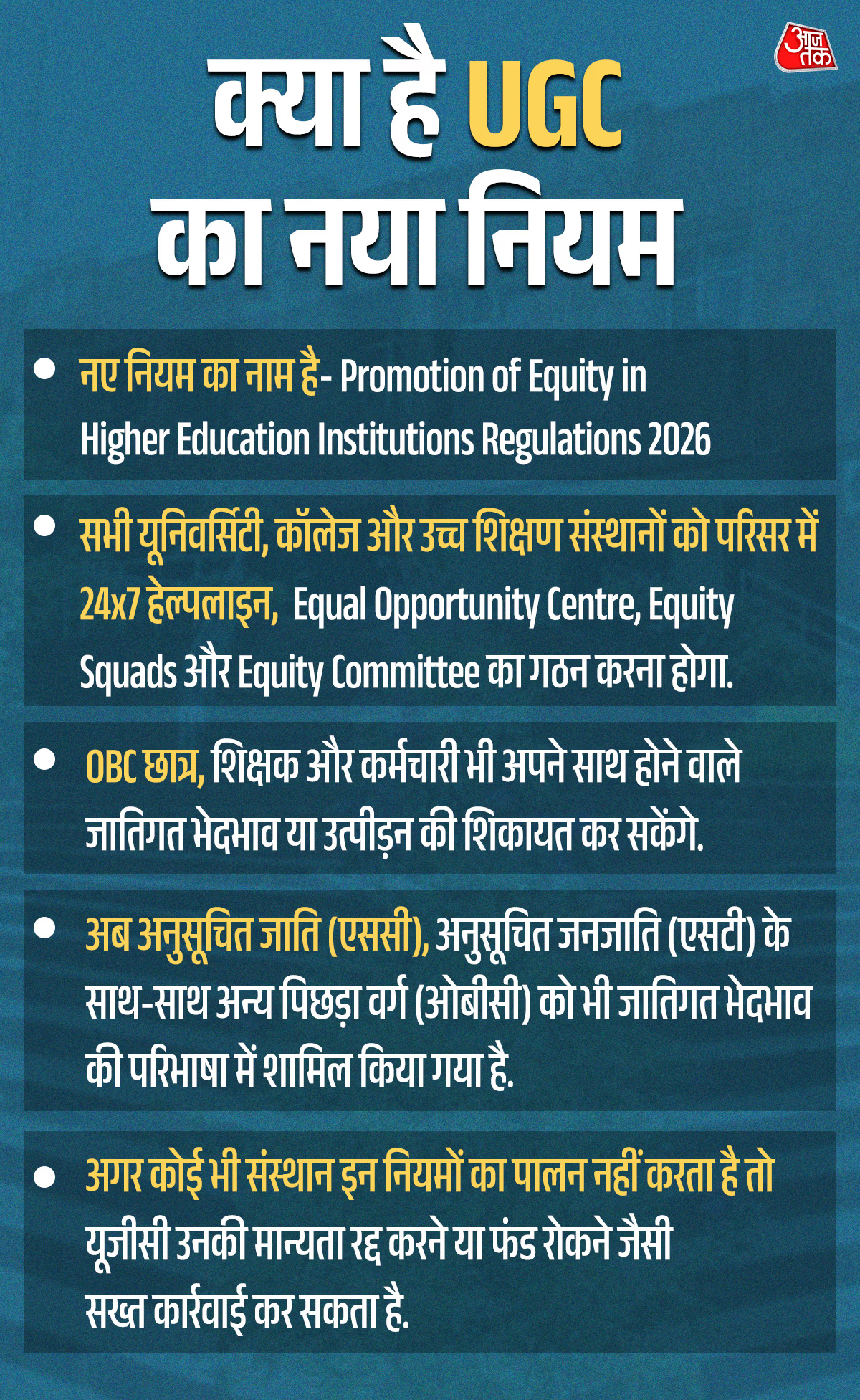
The University Grants Commission (UGC) has made it mandatory for all higher education institutions to establish an Equal Opportunity Centre, an Equity Committee, and a 24/7 complaint helpline, especially for SC, ST, and OBC students. The UGC states the aim is to ensure fairness and inclusivity on campuses, though some oppose the regulation.
Opponents of the new rules argue: "The newly issued regulations do not clearly define safety measures for those accused of discrimination. This risks fostering a presumption of guilt, especially against general category students and faculty. Institutions failing to comply could face severe penalties, such as withdrawing accreditation or funding."
BJP leader and former Union Minister Dr. Sanjay Singh raised questions regarding justice, fairness, and balanced representation through a social media post. He stated that meaningful justice is one that is equal and fair for everyone.
In his post, he wrote, "The current scenario is creating an atmosphere of concern and apprehension in educational institutions. Committees formed without balanced representation will not deliver justice. They mainly provide formal decisions that don't solve problems."
Dr. Singh appealed to Prime Minister Modi in his post, stating, "While treading the path of justice, it is essential to ensure every citizen's respect and security. Participation of all sections in decision-making is crucial to prevent any inequality."
Read also: Controversy Deepens over New UGC Rules as Central Minister Nityanand Rai Dodges Questions
BJP leader Braj Bhushan Singh's son and Gonda MLA Prateek Bhushan Singh stated, "There should now be a deep analysis of history's double standards, where the brutal atrocities by foreign invaders and colonial powers are dismissed as 'things of the past', while a section of Indian society is constantly targeted as 'historic criminals' marked for retribution in the present."
'The country remains divided by religion and litigation...'
Farmer leader Rakesh Tikait stated, "This act might increase caste tensions and conflicts in the nation. The government wants the country divided on caste, religion, and court cases. The law's effects will appear over time, but such measures promote caste enmity in society. Such decisions are not conducive to the nation's unity."
After a senior bureaucrat resigned from government service, expressing policy dissent, the political dispute intensified. They cited dissatisfaction with the policy's implementation and reactions to the opposition as reasons for resigning. Shortly after, a BJP Youth Wing leader also resigned, claiming these rules worsen division and ignore student and teacher concerns.
Read also:
The Union Education Minister declined to directly address whether the rules would be reviewed or halted. He stated only that the government is 'open to dialogue' and the rules are aimed at promoting equality, not conflict. However, no timeline was provided for consultations or possible amendments.
What began as a regulatory shift has now escalated into a political and ideological clash, addressing caste discrimination concerns against the fears of excessive intervention, procedural lapses, and campus polarization. Resignations continue to mount, and protests are spreading, increasing pressure on the central government to clarify whether the UGC rules will remain unchanged or be re-evaluated.