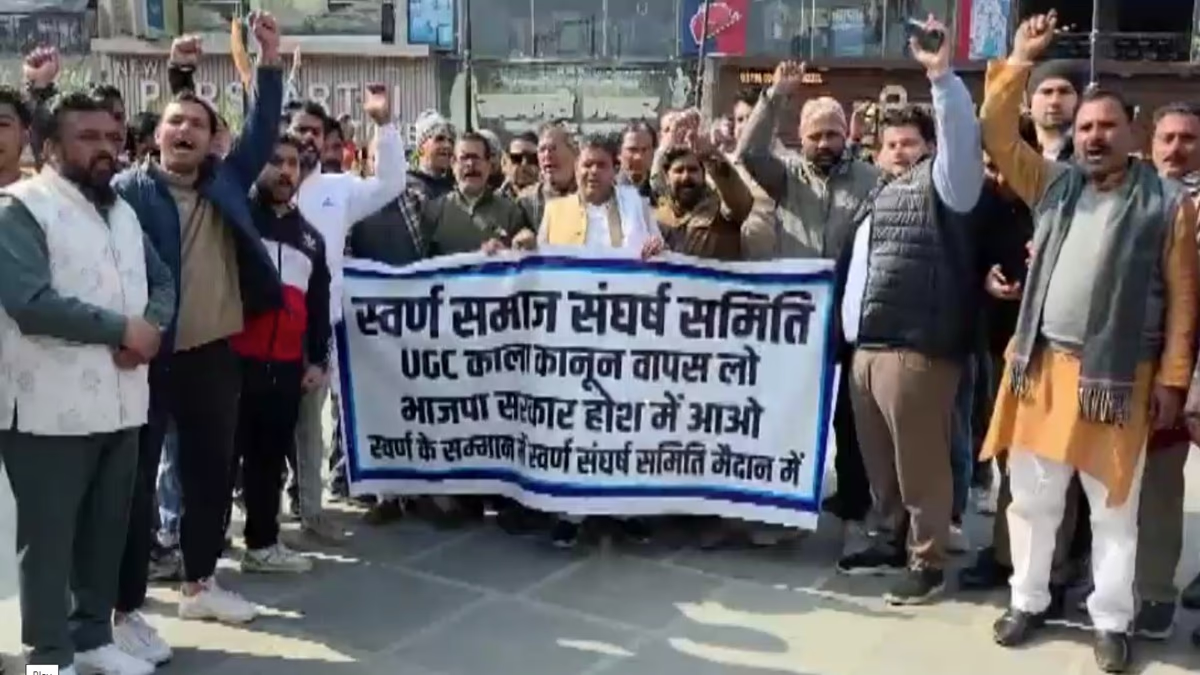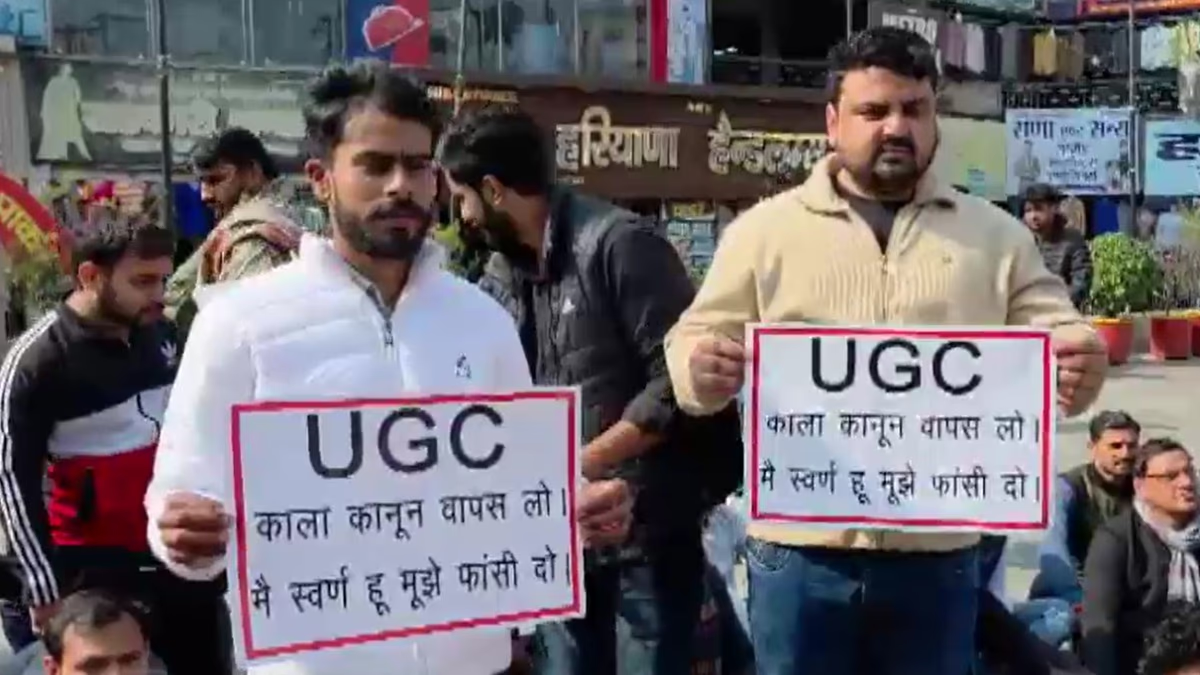
Across the nation, the UGC's new regulations have sparked widespread controversy. First, social media was abuzz with #UGCRolleback trends. The matter escalated to the Supreme Court, with arguments that it fuels discrimination. Moreover, the Bareilly City Magistrate, Alankar Agnihotri, protested these changes by resigning. This raises questions about the rules implemented by the UGC and the reason behind the dissatisfaction among teachers, students, and the general public.
What is the New UGC Rule?
On January 13, 2026, the UGC enacted a rule, known as the “Promotion of Equity in Higher Education Institutions Regulations 2026.” Its purpose is to prevent caste discrimination and inequality in academic institutions. According to the new regulations, all universities and colleges are required to establish Equity Centers, Equity Squads, and Equity Committees, along with a 24/7 helpline. Institutions failing to comply may face revocation of acknowledgment or a freeze in funding.
The UGC states that complaints against backward classes, scheduled castes, and tribes increased by over 100% between 2020 and 2025. References to Supreme Court comments in cases like Rohit Vemula and Payal Tadvi have guided the enactment of this regulation.
Why the Uproar?
Some sections of the rule have attracted significant attention. A Public Interest Litigation (PIL) has been filed in the Supreme Court, arguing that Section 3(C) contravenes the right to freedom of expression, equality, and personal liberty. Furthermore, students and teachers from the general category are displeased. The Bareilly magistrate, Alankar Agnihotri, likened the new rule to declaring general-category students as self-proclaimed offenders.
Both teachers and students argue that the rules are one-sided, lacking provisions to address false complaints, and inadequately represent the general category.
The 4 Controversial UGC Rules/Changes
1. Formation of Equity Committees and Squads Every college and university will establish Equity Committees and Squads. Students argue that this does not necessarily ensure representation from the general category. The squads are granted extensive powers, and the definition of 'discrimination' remains ambiguous.
2. 24/7 Helpline and Complaint System
Under the UGC's rule, each institution will operate a helpline and an Equal Opportunity Centre for students to report discrimination. The rule provides no deterrent against false complaints. Consequently, any student may become vulnerable to baseless accusations, potentially affecting their career.
3. Focus on Scheduled Castes, Tribes, and Backward Classes
The objective of the rule is to prevent discrimination against SCs, STs, and backward classes. However, the general category students and teachers are critical, citing it as a one-sided rule that could inadvertently stigmatize general-category students as 'potential offenders.'
4. Authority for Strict Action
Non-compliance with the rule could lead to the UGC withdrawing recognition or halting funds for institutes. Students and teachers feel this places undue pressure on institutions and is difficult to enforce without adequate training.
Reactions from Students and Teachers
Numerous student organizations and teacher unions are opposing the UGC's new rule. The hashtag #UGCRolleback is trending on social media. The city magistrate in Bareilly, Alankar Agnihotri, resigned in protest. Students claim that the rules are one-sided, do not address false complaints, and put the rights of general category students at risk.
What is the UGC's Standpoint?
According to the UGC, these regulations are essential for ensuring equal opportunities and a secure educational environment. The commission argues that without a monitoring system, combating discrimination against backward classes proves challenging. The UGC clarifies that the regulations will be phased in gradually, with the ultimate aim being to ensure equal opportunities and security. While the UGC's new rule seeks to enhance equity and safety within the educational system, some sections remain contentious.
From teachers to students, there is concern that the rulings may infringe upon the rights of general-category students and teachers. Moving forward, it remains to be seen if the UGC will amend the rules following the Supreme Court's PIL. For now, this issue continues to be a major and heated topic of discussion in the educational sphere.