
Recently, intense debates have sparked on social media regarding the new rules by the University Grants Commission (UGC). Students and parents from the general category vehemently oppose these regulations, introduced in the name of establishing 'Equity' in higher education institutions. Traditionally, higher education institutions are seen as bastions of merit, intellect, and equal opportunity, providing every student with a fair chance to progress. However, the UGC's new rules have called this very notion of 'equity' into question.
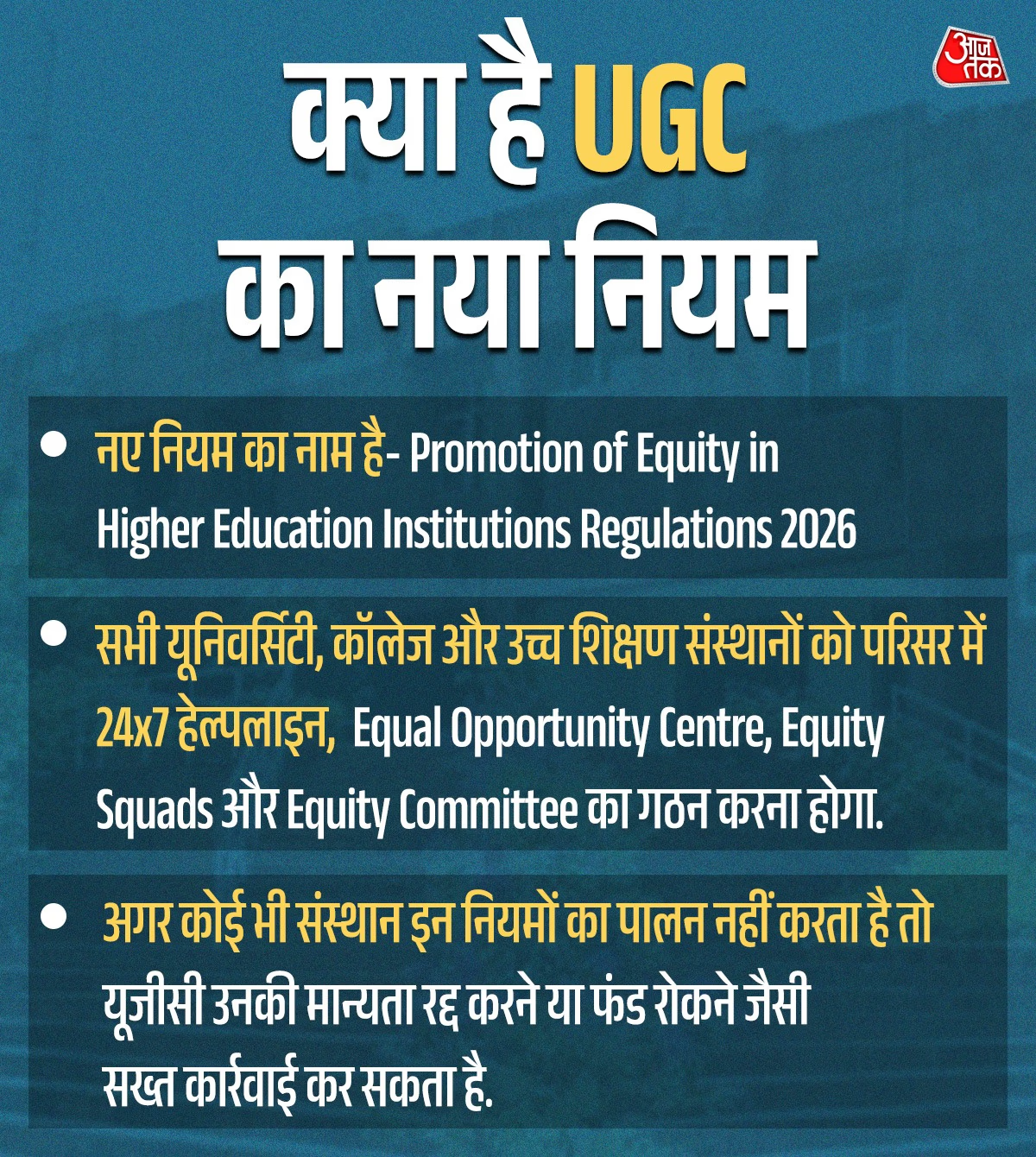
On January 13, the UGC implemented the 'Promotion of Equity in Higher Education Institutions Regulation 2026'. This aims to end discrimination against students, teachers, and staff from SC (Scheduled Castes), ST (Scheduled Tribes), OBC (Other Backward Classes), EWS (Economically Weaker Sections), and differently-abled communities. It mandates every university and college to form a nine-member Equity Committee.
Source: aajtak
This committee would include institutional heads, three professors, one employee, two general citizens, two specially invited students, and one coordinator. As per the rules, at least five seats in the committee are reserved for SC, ST, OBC, differently-abled individuals, and women. This is where the controversy begins. Critics argue that mandatory representation for the General Category isn't provided, despite this group being perceived as facing the highest likelihood of discrimination allegations.
Read Also:
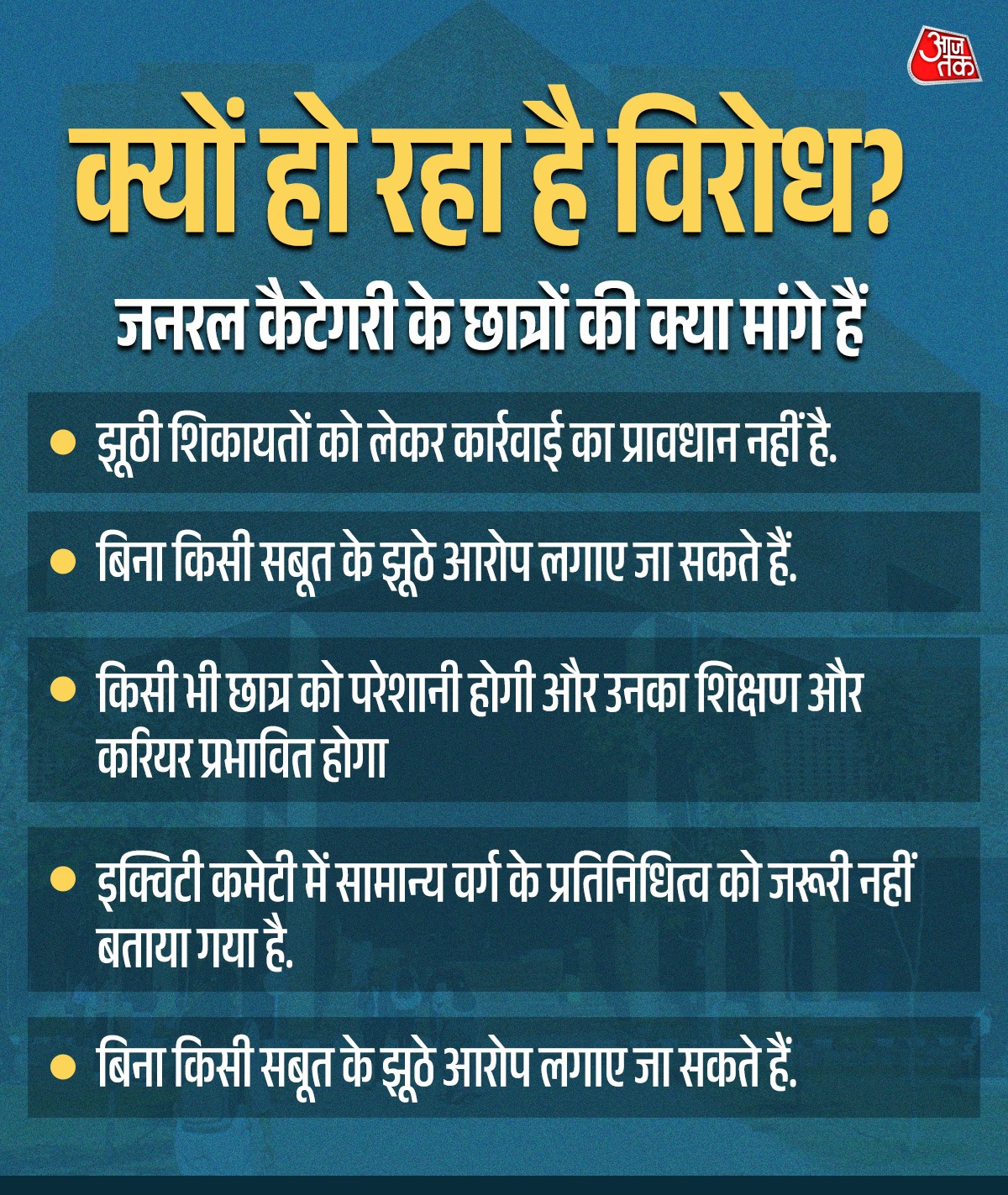
Why the Outcry Over UGC's New Rules?
The University Grants Commission argues that these rules are designed to strengthen the sense of equity and inclusion in higher education institutions. However, opponents believe these regulations are based on the assumption that one group is always oppressed, while another is forever the oppressor. Students and educators from the general category fear being ensnared in false cases since there's no provision for penalties against false complainants, potentially leading to biased actions.
Source: aajtak
The UGC claims these rules were introduced due to rising complaints of caste discrimination. According to the Commission's 2024 report, 173 discrimination complaints were registered in 2019–20, increasing to 378 by 2023–24. In five years, a total of 1160 complaints surfaced, indicating approximately a 118% rise. However, there's another side to the statistics. In 2023–24, there were 1153 universities and over 48,000 colleges in the country, with more than 42 million students. If approximately 50% of these students belong to SC, ST, OBC, EWS, and differently-abled categories, the complainants' percentage still hovers around just 0.0018%.
Read Also:
A Bigger Challenge Than Caste Discrimination Is Mental Stress
Critics argue that it's unfair to label the entire general category as suspect based on such few complaints. Experts assert that while caste discrimination is a severe issue deserving strict action against offenders, an even greater challenge is the escalating mental stress among students. Data reveals that from 2019 to 2023, around 62,886 students committed suicide nationwide, and stress claimed the lives of 65 IIT students between 2021 to 2025. Critics argue that instead of addressing students' mental health, the system is crafting regulations that could fuel distrust, discrimination, and clashes on campuses.
This growing frustration over the UGC's new rules among the general category is increasingly directed towards the central government. Even within BJP, voices of dissent have risen. Eleven BJP officials resigned in Lucknow on Monday opposing the UGC's new rules. Raju Pandit, Vice President of the BJP Youth Wing in Noida, dubbed the new rules a 'black law' for the general category and quit his position. BJP leader and former Union Minister Dr. Sanjay Singh also expressed discontent with the new regulations, emphasizing that justice is only meaningful when equal and fair for all.