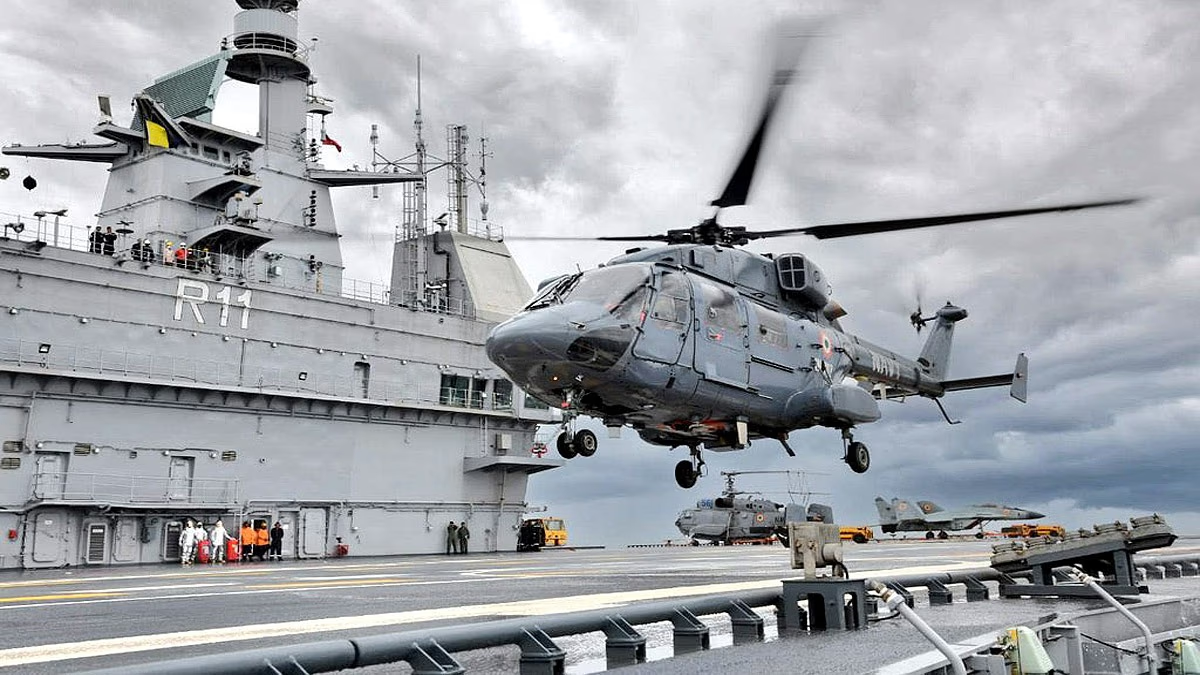
The Indian Navy is embarking on establishing a significant new base at Haldia, West Bengal, set to fortify India's maritime presence in the Northern Bay of Bengal substantially. This initiative is especially pivotal given the Chinese Navy's escalating activities, increasing infiltrations from Bangladesh, and the shifting dynamics with Pakistan. Let's explore the purpose of this base, what it will entail, the vessels it will host, and its strategic significance.
What is the Plan for Haldia Base?
Location and Type:
Nestled approximately 100 km from Kolkata on the Hooghly River, Haldia offers direct access to the Bay of Bengal. Despite lacking a formal name yet, it is referred to as Naval Detachment (Naval Outpost).
Also read:
Scale:
While not a substantial command, this base will be a compact facility housing approximately 100 officers and sailors.
Construction:
The existing Haldia Dock Complex, operational since 1970, will be utilized. Initially, a special jetty (a berth for mooring ships) and shore support facilities will be developed, expediting the base's readiness with minimal new infrastructure.
Advantages:
This development reduces the long journey from the Hooghly River to Kolkata. The base ensures swift access to the Bay of Bengal.
Which Vessels Will Be Deployed?
This base primarily supports small, agile vessels...
Fast Interceptor Crafts (FICs):
These are nimble vessels reaching speeds of up to 45 knots, armed with machine guns. Weighing around 100 tons, they are operated by a crew of 10-12 members.
New Water Jet Fast Attack Crafts (NWJFACs):
At 300 tons, these crafts can travel between 40-45 knots, armed with CRN-91 guns and potentially deploying loitering munitions like Nagastra. They are designed for surveillance, assault, and precision strikes.
Procurement:
In 2024, the Defense Acquisition Council, led by Defense Minister Rajnath Singh, approved the purchase of 120 FICs and 31 NWJFACs for coastal security, intrusion prevention, port security, and special operations.
Also read:
Why is This Base Critical? Key Reasons
The Indian Navy already maintains major bases on the eastern flank at Visakhapatnam (Eastern Naval Command) and the Andaman & Nicobar Islands. Yet, solidifying presence in the Northern Bay of Bengal bears significant importance...
Chinese Escalation:
The People's Liberation Army Navy (PLAN) is increasingly active in the Indian Ocean, necessitating vigilant surveillance of Chinese vessels in the Bay of Bengal.
Infiltration from Bangladesh:
The waterway serves as a conduit for illicit entry at the India-Bangladesh frontier. Swift vessels prove essential in the shallow waters and dense maritime traffic.
Pakistan-Bangladesh Relations:
Defense ties between the two nations have been strengthening as recently, with China's provision of submarines and bases to Bangladesh. This base underpins security across India's eastern corridors.
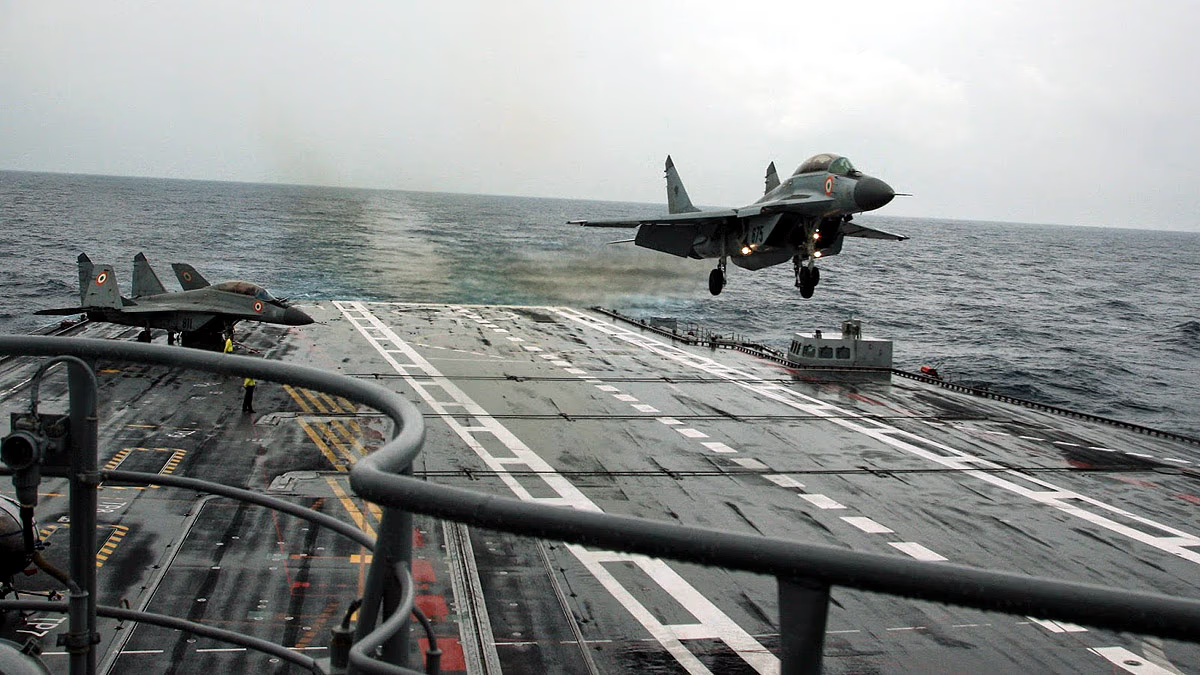
Source: aajtak
Securing Maritime Routes: From Haldia, monitoring the Strait of Malacca, a global trade chokepoint, becomes seamless.
Strategic Significance
This base empowers India with rapid response capabilities across the Bay of Bengal.
Assistance in counter-infiltration, smuggling, maritime piracy, and disaster relief will be bolstered.
India's primary security provider role in the region will be reinforced.
Pre-allocated land is now available, ensuring a swift commencement of operations.
Haldia Base forms a crucial part of the Indian Navy's expansion on the eastern seaboard. With nimble yet agile vessels, this base will be instrumental in curbing infiltration, heightening surveillance, and sustaining regional stability amidst the challenges linked to China, Bangladesh, and Pakistan. This strategic enhancement offers fresh vigor to India's maritime security domain.