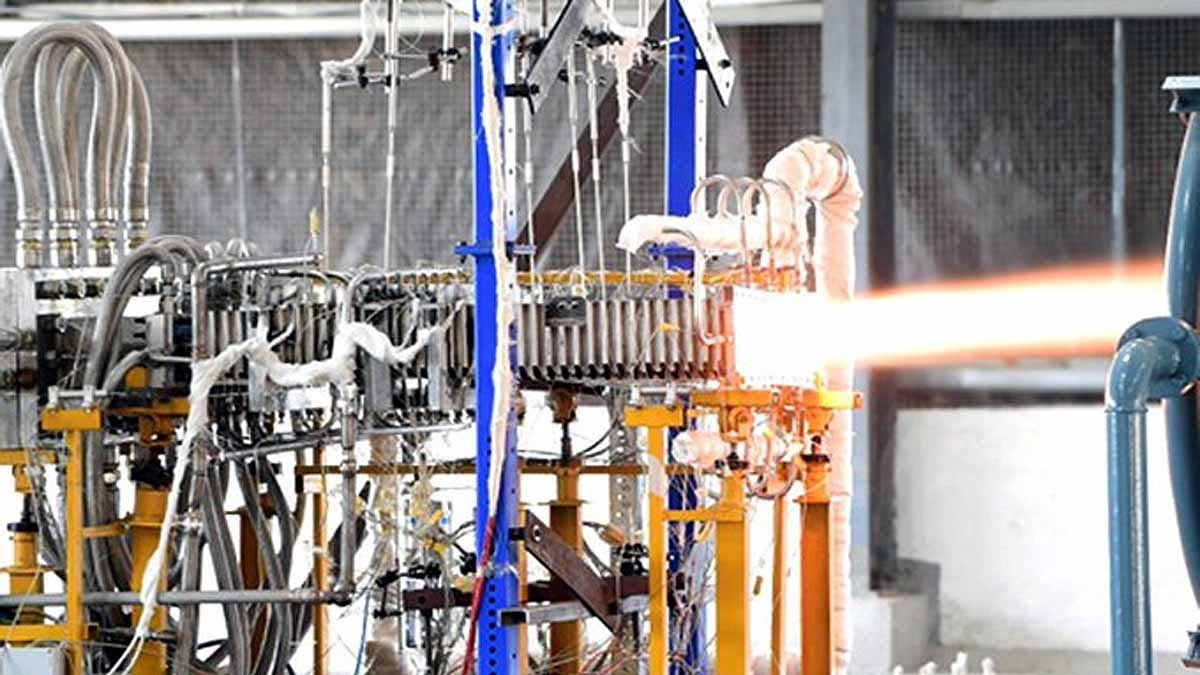
In a groundbreaking development, India strides confidently toward self-sufficiency in hypersonic cruise missile technology. No longer reliant on other nations, India’s missile prowess now rivals Russia's
in speed and lethality, thanks to DRDO’s landmark achievement in Hyderabad on January 9, 2026.
DRDL inaugurated its state-of-the-art Scramjet Connect Pipe Test Facility with a full-scale actively cooled scramjet combustor, enduring a rigorous 720-second (12-minute) ground test—a monumental leap in India's hypersonic capabilities.
Why is this test pivotal?
Surpassing previous tests:
While 2025 saw shorter scramjet trials, this full-scale test proved the combustor’s endurance over 12 minutes, vital for sustaining long-range stability in hypersonic missiles.
Explore more:
Global standing:
With this success, India joins an elite group with the ability to develop missiles reaching speeds of 7408 km/hr, enhancing strategic deterrence powerfully.
Hypersonic Missile Advantages:
Their remarkable speed makes evasion from enemy radar and missile defense systems near-impossible.
Watch the Oreshnik missile in action video
How does the Scramjet Engine work?
The Scramjet (Supersonic Combustion Ramjet) enriches air-breathing engine technology, performing at hypersonic speeds.
Unlike conventional jet engines, it ignites air at supersonic velocity.
Initiation requires a rocket booster.
At high speeds, engines achieve temperatures in the thousands, necessitating an active cooling system—cold fluid fuels traverse the engine walls.
A 12-minute operation signifies the engine's tolerance for prolonged thermal and pressure extremes, key for extended-range missiles.
Discover more:
Missiles powered by this technology:
The actively cooled scramjet engine aims to power DRDO’s Hypersonic Technology Demonstrator Vehicle (HSTDV), a testbed for pioneering India’s complete hypersonic cruise missiles.
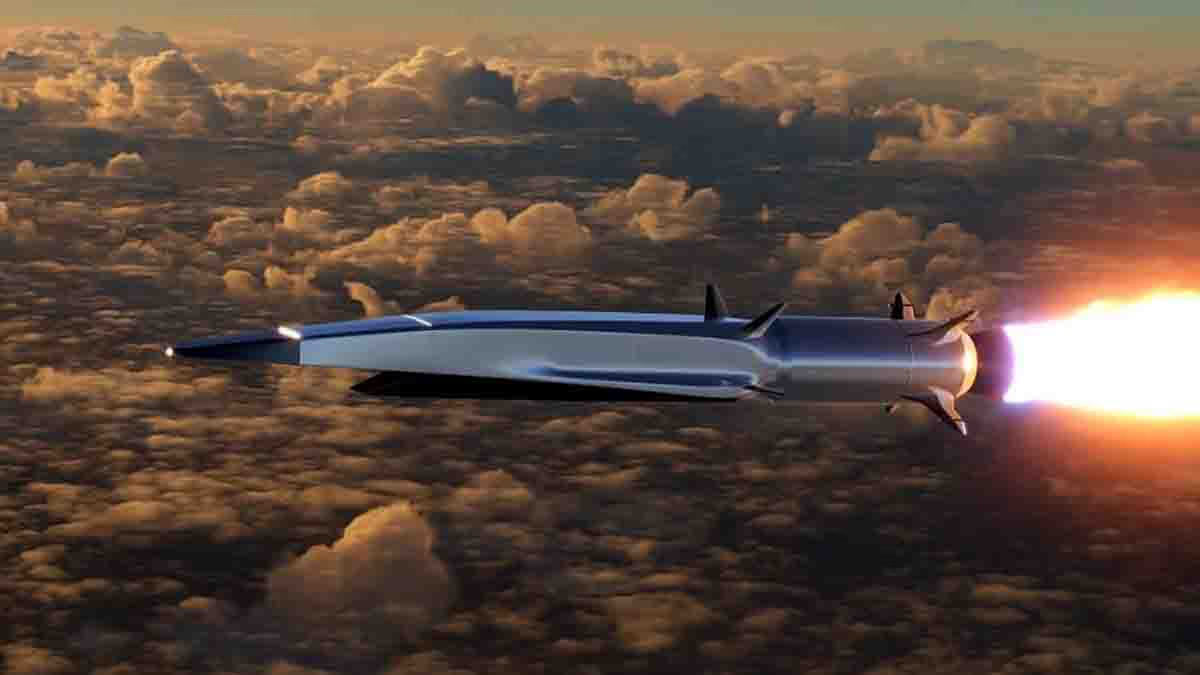
Source: aajtak
Notably, this technology will enhance the future BrahMos-II, a collaborative project with Russia. Targeting a Mach 7-8 speed, BrahMos-II seeks a 450-600 km range, with DRDO striving for full development by 2028.
This achievement is a testament to the relentless dedication of DRDO’s scientists and engineers. The 12-minute ground test positions India robustly in the global hypersonic weapons race. Defense Minister Rajnath Singh considers it a foundational pillar for India’s hypersonic cruise missile initiative. Upcoming phases will focus on flight tests and missile development.