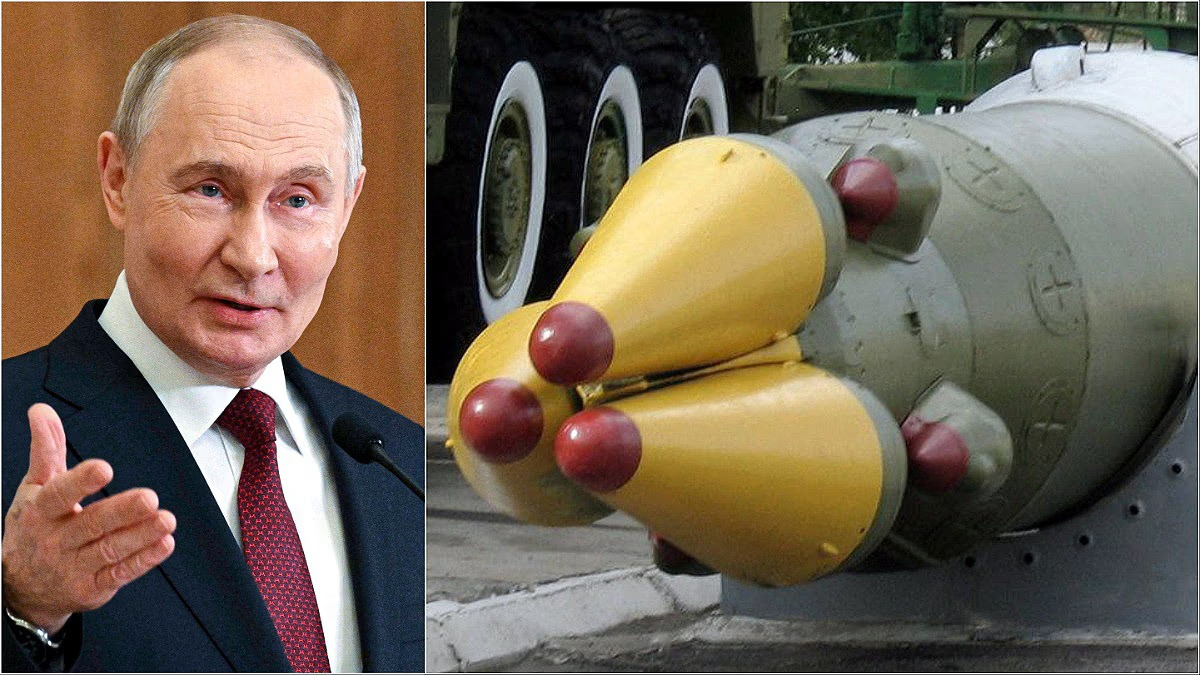
On Friday, Russia's Ministry of Defense announced the deployment of its new Intermediate-Range Ballistic Missile (IRBM), Oreshnik, against Ukraine. This marks its second use in combat since it first struck Dnipro in November 2024.
This latest strike targeted a crucial underground gas storage facility in Ukraine's western Lviv region, disrupting gas supplies. Russia termed it as retaliation, while Ukraine and the USA dismissed Russia's claims.
Source: aajtak
When and Why Did the Attack Occur?
According to Russia's Ministry of Defense, this strike was a response to Ukraine's alleged drone attack on President Vladimir Putin's residence last month (December 2025). Russia alleged Ukraine attempted to attack Putin's home in the Novgorod region, a claim Ukraine flatly denied, and former US President Donald Trump stated there was no such attack.
Timing of the Attack:
A major strike occurred overnight on January 8-9, 2026, involving 242 drones and 36 missiles, including the Oreshnik missile.
Targets:
Russia claimed critical infrastructure was the target. Local media and Russian bloggers reported that an underground gas storage facility near Stryi, one of Ukraine's largest, was hit. It is located 66 km from Lviv city and 75 km from the Poland border.
Impact:
The attack lowered gas pressure in the Lviv Oblast, with gas supplies nearly cut off in several areas. Ukraine's Air Force confirmed the ballistic missile flew at a speed of 13,000 km/hour along its trajectory. This assault seems part of a strategy to cripple Ukraine's energy supply amidst the cold weather.
Features of the Oreshnik Missile
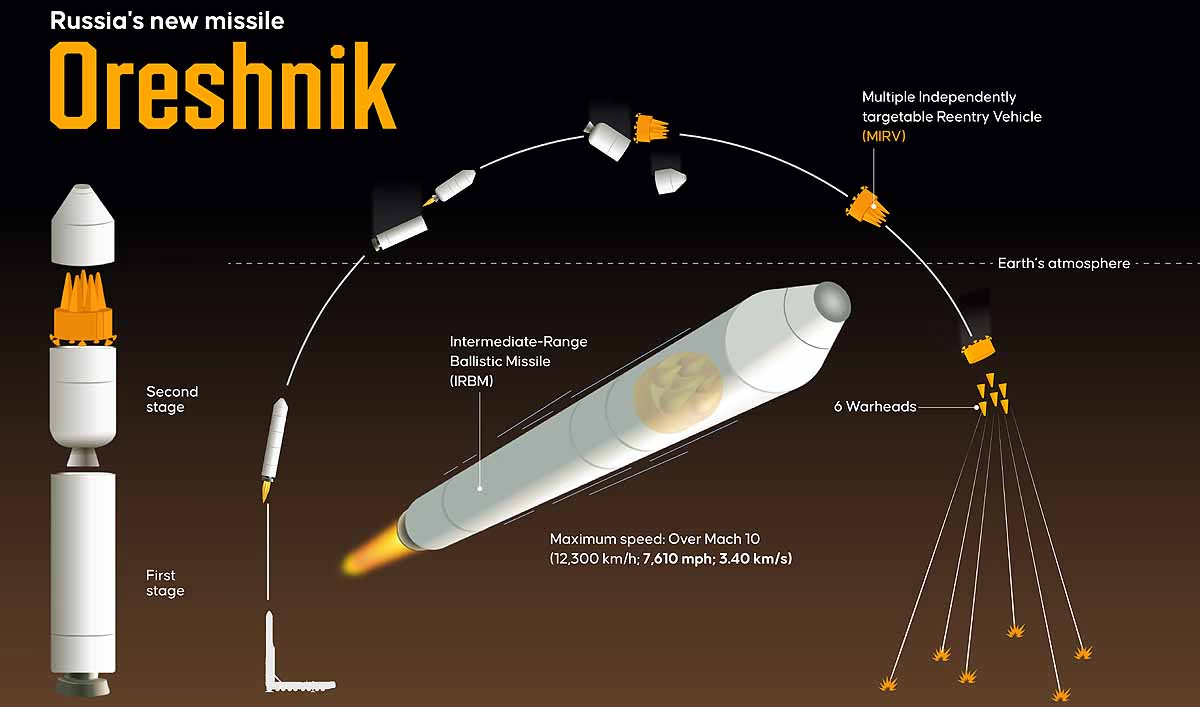
The Oreshnik (Russian for Hazel Tree) is Russia's most advanced hypersonic ballistic missile, based on RS-26 Rubezh or Yars ICBM technology. Key features include:
Type: Intermediate-Range Ballistic Missile (IRBM), Mobile (launched from a truck), and Solid Fuel-powered.
Speed: Hypersonic (12,000-13,000 km/hour).
Range: Between 3,000 to 5,500 km.
Warheads: Incorporates MIRV technology (Multiple Independently Targetable Reentry Vehicles) – a single missile can carry 3 to 6 different warheads, capable of hitting multiple targets. Each warhead may host submunitions (smaller bombs).
Nuclear Capability: Can carry both nuclear and conventional warheads. Putin claims it can cause nuclear-like devastation with conventional warheads.
Interception: According to Putin, it's unbeatable due to its high speed and maneuverable warheads.
Notable: It's the second combat usage of a missile with MIRV (the first also being Oreshnik). Normally, MIRV is employed in nuclear ICBMs.
This missile signifies a new generation of Russian weaponry, crafted to serve as a warning to Western nations.
The Impact and Concerns of the Attack
On Ukraine: Striking the gas storage in Lviv could magnify heating and energy crises during winter. Drone strikes in Kyiv caused 4 deaths and multiple injuries.
On Europe: The facility's proximity to the Poland border raises alarms for NATO and the EU. Ukraine's Foreign Minister declared it a significant threat to European security.
Russia's Message: This attack mirrors Putin's threats, a warning to nations providing long-range missiles to Ukraine.
Global Reaction: The USA and Ukraine condemned the Russian claims as false. Experts suggest this reflects Russia's frustration but won't significantly alter the battlefield dynamics.
The Oreshnik missile's usage showcases Russia's technological prowess and attempts to weaken Ukraine's energy infrastructure. However, it escalates the risks of war. More attacks are anticipated in the following days.