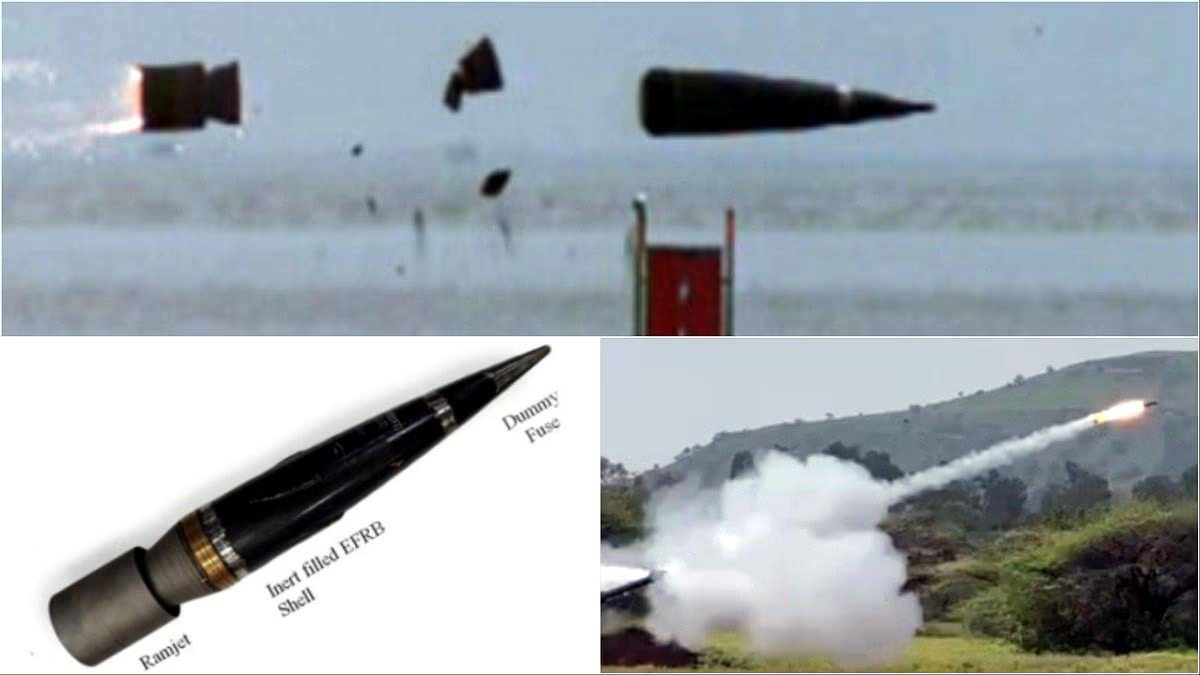
The Indian Institute of Technology (IIT) Madras has achieved a significant milestone in the defense sector. Researchers have integrated ramjet engines into 155 mm conventional artillery shells, nearly doubling their striking range. This innovation greatly enhances the reach of existing artillery without necessitating new costly artillery systems or missile alternatives.
What is a Ramjet and How Does It Work?
A ramjet is a type of jet engine that utilizes high-speed air to burn oxygen. Typically, an artillery shell slows down after being fired. However, in this groundbreaking design, a ramjet engine is attached to the rear of the shell, activating as soon as it is fired from the cannon. This sustained thrust propels the shell further, allowing it to hit targets at greater distances and depths.
Also Read:

Source: aajtak
How Much Has the Range Improved?
The testing results on various artillery systems have been impressive...
ATAGS: Previously 40 km → Now approximately 70 km
K9 Vajra (Thunder): Previously 36 km → Now approximately 62 km
Dhanush: Previously 30 km → Now approximately 55 km
This enhancement has been achieved without reducing the shell's lethality.
Leadership and Collaboration
The project commenced in 2020, led by Professor P. A. Ramakrishna. Team members included... Lieutenant General P. R. Shankar (Retired), Professor H.S.N. Murthy, Professor G. Rajesh, Professor M. Ramakrishna, Professor Murugaiyan, Lieutenant General Hari Mohan Iyer (Retired), Professor Lazar C, and Dr. Yogesh Kumar Velary.
Also Read:
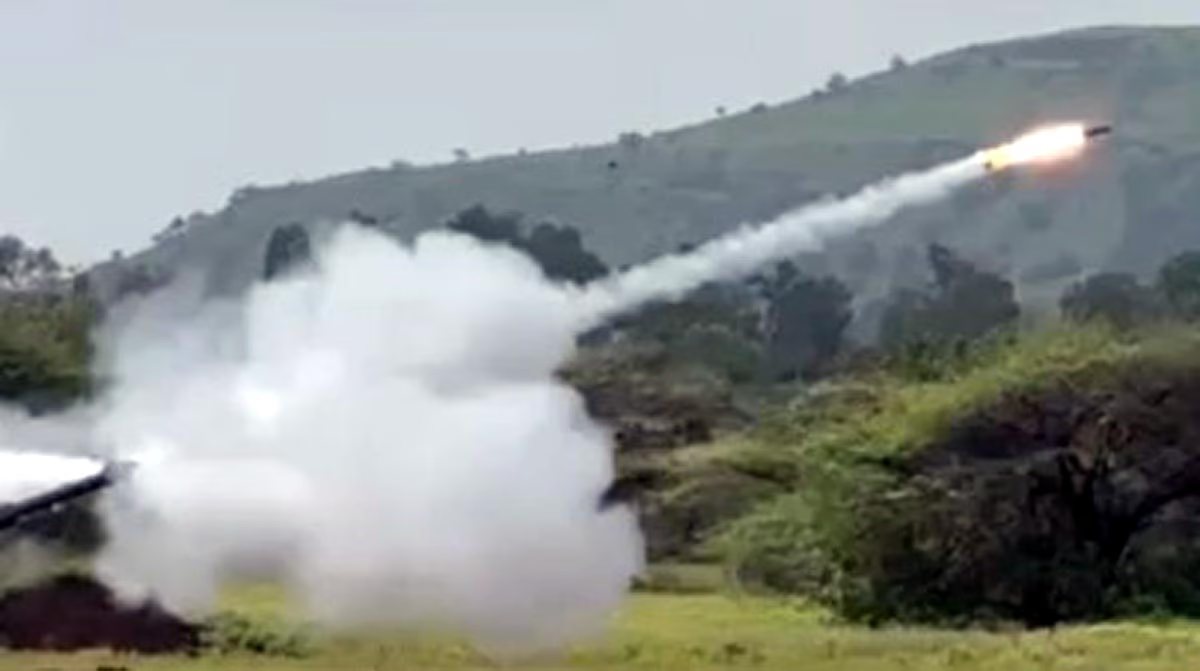
Thorough examinations were conducted in collaboration with the Indian Army. Field trials took place in Deolali and Pokhran, where shells were successfully fired, flights remained stable, and ramjet engines functioned effectively.
Source: aajtak
Why Is This Achievement Significant?
Modification to existing artillery – no need for new, expensive weaponry.
Reduced costs, increased impact.
Capable of deeper, quicker strikes on adversaries.
Perfect example of 'Atmanirbhar Bharat' (Self-Reliant India).
Sustainable and future-ready firepower for modern warfare.
This technology will significantly bolster the Indian Army's capabilities, bringing its artillery prowess to globally competitive standards with minimal expense. This IIT Madras-Indian Army collaboration has ushered in a wave of optimism in the defense domain.